
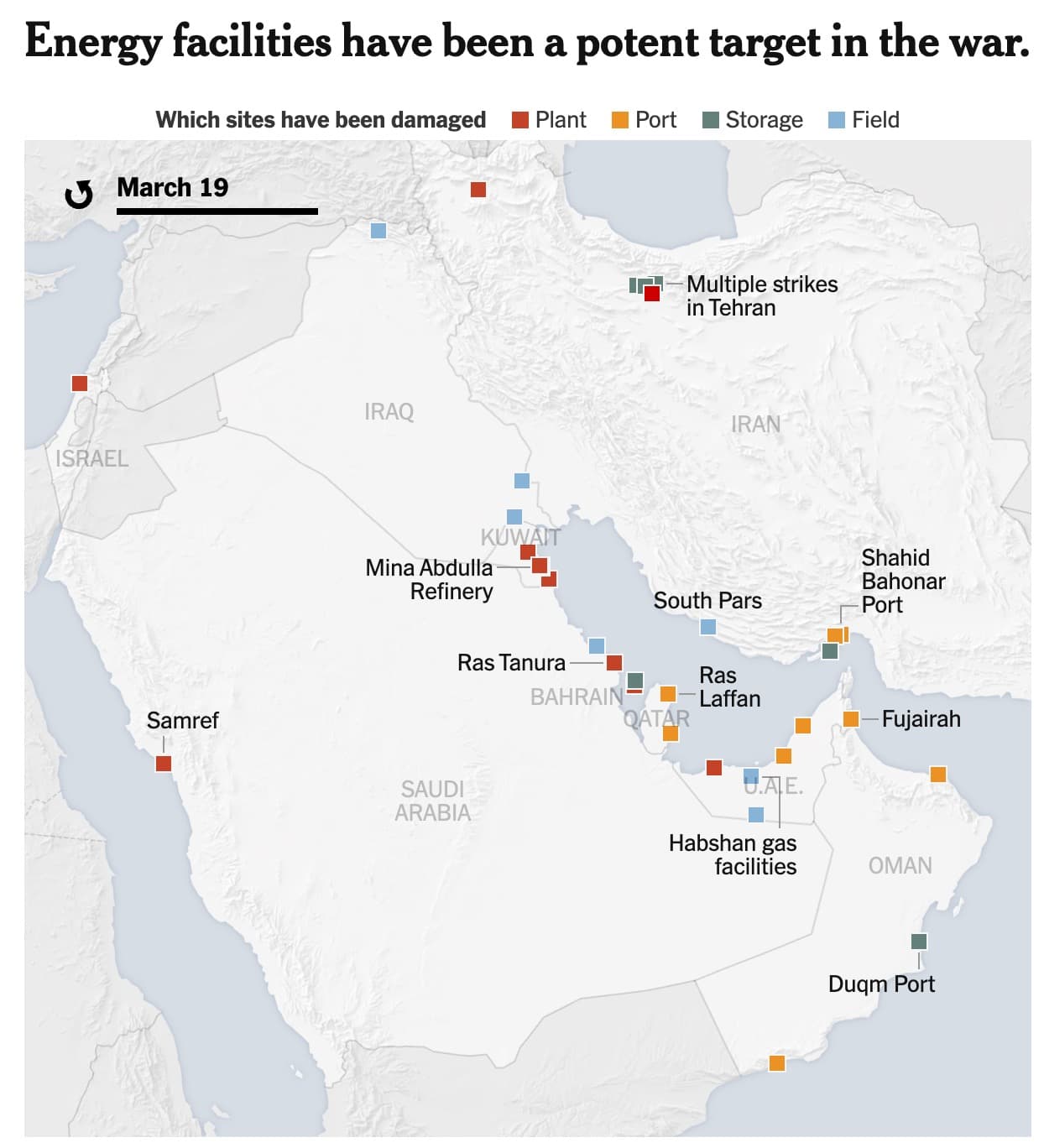
Larry Fink left a single sentence in his annual letter on March 25: “The old model of global capitalism is fracturing.” Before that ink had even dried, the Strait of Hormuz was blocked. In his March 20 portfolio post , Aleph warned of “ electricity cost inflation ” as one of the three major structural risks. Ten days later, Brent crude oil prices hit $116, recording their largest monthly gain in history (+55%). Why is this relevant to AI stocks ? Because electricity costs account for half of data center operating expenses. When electricity rates rise, the speed at which GPUs are sold changes. Today, we will examine, using data, how geopolitical shocks are penetrating the semiconductor , cloud, and domestic stock sectors, and how you should adjust your portfolio now.
We are re-evaluating the outlooks and recommendation weights from previous posts from the perspective of the realization of geopolitical risks. Data was used as of 18:00 KST, March 30, 2026.
1 What Happened in the Last Month — Shock in the Timeline
The market often feels like it collapses “suddenly,” but in fact, cracks have existed for a long time. Tensions built up following the airstrike on Iranian nuclear facilities in June 2025 finally exploded into an all-out war last month. What is noteworthy is not the oil price chart, but the structure of the timeline . The pattern of “diplomatic remarks → oil price drop → military conflict → oil price surge” repeated itself throughout the month.
| date | event | Oil price (Brent) | Market Reaction |
|---|---|---|---|
| 2026.02.27 | The day before the air raid — the last normal trading day | ~$73 | benchmark |
| 2026.02.28 | US and Israel Launch Airstrikes on Iran / Declaration of Blockade of Hormuz | $79 (+9%) | Nasdaq plunges |
| 2026.03.08 | Brent Surpasses $100 — Returns to Triple Digits for the First Time in 4 Years | $100+ | Energy stocks surge |
| 2026.03.25 | Trump’s “Negotiations in Progress” Remark → Oil Prices Temporarily Drop | $102 (-2.2%) | A brief moment of relief |
| 2026.03.29 | Houthi join attack on Israel / 3,500 additional US Marines dispatched | $116 (+3.3%) | Futures -0.5~0.7% |
| 2026.03.30 | Pakistan Announces "Meeting for Peace Talks" — However, Military Clashes Continue | Maintain $115~116 | Wait-and-see attitude |
March 30. The current market situation can be summarized in a single sentence: “Negotiations in words, combat in reality.” Although Pakistan announced the arrangement of talks, the Iranian Foreign Minister drew a line on the same day, stating that “mediated contact is not negotiation,” and the IEA estimated that global crude oil supply dropped by 8 million barrels per day in March due to the blockade of the Strait of Hormuz. The pattern of oil prices briefly dropping at a single word from Trump is likely to repeat itself for the time being.

2 Why Does GPU Demand Decrease When Oil Prices Rise? — 3 Links
“What does oil prices have to do with Nvidia?” This question is obvious. However, if you follow the links, the connection is much more direct than you might think. There are three pathways: ① Electricity costs → Data center margins → Capex reduction, ② Helium → Fab shutdown, ③ LNG → Increased server material costs. Let’s break down how each works.
⚡ Goli 1 — “Half of data center electricity costs run memory”
AI data centers consume three to five times more electricity than general server facilities. According to Morningstar analyst Jing Jie Yu, electricity costs account for about half of data center operating expenses, and half of that is used to power memory. Simply put, half of the cost of running SK Hynix's HBM is ultimately electricity. Based on IEA projections, the electricity consumption for AI, data centers, and cryptocurrency in 2026 is 1,050 TWh —a figure equivalent to Japan's total electricity consumption. When multiplying this by the fact that a single ChatGPT query uses 10 times the power of a Google search, the impact of rising oil prices on data center costs is shaking up the profit equation faster than expected.
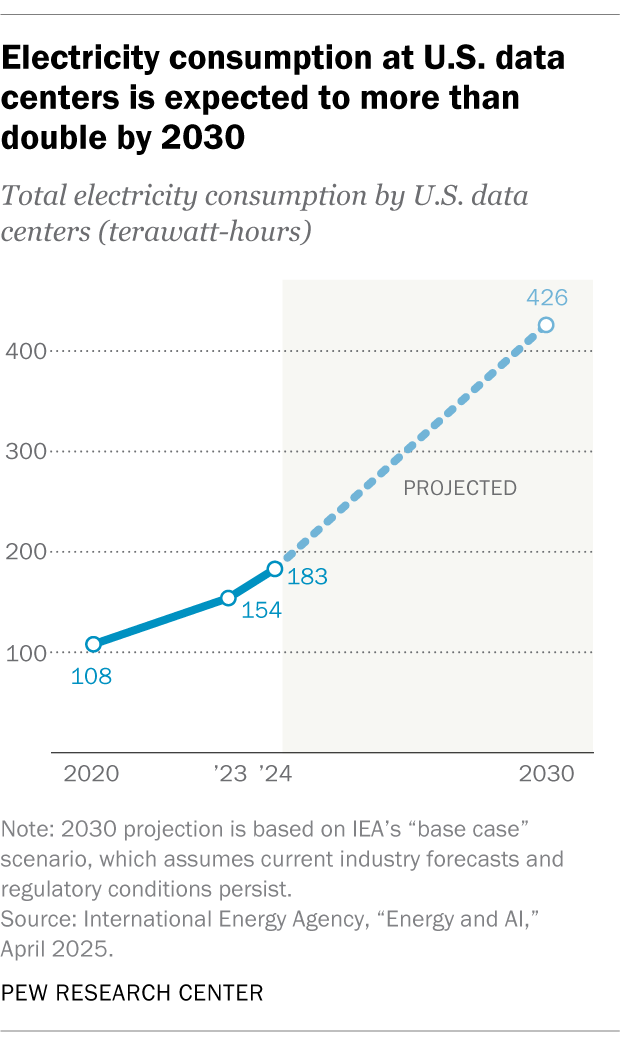
Amazon, Google, Meta, and Microsoft signed the Trump administration’s “Ratepayer Protection Pledge” on February 24, four days before the airstrike. It is a structure in which costs are pre-agreed upon based on electricity usage. If skyrocketing oil prices are passed on to electricity bills, this agreement actually becomes a burden of fixed costs .
🧪 Ring 2 — The Variable No One Noticed, Helium
There is one thing semiconductor investors often overlook. Fab cleanrooms cannot operate for even a single day without helium. Furthermore, Qatar supplies approximately 33% of the world's helium. With Qatar's exports blocked due to the blockade of the Strait of Hormuz, helium prices have already doubled since the conflict began. Experts warn that since current global inventories are at a 45-day level, Samsung, SK Hynix, and TSMC could all face a direct blow to fab operations if the conflict persists for more than 60 to 90 days. While oil prices are a variable everyone sees, helium is a real risk that no one is paying attention to.
🚢 Ring 3 — The fact that servers are made of aluminum
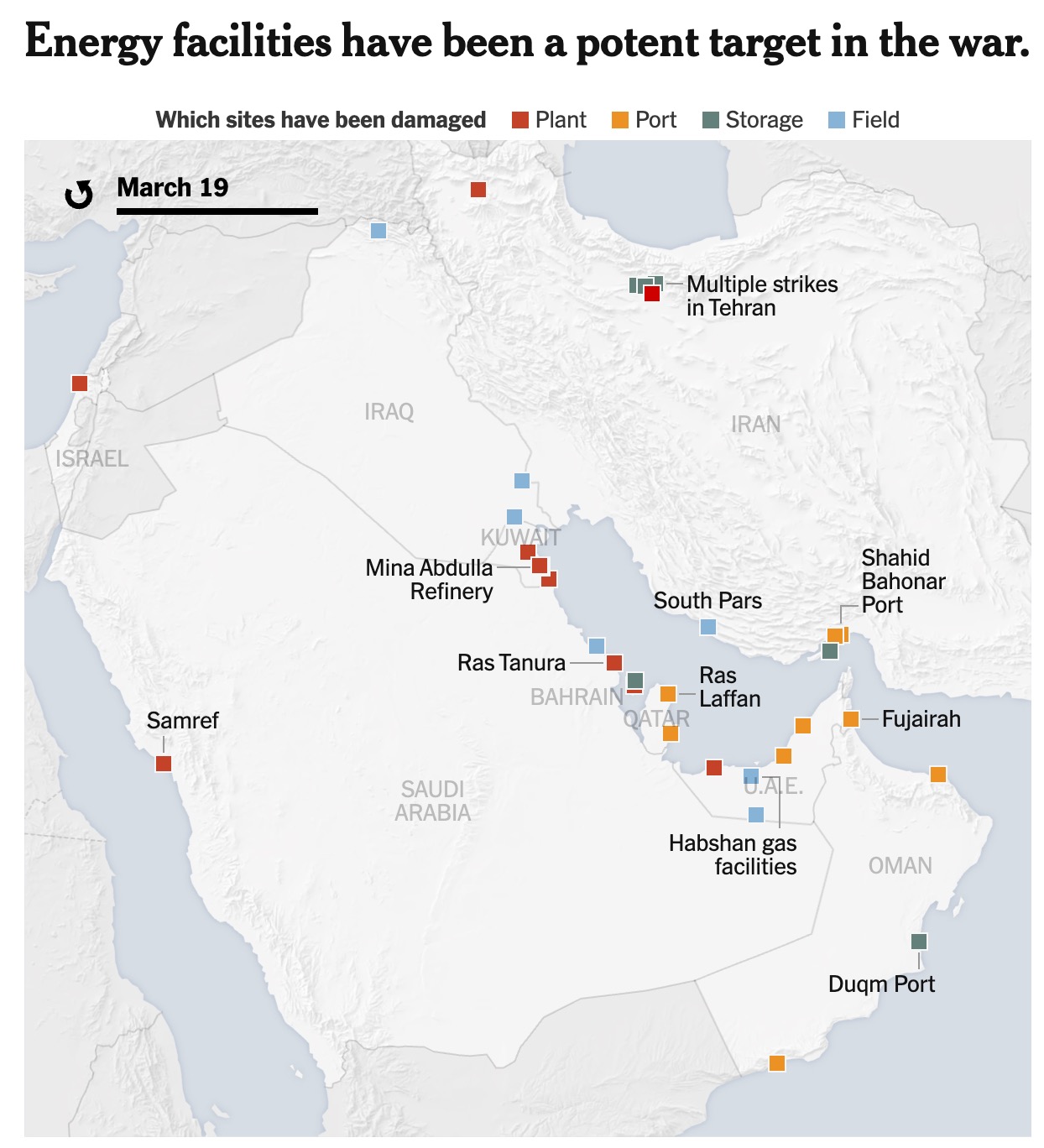
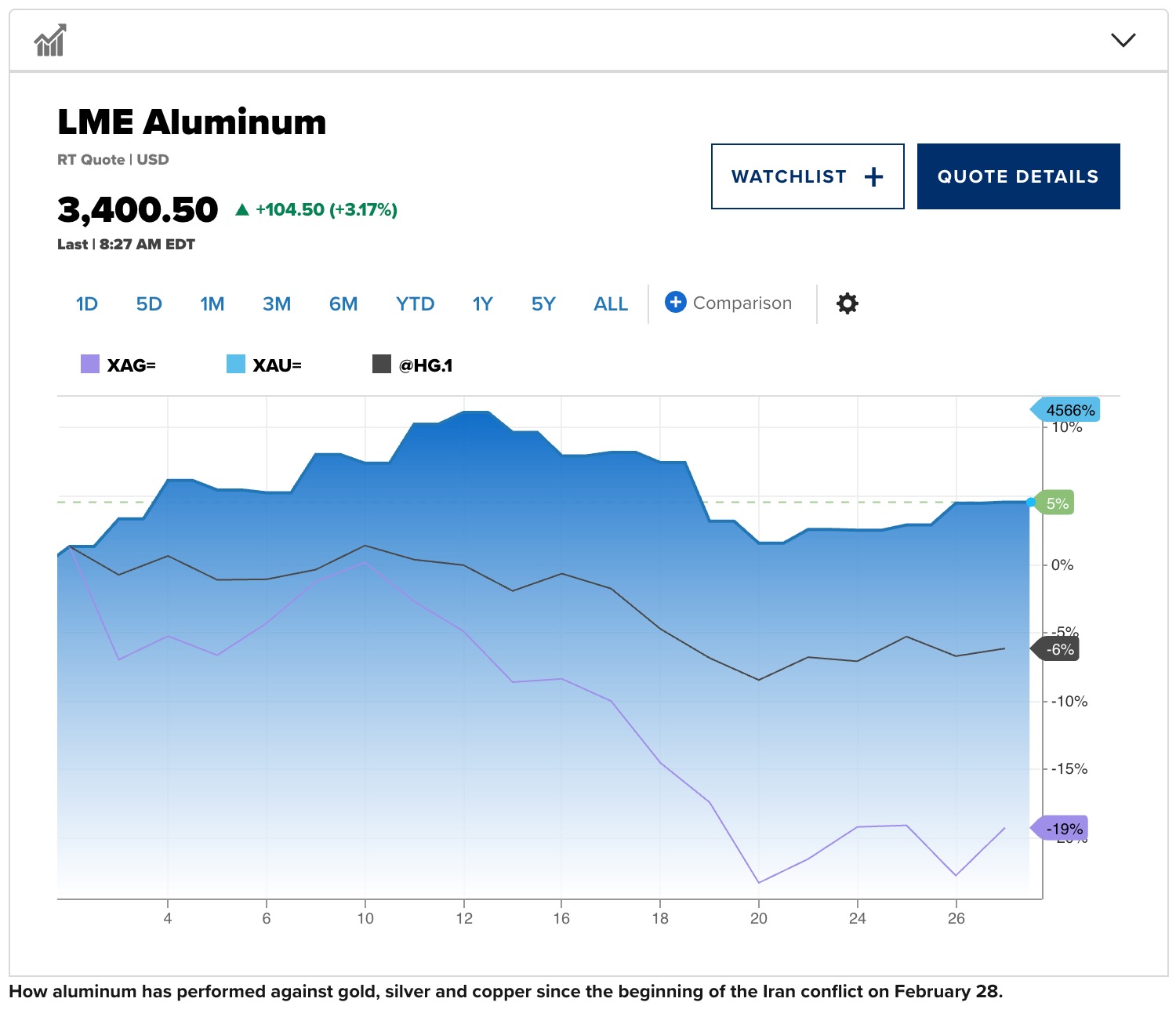
Aluminum is the core material for server chassis and cooling systems. Gulf aluminum-producing nations such as Bahrain and the UAE operate their smelting plants using local LNG. Now that LNG prices have risen by 60%, aluminum production costs are increasing in a chain reaction. The result is simple: delivery times for AI data center hardware are delayed, and unit prices are rising. This creates a structure where the actual number of servers that can be installed decreases, even with the same capex budget.
3 So, how have each sport changed? — Re-evaluation results
If you are currently holding the recommended weightings presented in the March 20 portfolio post, you need to review your portfolio. Not all stocks move in the same direction. Those with long-term contracts hold firm, while those heavily reliant on the spot market fluctuate.
🇰🇷 SK Hynix & Samsung Electronics — “HBM is Defense, DRAM is Warning”
| item | 3.20 rating | 3.30 Re-evaluation | change |
|---|---|---|---|
| HBM (AI-oriented) demand | Maintain strength | Short-term defense through long-term contracts | → Maintain |
| General DRAM demand | recovery | AI Capex Delays May Weaken | Downward risk |
| Fab Operation Risk | lowness | Added Helium Shock 45~90 Day Scenario | Upward |
| Adjusting recommendation weight | SK Hynix 20% / Samsung Electronics 18% | SK Hynix 15% / Samsung Electronics 14% | -5%p recommendation for each |
Morningstar analyst Yu’s assessment is key. Since both companies have signed long-term HBM supply contracts, maintaining production this year is not an issue; however, if the war drags on, the construction of AI infrastructure itself will be delayed, dealing a direct blow to demand for standard DRAM. Director Hwang at Counterpoint Research issues the same warning. As data center operating costs rise due to increasing energy expenses, customers will cut semiconductor capex first. This means that while HBM will survive, DRAM is at risk.
🇺🇸 NVDA·MSFT·AMZN·TSMC — Stock Temperature Differences
| event | Previous proportion | Adjusted weight | Key grounds |
|---|---|---|---|
| NVDA | 12% | 10% | Concerns over slowing GPU demand if data center capex is delayed |
| MSFT (Azure) | 15% | Maintain 15% | Long-term contract-based cloud revenue structure — strongest relative defense |
| AMZN (AWS) | 8% | 6% | Attack on UAE Data Center → Realization of Middle East Infrastructure Risks |
| TSMC | 10% | 8% | Helium supply uncertainty + complex pressure from Taiwan's geopolitics |
Amazon's AWS data center in the UAE was attacked following the outbreak of the war with Iran. This marks the first instance of cloud infrastructure becoming a geopolitical target. AWS, Azure, and Google Cloud, all of which have significant investments in the Middle East, face the same risk structure. The assumption that "digital infrastructure is free from physical conflict" must now be re-examined.
4 There is only one turning point — “whether the Strait of Hormuz opens by the end of April”
The biggest mistake investors make regarding this situation is doing nothing while agonizing over "which scenario is correct." Aleph's proposal is different. Instead of predicting scenarios, it involves monitoring a single turning point and mechanically adjusting portfolio weights accordingly . That turning point is whether the 30-day lockdown of Hormuz continues.
| division | 🟡 Short-term relief (Open before the end of April) | 🔴 Prolonged (Lockdown even after May) |
|---|---|---|
| Oil price outlook | $85~95 Downward stabilization | Societe Generale target price $150+ |
| LNG prices | Easing to 30–40% | Europe and Asia Inventory Depletion → Further Surge |
| Helium supply | Holding out with 45 days' worth of inventory | Possibility of Fab Shutdown Becomes a Reality |
| AI infrastructure capex | Maintaining the annual plan | Delays intensify after Q2 |
| Semiconductor demand | HBM Strength / DRAM Returns to Recovery | Downward pressure on general DRAM prices |
| Portfolio Response | Maintain existing weighting + resume split buying | Increase hedge weight from 10% to 20% |
Why is the end of April a turning point? As pointed out by the IEA and experts, the effectiveness of the 400 million barrels of Strategic Petroleum Reserve (SPR) being released by the U.S. begins to weaken from early to mid-April. While oil prices remain below $120 as long as the SPR provides support, if the Strait of Hormuz remains blocked at the time its effectiveness is exhausted, oil prices will structurally rise to the next level.
5 Portfolio Adjustment Plan — Don't Sell, Reallocate
“Should I sell everything and hold onto cash?” — No. As Larry Fink said, getting out of the market is riskier. What needs to be done now is not selling, but reallocating . It is to slightly reduce the weighting of AI semiconductors and fill that space with assets and hedging instruments that benefit from the energy crisis.
| Asset items | ⚖️ Balanced Existing (3.20) | ⚖️ Balanced Adjustment (3.30) | Reason for change |
|---|---|---|---|
| 🇺🇸 Overseas AI Stocks | 55% | 47% | NVDA, AMZN, and TSMC weight slightly reduced |
| 🇰🇷 Domestic AI Stocks | 35% | 28% | SK Hynix and Samsung reflect short-term risks |
| 🥇 Hedge Assets (Gold, Bonds) | 10% | 15% | Strengthening hedging during geopolitical shock periods |
| ⚡ Energy & Nuclear Stocks (New) | — | 10% | Benefits from the energy crisis + Long-term structural benefits from AI power demand |
There is an irony created by this crisis. The greater the shock to fossil fuels, the more structurally the demand for nuclear and renewable energy increases. Southeast Asian countries have begun re-evaluating nuclear power as the power demand for AI data centers overlaps with fossil fuel risks, while U.S. Big Tech companies are accelerating investment in SMRs (Small Modular Reactors). Gold ETFs (KODEX Gold Futures, GLD) are effective for
단기 헤지 , while nuclear-related stocks such as Vistra and Constellation Energy are effective for 중기 구조 수혜 .6 3 Things to Do Right Now
Immediately — Reduce your semiconductor weight by 3–5 percentage points and fill it with gold ETFs
You are not suggesting that you sell all of your SK Hynix and NVDA holdings. Reduce the weightings for each by just 3–5 percentage points from the recommendations in the March 20 post, and fill that gap with gold ETFs (KODEX Gold Futures, GLD) . Gold is the most proven buffer in a climate where geopolitical risks have materialized. However, as a general rule, you should temporarily pause new entries when the VIX is above 25. There is a difference between buying when fear is at its peak and stopping precisely because fear is at its peak.
Mid-April — Set up a $120 alert for Brent on TradingView
The end of April is the real turning point. If the Strait of Hormuz remains blocked at the time when the SPR's influence weakens, oil prices will enter a $130–$150 scenario. There is no need to check the chart every day. Setting up a single alert on TradingView for a Brent breakout above $120 is sufficient. Establish a principle in advance to further increase your hedge weight from 15% to 20% the moment the alert sounds. Creating rules in advance is the key to investing during geopolitical periods.
Annual — Re-evaluation of items based on the criterion that “AI depends on energy independence”
There is one structural lesson left by this crisis: AI companies lacking energy self-sufficiency capabilities are vulnerable in the next cycle. Hyperscalers with high renewable energy self-sufficiency, companies investing in SMRs, and firms possessing cooling efficiency technologies—be sure to include these criteria in your annual rebalancing. Geopolitical risks recur, and each time, companies with low energy self-sufficiency are the first to falter.
Conclusion — A crisis is a signal to review your portfolio.
Larry Fink stated in his March 25 letter, “Billions watch their economies grow from the outside, as renters rather than owners.” It was a warning that wealth in the AI era accrues only to those who participate. If we pull out of our portfolios now because the market is shaken by geopolitical shocks, we become exactly those “tenants.”
The growth direction of the $2.5 trillion AI market has not changed. However, a new toll booth—energy costs—has appeared on that path. No one abandons the highway just because a toll booth has opened. One simply needs to find an alternative route to bypass the booth or invest in the company operating it. That is precisely why nuclear power stocks are attracting attention.
Pakistan mediation, Trump's negotiating remarks, SPR releases — once these short-term deterrents lose their effect within April, the real test begins. The portfolio that will hold out in that test is the portfolio adjusted today.
All figures in this article are for informational purposes only and do not constitute investment advice . Geopolitical situations are rapidly changing, and the oil price and weight data presented here are based on data as of 18:00 KST on March 30, 2026. Monte Carlo simulations are statistical estimates based on historical data and do not guarantee actual returns. All investment decisions and responsibilities rest with the individual.
📌 Was this analysis helpful?
In the next post, we plan to cover “After the Hormuz Crisis — HBM4 and SK Hynix’s Survival Strategy.” We will verify with numbers whether long-term HBM contracts serve as a safeguard even amidst the energy crisis.
Please leave your portfolio concerns in the comments.
How this content was produced
Aleph's research AI agent assisted with collecting and analyzing public data, creating charts and visuals, and structuring the draft. Davar personally reviewed and edited the sources, figures, reasoning, and final conclusions.
This content is for informational purposes only and is not personalized investment advice or an individual stock recommendation. Read the full disclaimer

Davar
Davar builds and operates Aleph's research AI agent and writes and reviews analysis on macroeconomic developments and AI industry trends.
© Aleph. All rights reserved.