
As soon as GTC 2026 concluded, Jensen Huang sat down for the All-In podcast. He was bombarded with stories he couldn't share in the official keynote, as well as the questions investors are most curious about. From the real reason behind the Groq acquisition, the $50 trillion Physical AI market, engineer token salaries, candid advice on the AI PR crisis, to the future of OpenClaw —Aleph provides a complete analysis of this 1 hour and 6 minute video from an investment perspective. We explain exactly what he said—in the original text—why these remarks are the reason you need to restructure your portfolio strategy right now.

1Why All In Podcast? — Differences from the Official Keynote
While Jensen Huang announced his technology stack and product roadmap during the GTC keynote, he shared his strategic mindset and market judgment in the All-in Podcast. In front of Chamath, Jason Sacks, and Friedberg, CEO Huang spoke candidly about Anthropic communication, a forecast of a $50 trillion Physical AI market, and the token salary paradigm. From an investor's perspective, this podcast contains signals that are actually more important than the GTC keynote.
2Groq Acquisition and Inference Explosion — “From GPU Company to AI Factory”
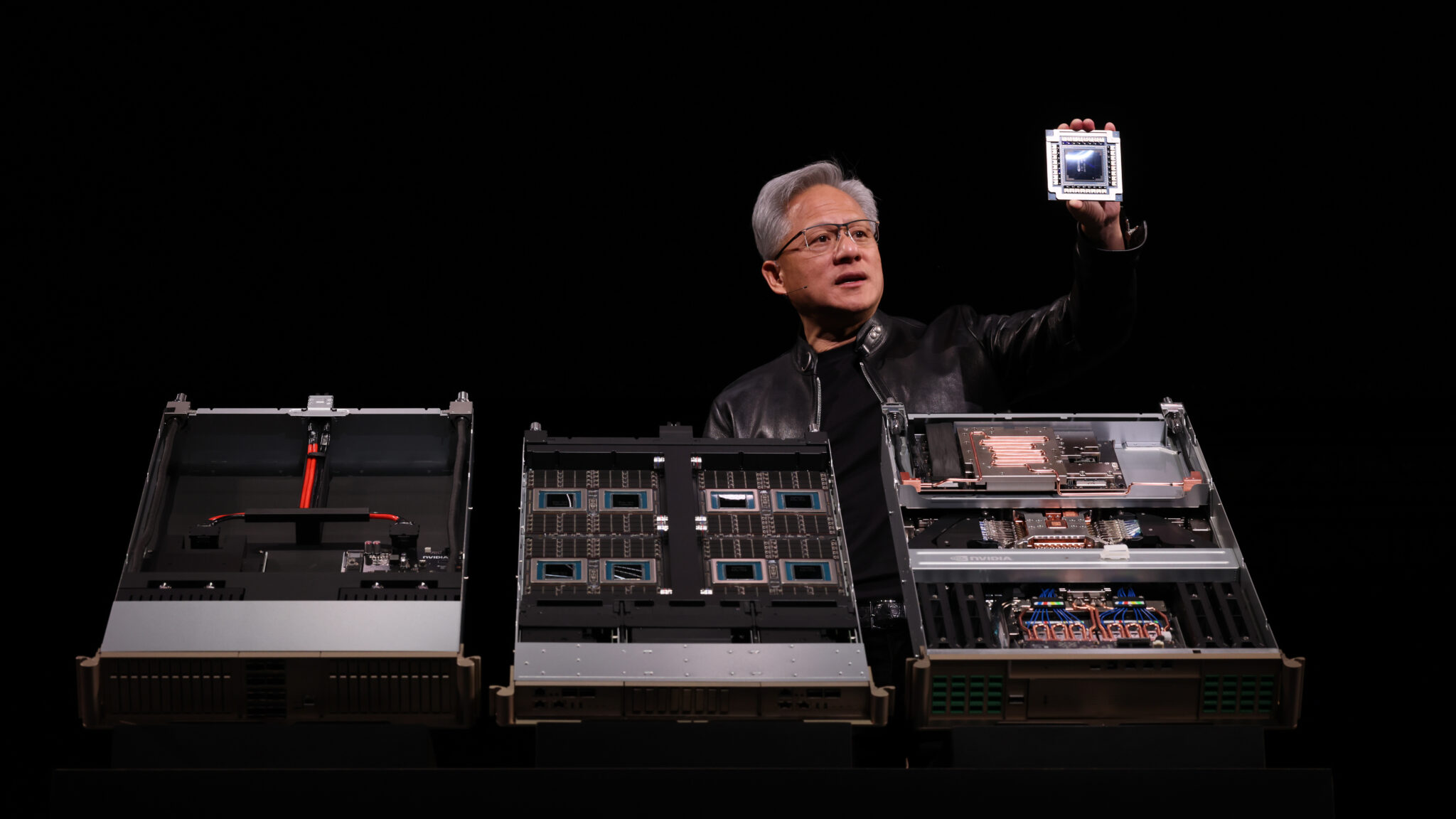
The first major topic of the podcast is the acquisition of Groq. CEO Huang explained not just the story of securing chips, but the fundamental redesign of the inference architecture . The core concept is “Disaggregated Inference”—a method of splitting the inference pipeline and optimally allocating it to different chips.
In an agent environment, working memory access, long-term memory, tool usage, and collaboration with other agents occur simultaneously. To handle this, NVIDIA created Vera Rubin and added Groq on top of it. CEO Huang stated directly on stage: “We should add Groq to about 25% of the Verrubins in the data center.” Data center rack configurations have also been expanded from the existing single rack to an additional four racks.
CEO Huang presented the impact of this change on Nvidia's TAM (Total Market Enrichment) in direct figures: “Nvidia's TAM… increased from whatever it was to probably something, call it, you know, 33%, 50% higher.” Storage processors (Bluefield), Groq processors, CPUs, and networking processors are all components of the new TAM.
| component | Role | core products | Meaning of investment |
|---|---|---|---|
| GPU | Training · Reasoning (Prefill) | Vera Rubin | NVIDIA maintains existing core revenue sources |
| LPU | Low-latency token generation (Decode) | Groq | New TAM +33~50% |
| Storage processor | Data Movement and Management | Bluefield | Demand surges upon spread of agents |
| CPU + Networking | AI Workflow Coordination | Vera CPU, etc. | Full-stack AI Factory Completed |
3 10,000x Computing — “The Age of Agents, We Haven’t Even Started Yet”
CEO Huang presented direct figures on the changes in AI computing demand over the past two years. He stated that computing demand increased approximately 100-fold when transitioning from Generative AI to Reasoning, and another 100-fold when transitioning from Reasoning to Agentic—a combined 10,000-fold increase—occurred in just two years. CEO Huang then remarked: “We haven’t even started scaling yet. We are absolutely at a million X.”
CEO Huang’s core logic is this: people pay for information, but they pay much more for actual “work.” Agents do the work. Friedberg testified firsthand on a podcast that he replaced his entire software stack with the Claude agent in just 90 minutes on a Sunday night, and used “auto research” to generate genomic results equivalent to a seven-year Ph.D. thesis in 30 minutes. CEO Huang explained that this is the reason why the demand for agents will far exceed current levels.
4Physical AI $50 Trillion — “A First-Ever Opportunity for the Tech Industry”
CEO Hwang defined Physical AI as follows: “Physical AI as a large category, it's technology industry's first opportunity to address a $50 trillion industry that has largely been a void of technology until now.” This applies to the entire physical industry, including manufacturing, logistics, agriculture, healthcare, and autonomous driving.

CEO Huang personally stated that Physical AI is already a significant revenue source for NVIDIA: “It is a multi-billion dollar business for us. It's close to $10 billion a year now. And so it's a big business and it's growing exponentially.” The key point is that while it is still in the extremely early stages of reaching $50 trillion, it is already growing exponentially.
CEO Huang's strategy is clear: to supply all three components—training computers (data centers), simulation computers (Omniverse), and edge computers (robots). Whether robotics companies succeed or fail, NVIDIA provides the infrastructure for all those robots to be trained. Huang also acknowledged that China's robotics infrastructure (motors, rare earth elements, and magnets) is world-class and stated directly that the global robotics industry will become deeply dependent on the Chinese supply chain.
5AI PR Crisis and Anthropic Bluntness — “Warnings are good, but intimidation is bad”
This is the part of the podcast that generated the most explosive reaction on social media. The host mentioned the controversy surrounding Anthropic regarding the Ministry of National Defense and sought advice from CEO Hwang; Hwang first highly praised Anthropic's technology before offering candid advice on their communication style.
① AI is software — “It is not a biological being. It is not alien. It is not conscious. It is computer software.”
② Warning and fear are different — “Warning is good, scaring is less good.” It was emphasized that the limitations and possibilities of technology must be conveyed in a balanced manner.
③ Side Effects of Extreme Remarks — “To say things that are quite extreme, quite catastrophic, that there's no evidence of it happening, could be more damaging than people think.” It was warned that catastrophic theories without evidence have a direct adverse effect on regulatory policies.
CEO Huang expressed concern that public awareness of AI in the U.S. remains low. His key warning was that AI could repeat the same mistakes as nuclear energy did—just as China is building 100 nuclear reactors while the U.S. abandons them due to public fear. This remark is not merely an industry debate. How the AI regulatory environment evolves directly impacts the valuation of entire AI infrastructure stocks, including Nvidia.
6 Token Salary — “If a $500K engineer doesn’t use $250K tokens, they are deeply alarmed”
This is the most viral statement from X. CEO Huang said on a podcast: “That $500,000 engineer at the end of the year, I'm going to ask them how much they spent on tokens? And that person said, $5,000, I will go ape… If that $500,000 engineer did not consume at least $250,000 worth of tokens, I am going to be deeply alarmed.”
CEO Huang used the analogy of a chip designer who doesn't use CAD tools: “This is no different than one of our chip designers who says, ‘I'm just going to use paper and pencil. I don't think I'm going to need any CAD tools.’” When host Chamath asked, “Is NVIDIA currently spending $1 to $2 billion on tokens?” Huang replied, “We're trying to.” He did not directly disclose specific internal target figures.
The message this statement conveys to investors is clear. When token budgets are incorporated into corporate compensation structures, the demand for inference computing becomes not merely service usage, but a structural expenditure linked to labor costs . The moment companies adopt token budgets as HR policy, the demand for NVIDIA's AI factories begins to take on a defensive character, increasing regardless of the economic cycle.
7OpenClaw — “Operating System of the Agent Age”
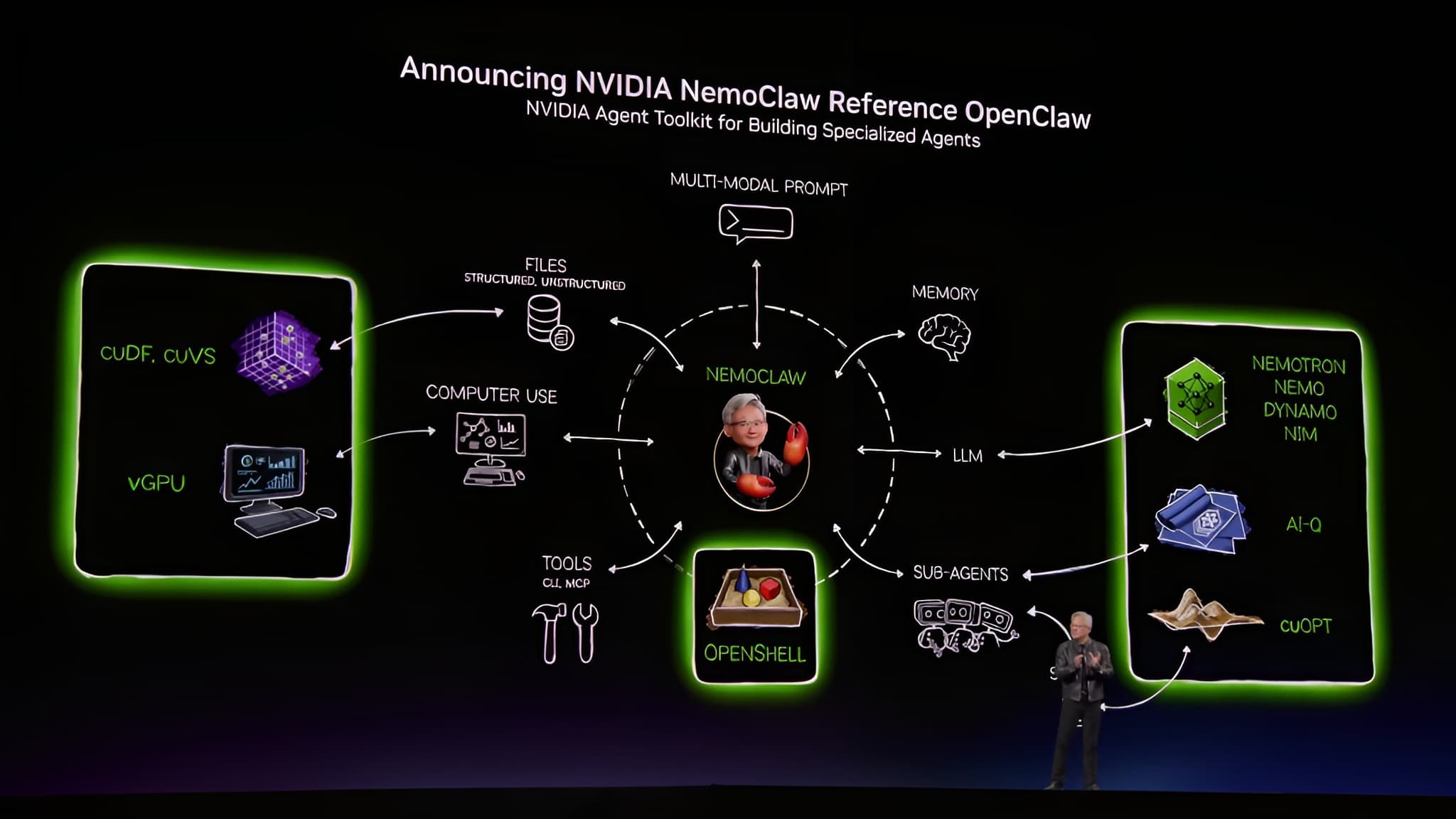
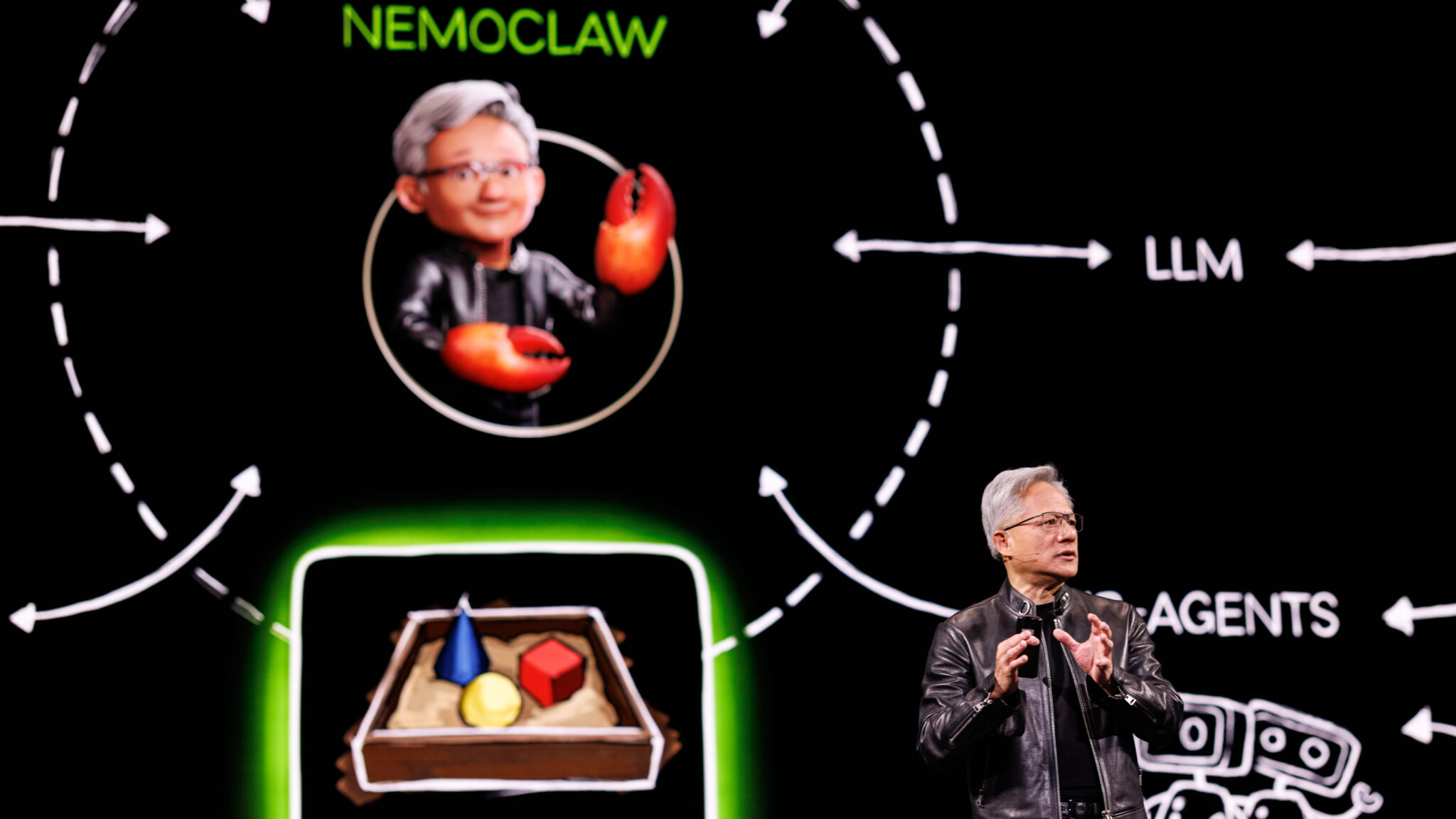
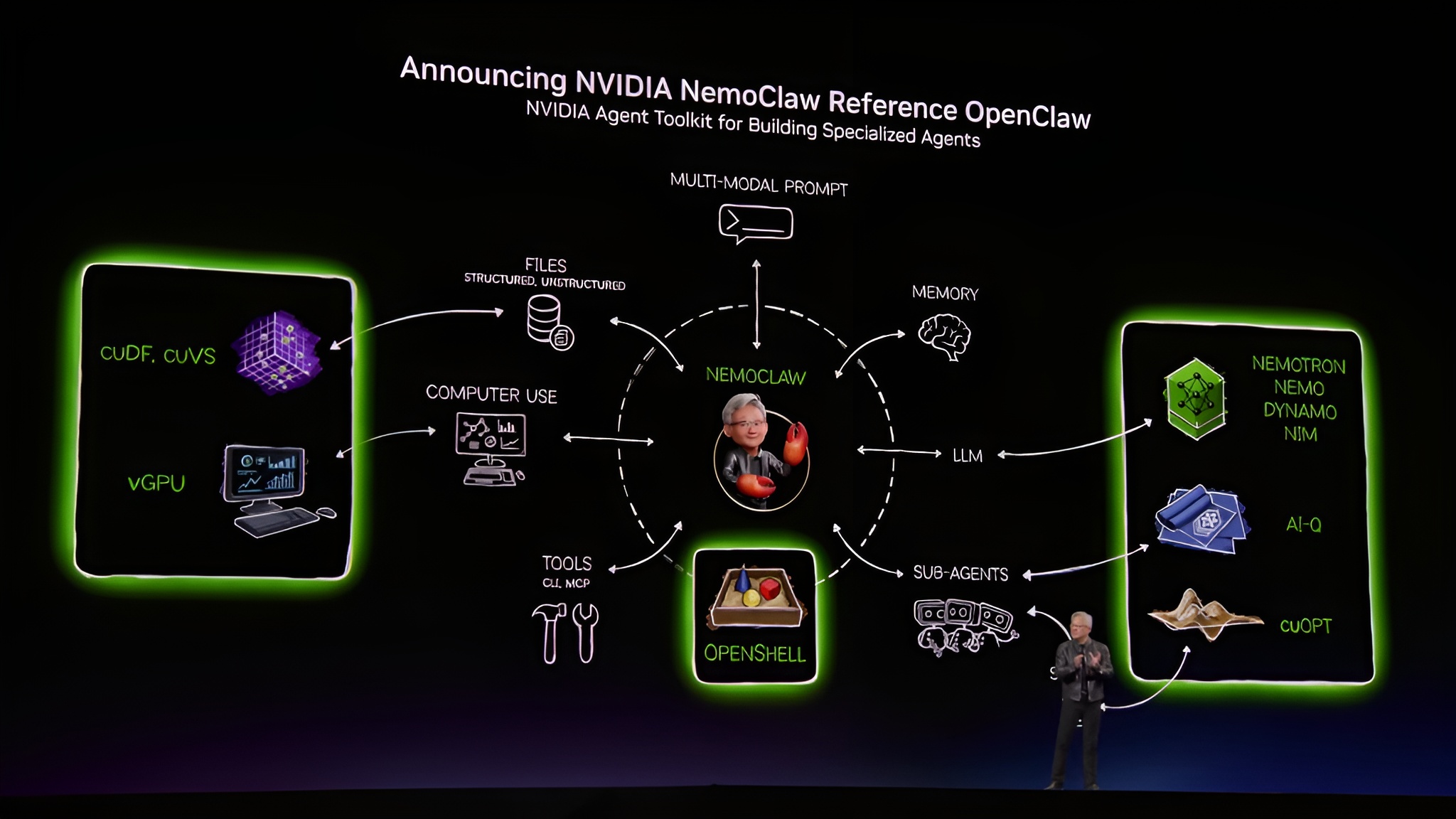
CEO Hwang explained why OpenClaw is important in two ways. The first is a cultural reason—while ClaudeCode was used only internally, OpenClaw implanted in the public consciousness what agents can do. The second is a technical reason.
CEO Hwang explained that OpenClaw possesses all four basic elements of a computer .
① Memory Systems — Short-term Memory (Scratch File System) and Long-term Memory
② Scheduling — Cron jobs, agent creation, branching, and task decomposition
③ Input/Output (I/O) — Communication with external systems, such as WhatsApp connections
④ API (Skills) — Various application execution interfaces
Huang said: "These four elements fundamentally define a computer. And therefore, what do we have? We have a personal artificial intelligence computer for the very first time."
| Comparison items | Past (ChatGPT era) | Current (OpenClaw era) |
|---|---|---|
| AI Interaction | Question → Answer (Conversational) | Goal Input → Autonomous Execution (Agent Type) |
| computing demand | Single request processing | Multistep, tool calling, iterative reasoning |
| Infrastructure requirements | GPU-centric simple structure | Low-latency LPU is essential |
| Software ecosystem | Concerns about replacing existing SaaS | Connect 100 times the agent to existing tools (Yellow) |
CEO Hwang refuted the view that existing enterprise software would be destroyed: “The enterprise software industry is limited by butts and seats. It's about to get 100 times more agents banging on those tools.” The logic is that even if agents produce results, the channel for human review and control remains the existing tools.
OpenClaw itself is open source and therefore not a target for direct monetization. However, as agents become more widespread, the demand for low-latency inference (i.e., Groq LPU demand) skyrockets, and the entire OpenClaw developer ecosystem operates on NVIDIA infrastructure. This is a strategy of locking down the platform using open source as a weapon —a pattern similar to how Linux dominated server operating systems.
8 Geopolitics & Supply Chains — Resumption of Exports to Taiwan, Iran, and China
CEO Hwang personally mentioned three geopolitical risks.
① Resumption of Exports to China in Progress — CEO Huang stated that the company lost 95% of its market share in China during the Biden administration. He revealed that, with the support of the Trump administration, they have applied for and received approval for licenses and have begun receiving purchase orders from Chinese companies: “We're in the process of cranking up our supply chain again to go ship.”
② Taiwan Supply Chain — Manufacturing diversification into the U.S., Japan, and Europe is underway. CEO Huang described Taiwan as a “strategic partner” and emphasized the need for continued support, while regarding helium supply risks, he stated that “there will be sufficient buffer capacity in the supply chain.”
③ Iran and the Middle East — He stated that he is concerned because NVIDIA has many Iranian employees and their families are based in the region. Regarding AI expansion in the Middle East, he clearly expressed his intention to invest, saying, “Once the war ends, the Middle East will be more stable than before.”
9 Non-infrastructure AI Revenue $1 Trillion — “Dario is taking a conservative view”
The original source of this $1 trillion forecast is not CEO Huang. It was Anthropic CEO Dario Amodei who predicted on the Dwarkesh podcast that non-infrastructure revenue from model and agent services could reach tens of billions of dollars by 2027–2028 and $1 trillion by 2030. Regarding this, CEO Huang said: “I think he's being very conservative. I believe Dario and Anthropic is going to do way better than that.”
The reason Huang issued an upward outlook is that all enterprise software companies will eventually become distribution channels for reselling Anthropic and OpenAI tokens. The logic is that if existing sales networks are converted into AI token distribution networks, the market size will far exceed Dario's estimates.
10 Investor Checklist — What to Watch After This Podcast
If you turn this 1 hour and 6 minute podcast into investment action, it is as follows. Use it as a standard to check the direction of your 3- to 5-year portfolio, rather than for short-term position adjustments.
| Point of remark | Investment Signals | Stocks to Watch | Time horizon |
|---|---|---|---|
| Groq + Vera Rubin Integration / TAM Expansion | TAM +33~50% (direct sulfur) | Maintain NVDA core weighting | 1~3 years |
| Physical AI $50 trillion / Current ~$10 billion exponential growth | New market initial index growth | NVDA + Robotic Supply Chain | 3~5 years |
| Computing ×10,000 / Agent demand structuring | Inference Demand Structuring | NVDA, Cloud 3 Companies | 2~3 years |
| OpenClaw Agent OS Spread | Agent infrastructure demand | NVDA + Vertical Agent | 2~4 years |
| Resumption of exports to China in progress | Sales recovery momentum | NVDA Short-term Stock Price Catalyst | 6 months to 1 year |
| Non-infrastructure AI revenue $1 trillion (Dario → Hwang upgrade) | Application layer growth | Interest in OpenAI listing | 3~5 years |
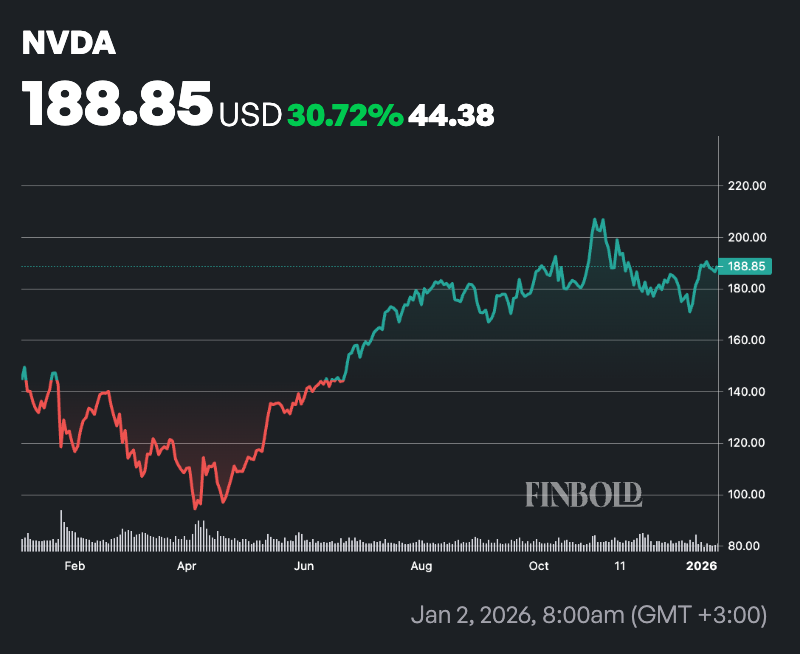
CEO Huang's remarks confirm three points. First, NVIDIA is no longer a GPU company but a full-stack AI infrastructure enterprise . The acquisition of Groq is hardware proof of that declaration. Second, while computing demand has already increased by 10,000, CEO Huang himself states that "we haven't even started yet." Third, the resumption of exports to China could act as a short-term catalyst for the stock price , as Huang personally stated that the supply chain is "restarting operations."
All figures and projections in this article are for informational purposes only and do not constitute investment advice . Figures such as the $50 trillion in Physical AI are CEO Huang's personal estimates, and the $1 trillion non-infrastructure revenue forecast is an upward revision cited by Huang of the prediction by Anthropic CEO Dario Amodei. The computing demand multiple (×10,000) is also CEO Huang's personal estimate. All investment decisions and responsibilities lie solely with the individual, and consulting with a professional financial advisor before making any significant decisions is recommended.
📌 Was this analysis helpful?
In the next post, we plan to cover “HBM4 — Can SK Hynix Beat Nvidia?”
Please leave a comment sharing what you found most memorable from Jensen Huang's remarks. You can check out the original podcast directly at the link below.
How this content was produced
Aleph's research AI agent assisted with collecting and analyzing public data, creating charts and visuals, and structuring the draft. Davar personally reviewed and edited the sources, figures, reasoning, and final conclusions.
This content is for informational purposes only and is not personalized investment advice or an individual stock recommendation. Read the full disclaimer

Davar
Davar builds and operates Aleph's research AI agent and writes and reviews analysis on macroeconomic developments and AI industry trends.

© Aleph. All rights reserved.