
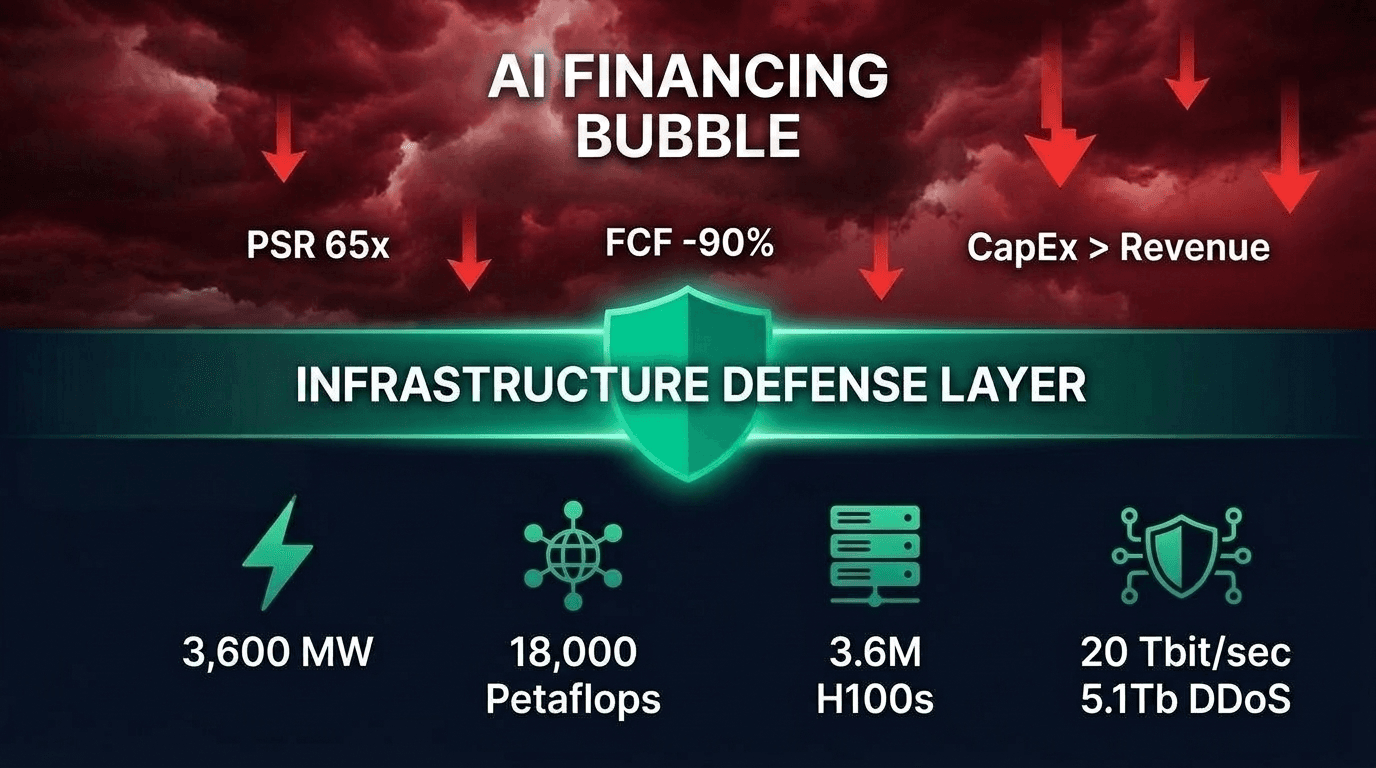
When demand for interest rates, energy, and AI points to the same intersection — Portfolio allocation starting from the macro
AI infrastructure
Energy investment
Portfolio Strategy
Interest rate cut
Nuclear Power · SMR
2026.06.04
I tend to check Search Console frequently. This is because search terms often tell us more than the numbers. Since the beginning of this year, the queries leading to Aleph have been changing. Until last year, most inquiries revolved around questions like "When will the AI bubble burst?" or "Should I sell NVIDIA now?" However, in the last few months, a different type of query has emerged. Questions such as "What will happen to AI infrastructure if interest rates are cut?", "What is the relationship between energy prices and data centers?", and "How should I view AI from a macro perspective?"—readers are looking beyond the layers to find a macro context. Honestly, I welcomed this. I felt that discussing AI infrastructure solely within the context of AI was like seeing only half the picture. In 2026, unique macro environments will overlap: an interest rate cut cycle, an explosion in energy demand, and an explosion in AI token consumption. It is not often that these three forces point to the same intersection. I intend to discuss how to construct a portfolio at that intersection, including the pathways available to Korean investors.
1 The moment three forces overlap
This does not happen often. It is rare for multiple macro forces to point in the same direction simultaneously. Usually, if one is favorable, another is a headwind. The first half of 2026 is different. Three forces have overlapped.
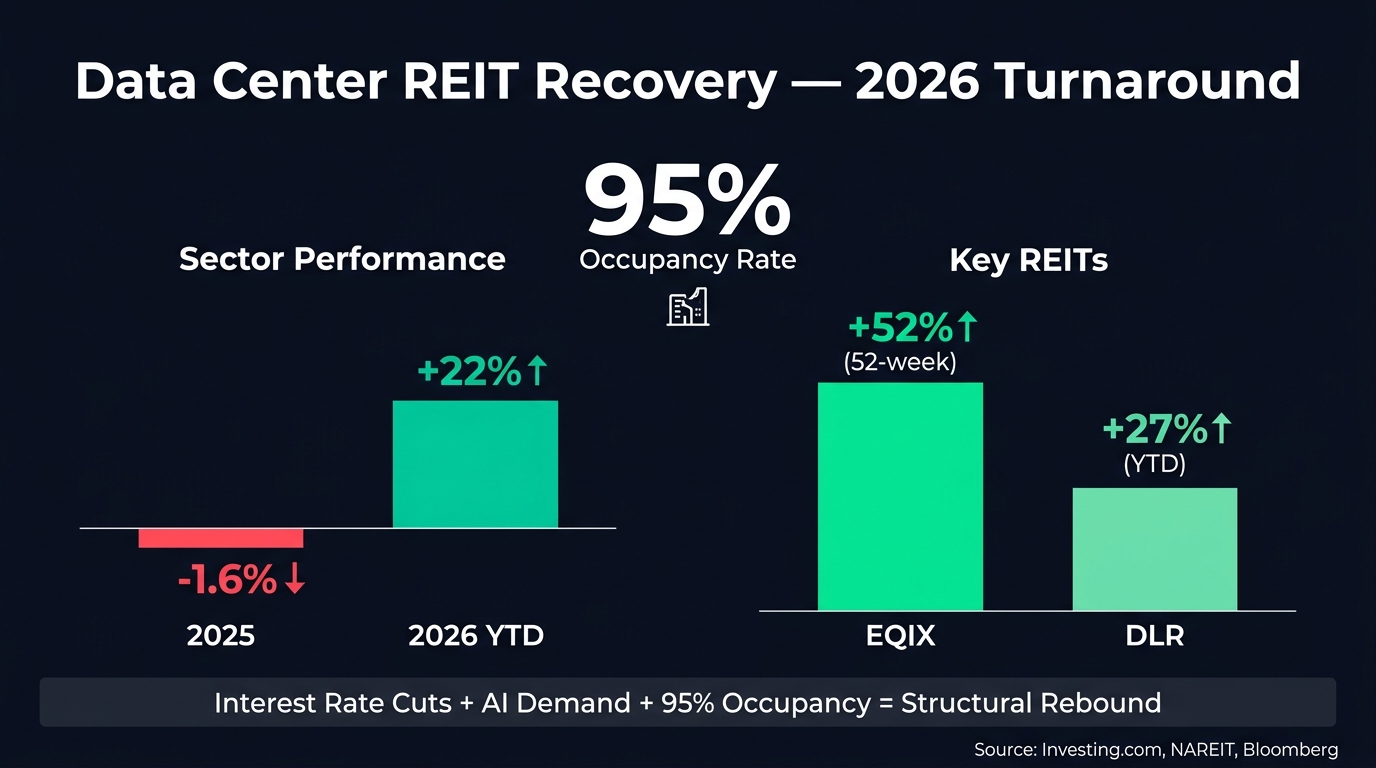
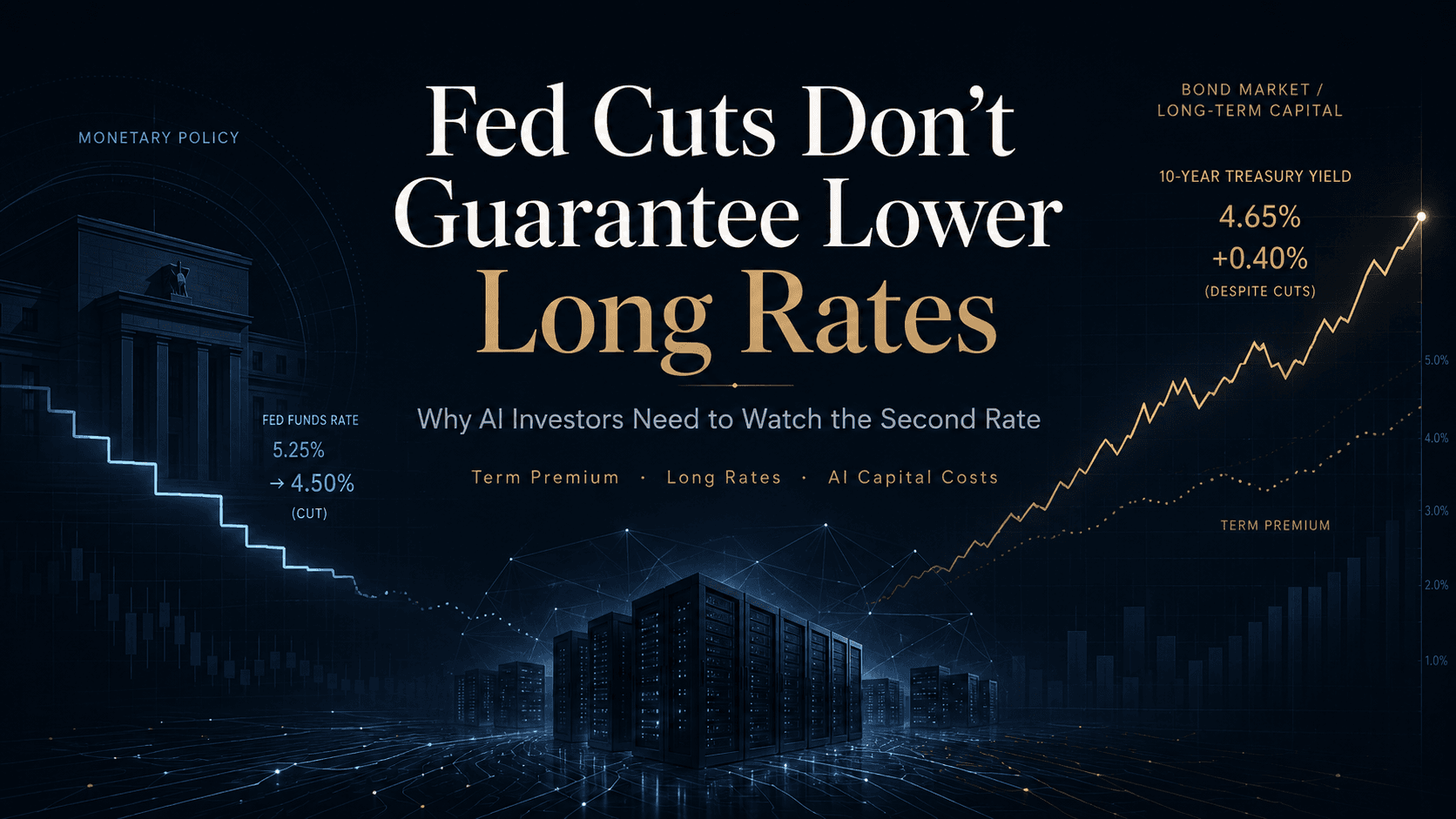
The first factor is the interest rate cut cycle. There was only one reason why the data center REIT sector performed poorly at -1.6% in 2025—interest rates were high. The rate cut cycle began in 2026. This signals the start of a structural rebound for the real asset-based infrastructure sector. As bond yields fall, the relative attractiveness of dividend-yield-based assets increases.
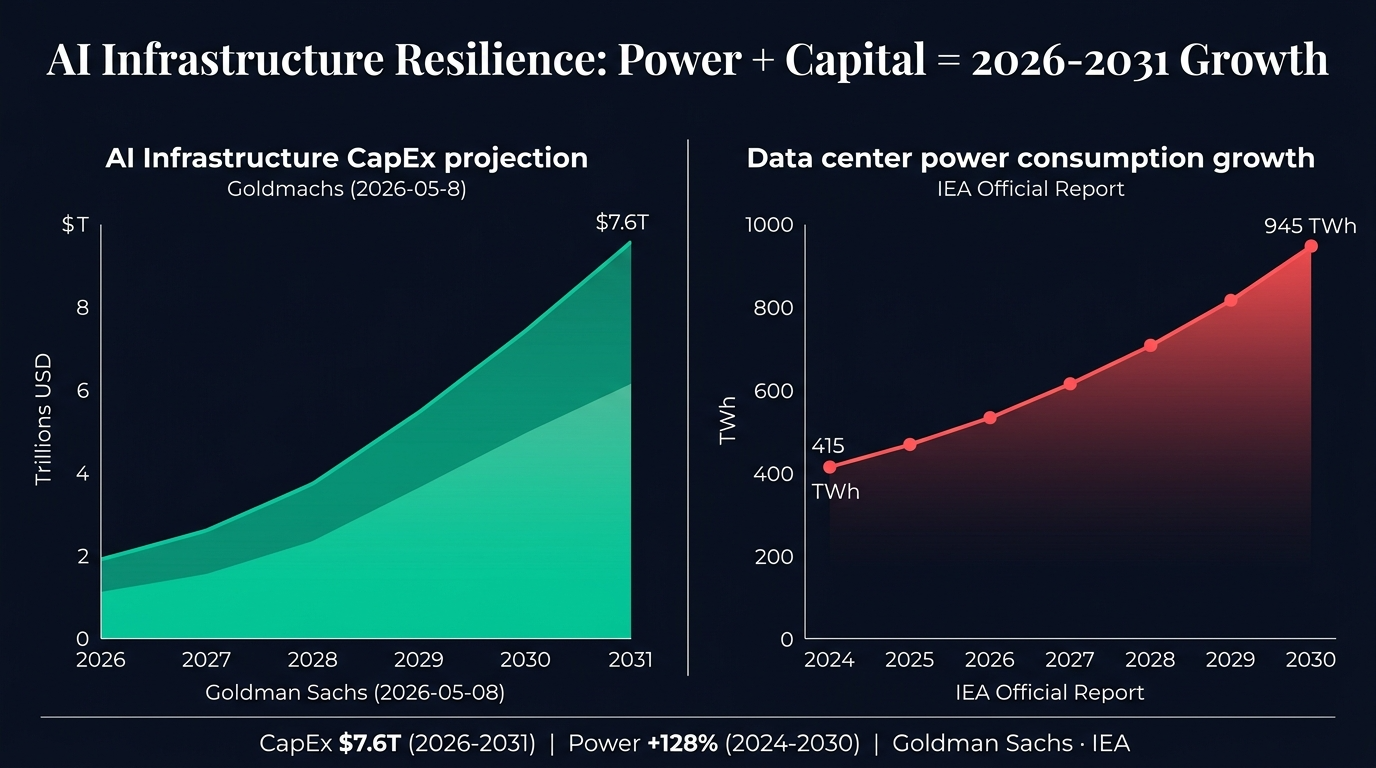
The second factor is the energy demand cycle. According to official IEA figures, power consumption by data centers is projected to increase by 128% from 415 TWh in 2024 to 945 TWh in 2030. Interestingly, this demand does not disappear under any scenario. Even if the AI financing bubble bursts, data centers already in operation will continue to consume electricity. As the ceiling on power demand rises, the bargaining power of electricity sellers changes. The increase in data center construction costs per MW from the previous $10 million to $15-$20 million is in the same context (Goldman Sachs, 2026-05-08). The speed at which supply tightens is faster than the speed at which demand declines.
The third factor is the explosion in AI token consumption. Goldman Sachs (2026-05) forecasts that global token consumption will reach 24 times current levels by 2030. The basis for this growth is not improved model performance. Rather, it is the structural disappearance of the ceiling on usage as AI agents remove the bottleneck of human attention. Once the bottleneck is removed, demand explodes—history has repeated itself.
Three forces meet at a single intersection—AI infrastructure. The companies at this intersection are investment targets for AI, investments for energy, and assets benefiting from interest rate cuts. It is rare for a single layer to absorb three macro-forces simultaneously.
2 The energy market has already reacted
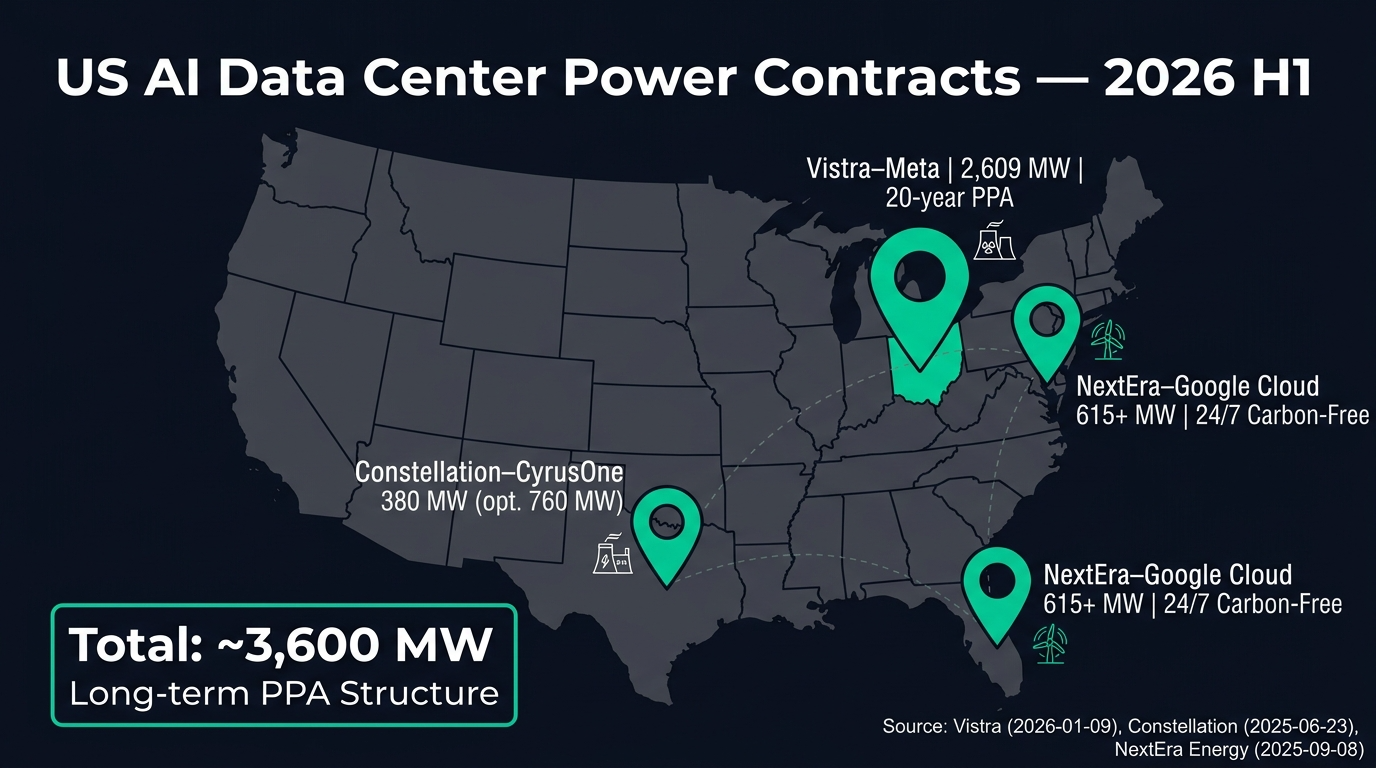
There is a common thread among the major power contracts signed in the U.S. during the first half of this year. These include the Vistra-Meta 2,609 MW 20-year PPA (2026-01-09), Constellation-CyrusOne 380 MW (2026-02-09), and NextEra-Google Cloud 615 MW+ (late 2025, in progress). All three contracts are nuclear-based.
Why nuclear power? It is due to the stability of electricity unit prices. Natural gas prices fluctuate. Renewable energy is intermittent. Nuclear power has fuel costs accounting for only 10–15% of total generation costs, and its output is stable. The fact that Big Tech firms are signing 20-year long-term contracts with nuclear power plants signals that what is required in this layer is not just simple electricity, but “predictable energy.” Regardless of how energy prices move, the contract terms will not change for 20 years.
| contract | Date of signing | scale | period | Key Points |
|---|---|---|---|---|
| Vistra–Meta PPA | 2026-01-09 | 2,609 MW | 20 years | Davis-Besse + Perry nuclear power plant in Ohio. Supply to begin in late 2026–2027. Long-term contracts lock in revenue regardless of changes in the financing environment. |
| Constellation–CyrusOne | 2026-02-09 | 380 MW (Option 760 MW) | long time | Texas Freestone Energy Center. Nuclear-based zero-carbon power. CEG 2026 EPS guidance $11–$12. |
| NextEra–Google Cloud | late 2025 (In progress) | 615 MW+ | long time | 24/7 Carbon-Free Power Supply. A Reference Case for Mixed Procurement of Renewable Energy and Nuclear Power for AI Power Demand. |
Domestic figures followed the same trend. The combined order backlog of LS Electric, Hyosung Heavy Industries, and HD Hyundai Electric exceeded 30 trillion won (as of May 2026). The key factor is securing orders for ultra-high voltage transformers for North American data centers. Power grid bottlenecks are directly impacting the performance of domestic companies. Looking at the order backlogs of these three companies, their earnings for 2027 are essentially secured.
3The more expensive electricity is, the more important cooling becomes
From an energy efficiency perspective, the importance of cooling infrastructure is viewed differently. Cooling accounts for 30–40% of a data center's total power consumption. When electricity unit prices rise, this is the first area where operators feel pressure. A 1% increase in cooling efficiency directly reduces electricity costs by that amount. This means that the higher the electricity price, the greater the incentive to invest in cooling equipment.
Vertiv’s Q1 earnings, announced on April 28, 2026, demonstrated this trend in numbers. Revenue was $2.65 billion , up 23% YoY. Looking at the Americas alone, it was up 44% . The company raised its annual revenue guidance to $13.75 billion–$14 billion , and its EPS guidance of $6.35 is up 51% year-over-year.
Around the same time, the acquisition of Strategic Thermal Labs was announced. The purpose is to strengthen liquid cooling capabilities for high-density AI chips. In an environment where power density per rack rises to 500kW, air cooling alone has its limitations. The background of this acquisition is the forecast that liquid cooling will become the standard option in hyperscale data centers by 2026–2028.
Rising energy prices → increased demand for cooling efficiency → accelerated transition to liquid cooling. This trend has grown Vertiv 's order backlog to approximately $15 billion, equivalent to about one year's worth of revenue. Personally, I find it interesting that this causal chain is being reflected in earnings faster than expected.
4If interest rates fall, this asset rises
Data center REITs underperformed last year at -1.6%, despite the boom in AI infrastructure investment. There was only one reason: interest rates.
REITs are structurally sensitive to interest rates because their dividend yields compete with bond yields. When interest rates are high, funds flow into bonds, pushing REITs down. The sluggish performance in 2025 accurately reflected this. However, with the entry into a rate cut cycle in 2026, this layer has entered a phase of structural rebound. Equinix (EQIX) is up 52% in 52 weeks, Digital Realty (DLR) is up 27% year-to-date, and the entire sector is up 22% year-to-date (as of May 9, 2026). With market share exceeding 95%, there are virtually no vacancies left.
The nature of physical assets acts as an additional safety net in an inflationary environment. Buildings last much longer than GPUs. Even if the valuation of AI applications is cut in half, the building housing those servers remains standing. The nature of this layer is that it is the asset that holds out until the very end in a worst-case scenario where a financing bubble strikes the application layer. When the dot-com bubble burst in 1999, electric companies did not go bankrupt. This time, too, the buildings will remain intact.
Domestic investors can access the stock directly through their domestic accounts via the RISE Global Data Center REIT (Synthetic) ETF. Digital Realty's quarterly Core FFO guidance is $8.00–$8.10 (upward revision for Q1 2026), and a construction pipeline of 1.2 GW is in progress.
5 Nuclear Power — The Final Stage of Energy Independence
Revisiting the reason why Vistra and Constellation are nuclear-based from the perspective of energy pricing reveals the underlying structure. The power demand for AI data centers is continuous, operating 24 hours a day. Renewable energy output drops when there is no sun or wind. Gas prices fluctuate. Nuclear power, on the other hand, has fuel costs that account for only 10–15% of total generation costs and offers stable output. It is the most suitable energy source for entering into long-term PPAs.
On May 6, 2026, Terrestrial Energy and Riot Platforms signed an MoU. This is a project to directly deploy a fourth-generation molten salt reactor (IMSR) on-site at a data center. A company that previously operated Bitcoin mining infrastructure has chosen SMRs to power its AI data center . This signals that nuclear power is establishing itself as a practical option for computationally intensive infrastructure.
Once SMR becomes fully operational, AI data centers will be able to become self-sufficient without connecting to the power grid. This will fundamentally resolve the 5 to 7-year delay in obtaining grid permits that currently holds 40 to 50 percent of AI data center projects back. Commercialization is expected as early as 2028 to 2030. Frankly, this is currently in the realm of momentum, not performance. It should be approached with only a minority weighting in the portfolio.
However, domestically, this layer is already moving strongly. Since the beginning of 2026 , TIGER Korea Nuclear Power has risen +138%, SOL Korea Nuclear SMR +116%, and KODEX Nuclear SMR +105% . Domestic ETFs related to nuclear power and SMR have occupied the top ranks in returns. Domestic nuclear power value chains, such as Doosan Enerbility and KEPCO E&C, are also moving in the same trend. Given that momentum is outpacing earnings, entering now is akin to betting on how high this layer will rise.
6Portfolio Allocation — Including Korean Investor Path
There is only one criterion for allocation—which layer absorbs which macroeconomic forces. Weights vary depending on which force—interest rate cuts, energy demand cycles, or an AI token explosion—is most directly connected. The allocation below is based on the 2026 environment where all three forces operate simultaneously. Weights must be adjusted as the macroeconomic environment changes.
| Layer | specific gravity | power of absorption | US Stocks (Direct Investment) | Domestic stocks | Domestic ETFs |
|---|---|---|---|---|---|
| Power supply | 35% | Energy demand cycle | Vistra (VST), Constellation (CEG), NextEra (NEE) | LS Electric, Hyosung Heavy Industries, HD Hyundai Electric | KODEX US AI Power Nuclear Energy Infrastructure, SOL US AI Power Infrastructure, RISE US AI Power Infrastructure |
| Cooling and Power Management | 25% | Energy efficiency demand | Vertiv (VRT), Eaton (ETN), Parker-Hannifin (PH) | — | Partially included in the Power Infrastructure ETF (separate cooling specialist ETF not listed) |
| Data Center REITs | 30% | Interest rate cut + inflation hedge | Equinix (EQIX), Digital Realty (DLR) | — | RISE Global Data Center REIT (Synthetic) |
| SMR · Nuclear Power Plant Options | 10% | Energy independence momentum | Cameco(CCJ), Oklo(OKLO) | Doosan Enerbility, KEPCO Engineering & Construction, KEPCO KPS | TIGER Korea Nuclear Power, SOL Korea Nuclear SMR, KODEX Nuclear SMR |
Domestic investors can choose between direct investment in U.S. stocks and domestic ETFs. There are differences in currency hedging, dividend taxation, and trading convenience. For the cooling and power management layer, since there is no separate pure cooling ETF listed domestically, investors should consider checking holdings within power infrastructure ETFs or directly purchasing Vertiv or Eaton. Regarding the SMR and nuclear power layer, investors must take into account that this weighting (10%) is closer to a momentum bet, given that they are still in the pre-commercialization stage.
7Frequently Asked Questions
| question | answer |
|---|---|
| How long does the period during which the three macro forces operate simultaneously last? | Interest rate cut cycles typically span 12 to 24 months. The energy demand cycle remains structurally valid until 2030 according to IEA forecasts. The explosion in AI token consumption depends on the speed of agent diffusion . The period during which these three forces operate simultaneously lasts for at most two to three years. Building and adjusting positions within this timeframe is a realistic approach. |
| If the AI financing bubble bursts, won't these layers drop out along with it? | They will take a hit, but the order and magnitude differ. The impact spreads in the order of AI applications → hyperscaler CapEx cuts → semiconductors → power, cooling, and REITs. Power, cooling, and REITs are the last to be hit, and the impact is the smallest. This is because long-term PPAs and physical asset structures create a buffer. Even during the collapse of the dot-com bubble in 2001, the infrastructure layer only experienced a correction 24 to 30 months later. |
| There are several domestic power infrastructure ETFs; how do I choose one? | KODEX US AI Power Nuclear Energy Infrastructure, SOL US AI Power Infrastructure, and RISE US AI Power Infrastructure all track US AI power infrastructure, but they differ in their underlying indices and the weighting of their constituent stocks. It is advisable to first check whether the weighting is high for cooling or nuclear power. If you wish to focus on Korea's "power trio" (LS Electric, Hyosung Heavy Industries, and HD Hyundai Electric), an approach using individual stocks is more direct. |
| The returns on Nuclear Power and SMR ETFs have already exceeded 100%. Is it okay to invest now? | Momentum is outpacing earnings. Entering this layer now is a bet on expectations of commercialization and the narrative of energy independence. It is reasonable to limit this to within 5–10% of the portfolio until the first instance of commercial SMR operation emerges. The principle is a staggered approach rather than investing all at once. |
| Aren't data center REITs subject to significant exchange rate risk? | Direct investment in EQIX and DLR as U.S. stocks results in dollar exposure. Although the RISE Global Data Center REIT (Synthetic) ETF is traded in Korean Won through domestic accounts, its underlying assets are denominated in US dollars. Therefore, it is necessary to verify whether currency hedging is in place. In a strong dollar environment, additional exchange rate gains may be generated, while in a strong won environment, exchange rate losses may occur. From a macroeconomic perspective, it should also be considered that interest rate cut cycles typically accompany a weak dollar. |
Conclusion — The intersection has already appeared
I wrote that viewing AI infrastructure solely within the context of AI is only half the picture. The whole picture comes from the macro.
As interest rates fall, the infrastructure sector based on real assets is reviving. As energy demand explodes, the bargaining power of power sellers is shifting. With the structural expansion of AI token consumption, the usage ceiling for all of this infrastructure is disappearing. It is rare for three forces to simultaneously point to the same intersection.
Perhaps the market is currently in the process of re-evaluating AI infrastructure not as a mere theme, but as a complex asset where energy, interest rates, and growth overlap. Domestic nuclear power ETFs are dominating the top ranks of returns, U.S. power companies are signing 20-year long-term contracts with Big Tech firms, and REITs hold rental negotiation power with a 95% market share. These signals emerged simultaneously.
However, this is still strictly a hypothesis. It is up to the market to decide how long these three forces will operate simultaneously and how the macro environment will change. I wanted to confirm just one thing—that even for the same "AI-related investment," the direction can vary completely depending on which macro force it is connected to. If you re-examine your portfolio based on that standard, your perspective may change.
All content in this article is for informational purposes only and does not constitute investment advice. The figures presented are based on data from their respective sources and may differ from actual figures. Portfolio allocation weights are reference examples that do not take into account the specific circumstances of any investor. All investments carry the risk of principal loss, and you bear the responsibility for your investment decisions. We recommend consulting with a professional financial advisor before making any important decisions.
📌 Was this analysis helpful?
In the next post, we will cover “Performance Inflection Points by AI Infrastructure Layer — How to Adjust Your Portfolio When Macro Signals Change.”
We continuously track the intersection of interest rates, energy, and AI demand. Receive notifications so you don't miss out.
How this content was produced
Aleph's research AI agent assisted with collecting and analyzing public data, creating charts and visuals, and structuring the draft. Davar personally reviewed and edited the sources, figures, reasoning, and final conclusions.
This content is for informational purposes only and is not personalized investment advice or an individual stock recommendation. Read the full disclaimer

Davar
Davar builds and operates Aleph's research AI agent and writes and reviews analysis on macroeconomic developments and AI industry trends.
© Aleph. All rights reserved.