
Why Are AI Stock Prices Rising While the Economy Is Worsening? — The Connection Between OECD Warnings and the Agent Economy Boom
Stagflation
Agent economy
Korean economy
semiconductor
macroeconomic
AI investment
2026.06.04
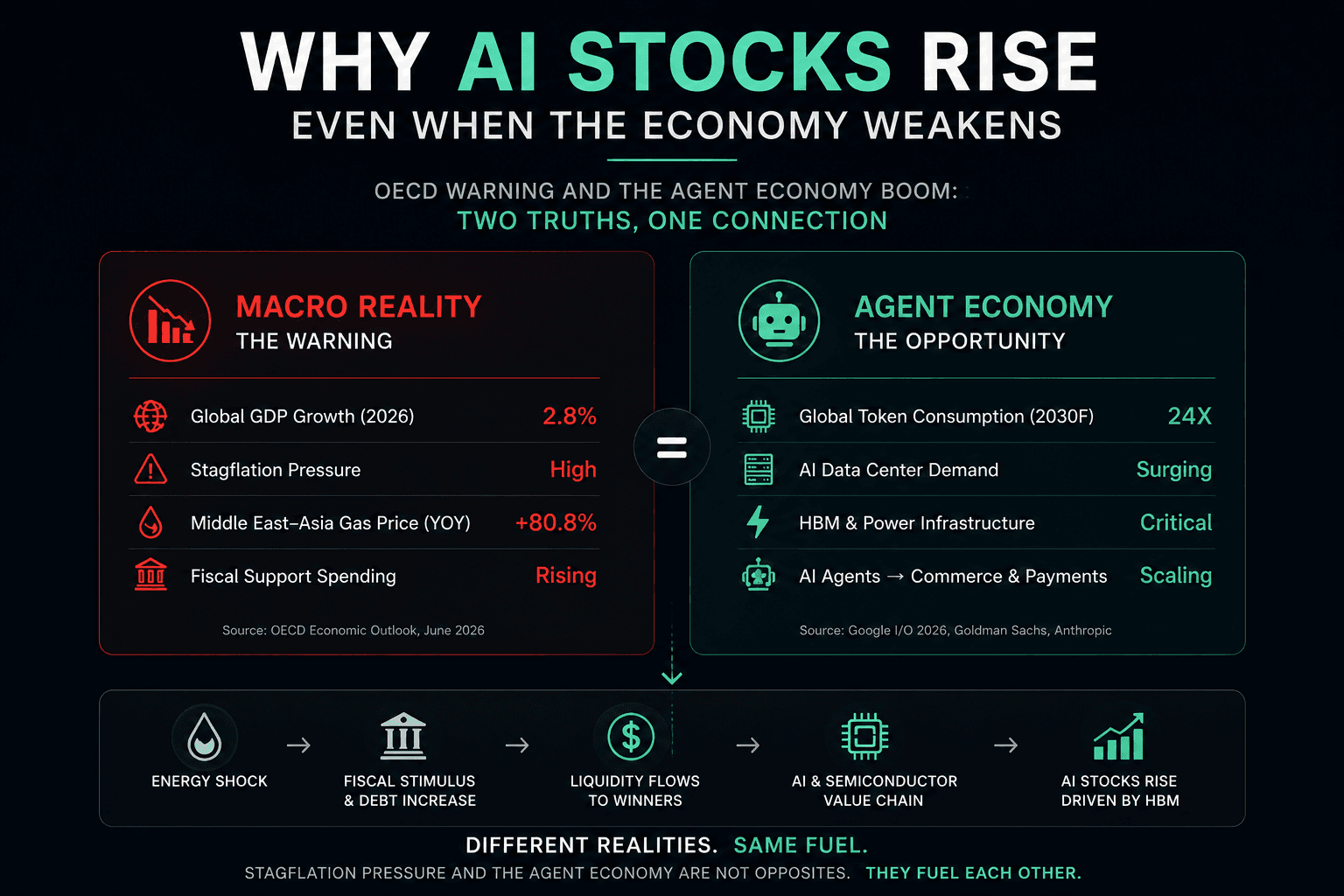
The OECD is concerned about the economy. AI stocks are nearing all-time highs. Is one of them wrong? No, they are not. During an economic crisis, fiscal spending is released, and that money flows into places generating profits, and those places generating profits are AI infrastructure. This is why the OECD's warning and the blueprint presented at Google I/O are not conflicting narratives.
1OECD’s Warning — Global Growth Drops to 2.8%
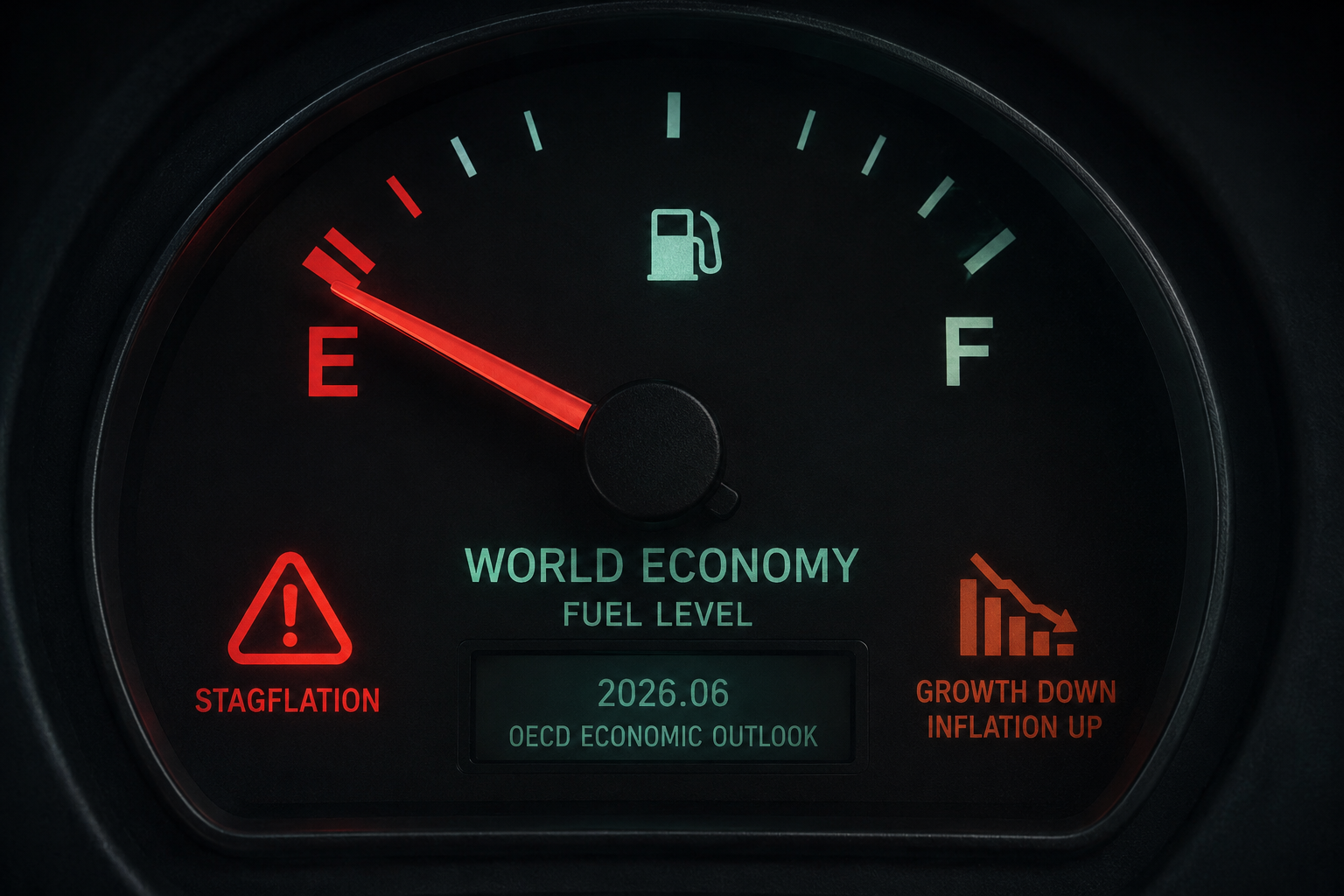
The core message of the economic outlook report published by the OECD in June was singular: stagflationary pressures . Downward growth and upward price growth—it is the trickiest combination to deal with.
Looking at the figures first, the OECD projected global GDP growth at 2.8% in 2026. Prior to the outbreak of the Middle East war this past March, the forecast was 3.2%. The full details of the energy shock at the time and the direction of portfolio response were summarized in "The Three-Tiered Portfolio Defense Strategy in the Era of Oil Shock ." While 0.4 percentage points have vanished, this is not a small figure when considering the magnitude of this loss relative to the scale of global GDP. If the economy fails to maintain a growth rate in the 3% range, the overall sentiment of the global economy will change noticeably.
What is more noteworthy is the direction. Last April, the IMF forecasted the entrenchment of low growth falling below the long-term average, and the OECD points in the same direction this time. Both diagnose that the economy will not be able to return to the long-term average growth rate of 3.7%. If the IMF and the OECD speak with one voice about the entrenchment of low growth, this is a shift in policy rather than short-term noise.
However, this forecast is based on one premise: the assumption that the war will be brought to a limited conclusion within June or July. If the war drags on like the Russian War, even this forecast will be broken. In that case, the OECD’s warning scenario is that downward pressure on the economy will intensify further in the fourth quarter of 2026 and the first quarter of 2027, compounded by the effects of interest rate hikes.
2Why Stagflation? — Gulf States Hold the Switch on Global Prices
One must always be careful when using the word "stagflation." The OECD's expression is that stagflationary pressures are at play , not that stagflation is coming. This difference is important. We are currently still in the pressure stage.
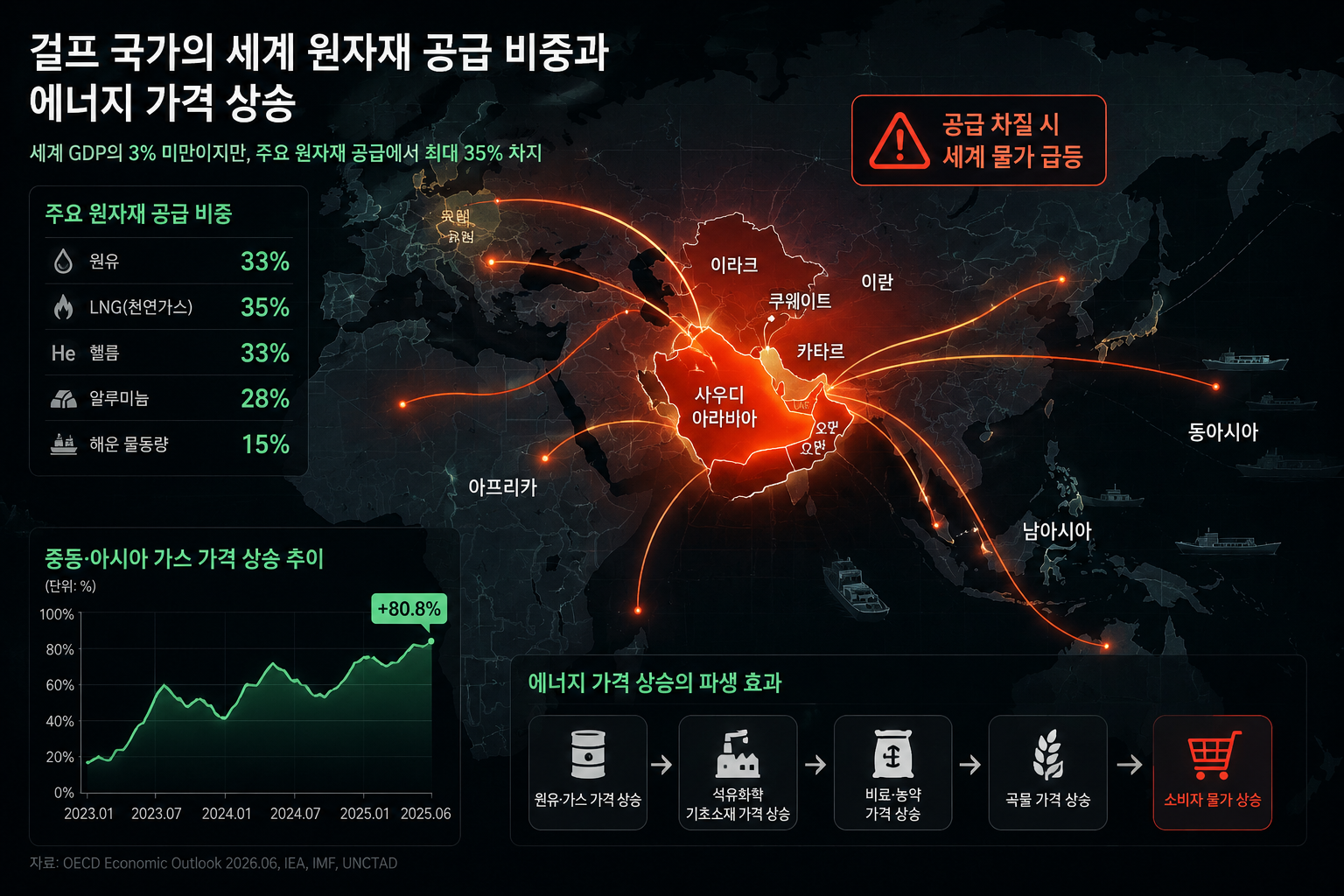
To understand why that pressure is coming, one must look at the Gulf states. The Persian Gulf states account for less than 3% of global GDP. Their population is also less than 3%. However, their share in the supply of raw materials is a completely different story. These countries account for as much as 35% of major commodities such as LNG, crude oil, helium, and aluminum. They also handle about 15% of global shipping volume.
The continuation of war in that region drives up prices through two channels: disruptions in raw material supply and shocks to logistics and supply chains. When energy prices rise, there are many consequences. The prices of materials like naphtha, polyethylene, and polypropylene increase, fertilizers rise, pesticides rise, and eventually, grain prices rise as well. This is why the fact that gas prices in the Middle East and Asia have already surged by 80.8% is not merely an energy issue. This energy shock travels up the entire supply chain, pushing up prices.
How are major countries around the world responding? They are injecting massive fiscal resources. Fiscal spending for energy stability—so-called energy support costs—has increased noticeably in countries such as France, South Korea, the Netherlands, and Spain. Furthermore, this fiscal injection increases national debt. As debt rises, the ability to respond to the next crisis weakens. This is precisely the background behind the OECD's repeated warnings regarding fiscal soundness.
3Where Does the Money Flow If Finances Are Released?
This is where many investors get confused. The OECD is warning of stagflation, so why do stock prices continue to rise? This question might actually be the most important part of this entire article.
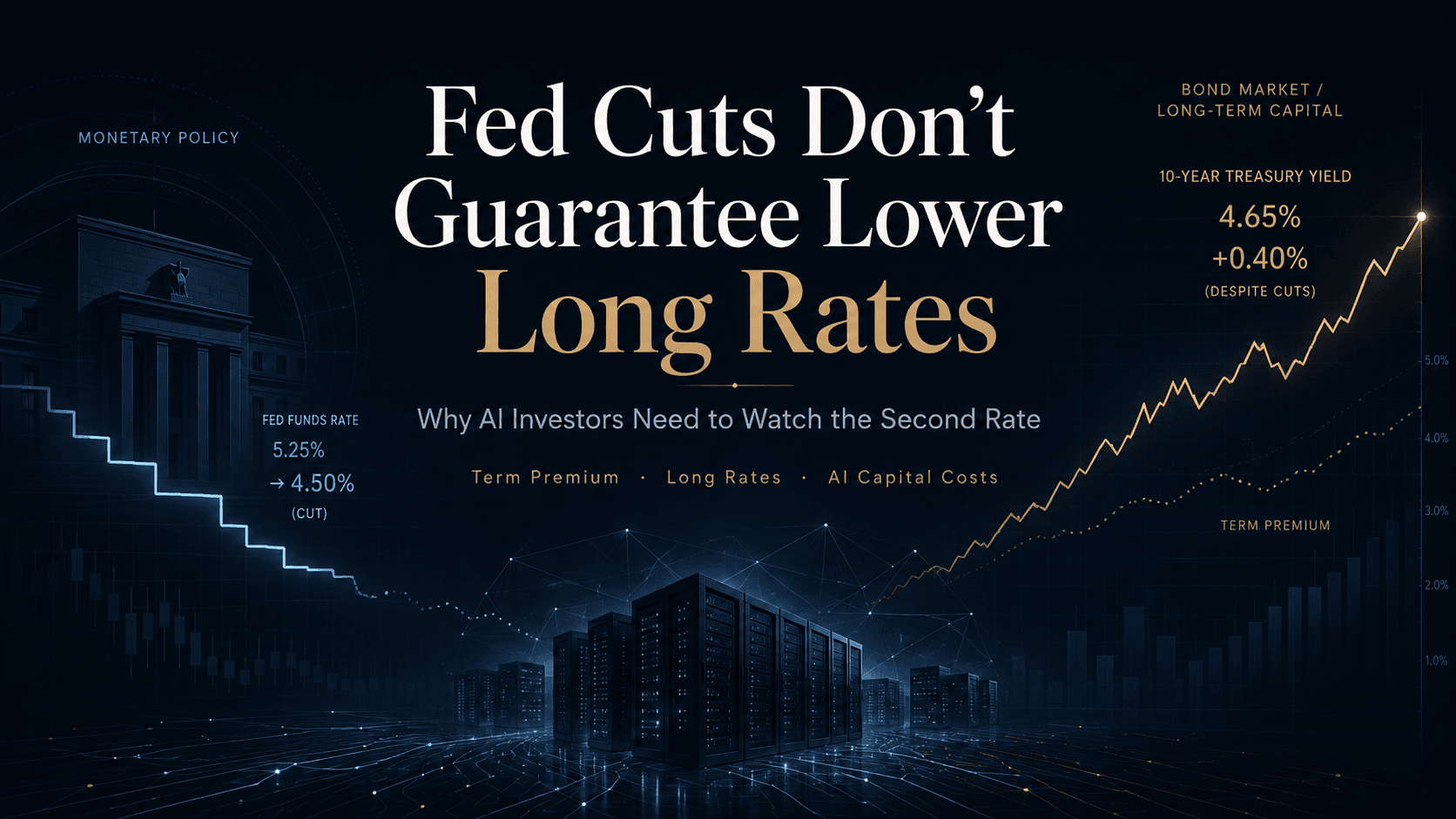
If we trace the market trend back, the market hit a bottom in late March of this year. That was a time when expectations for interest rate cuts had cooled, and caution regarding rate hikes had reached its peak. What happened after that is crucial. Fiscal injections by countries to support energy began in earnest. This involves financing energy stability costs by issuing government bonds. In this process, government bond yields rise. However, strangely enough, stock prices rose along with them. What is the reason for this?
In an environment where government bond yields are rising, gold, Bitcoin, and emerging market assets lose favor. Where should that capital go? Ultimately, it flows to where earnings are being generated. That sector is semiconductors and AI. As examined in the previous article, "Google I/O 2026 — Agents Handle Payments," agent platforms from Anthropic , Google, and OpenAI are generating results, and there are expectations that they will continue to do so. As the places where money can go shrink, this concentration intensifies. This is the reason why the liquidity generated by fiscal stimulus is flowing into the AI and semiconductor value chains.
This is why the simultaneous occurrence of the OECD's warning and rising stock prices appears contradictory. People are worried about the economy, while the market is watching where the money released during the economic crisis is flowing. They are looking at different questions.
4 Korea's GDP 2.6% — What the Numbers Are Hiding
The OECD has significantly raised its forecast for South Korea's economic growth rate from 1.7% to 2.6% . While global growth is declining, only South Korea's has risen. Is this a good sign? Honestly, we need to look at both sides.
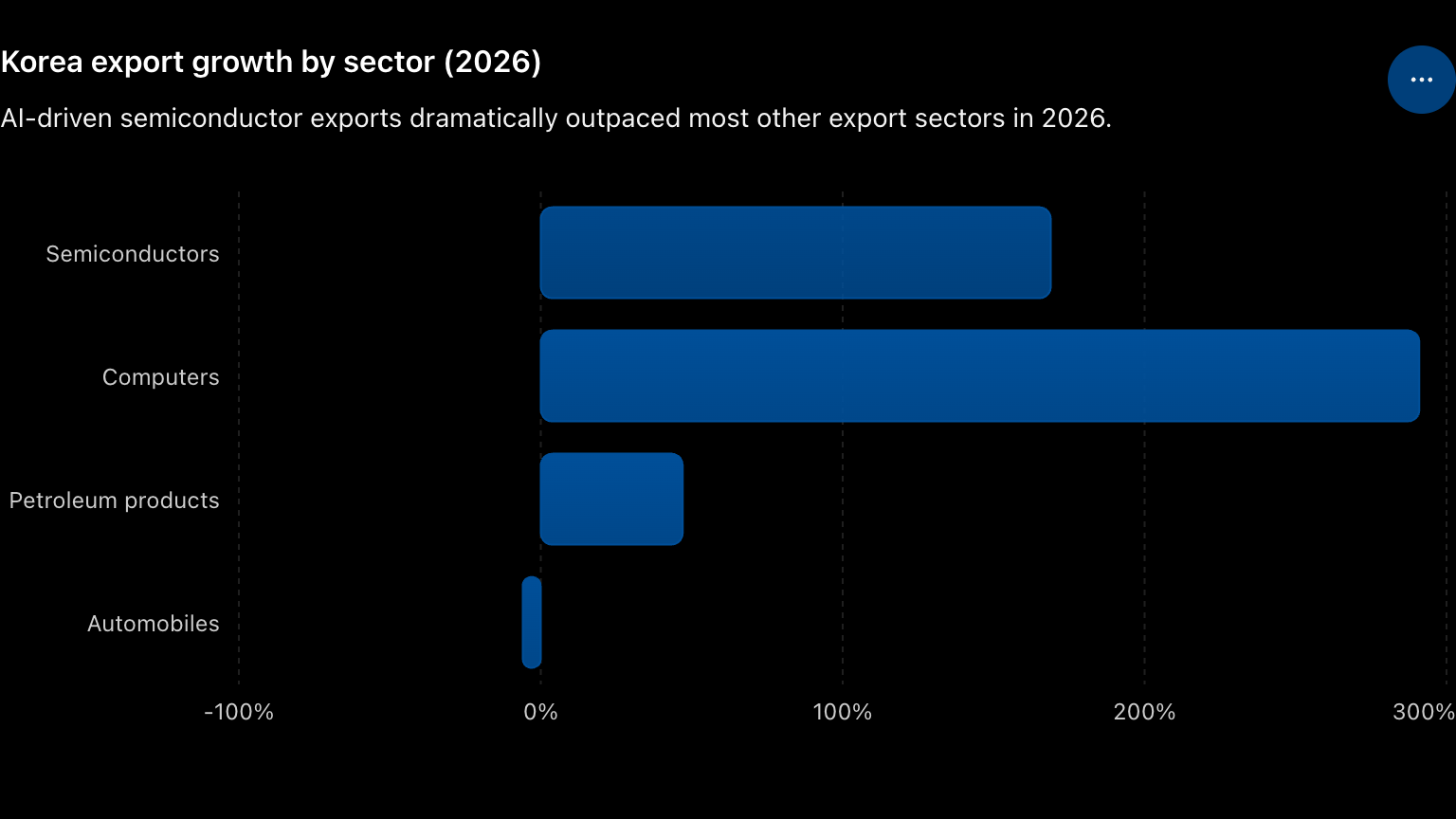
There is only one reason for the upward revision: semiconductors. As of the first quarter of 2026, the share of semiconductor exports in total exports has risen to 36.1% . This is a significant jump from the previous average of 24.4%. Moreover, this is not due to an increase in export volume, but rather to a surge in prices . Demand for HBM is driving up prices in tandem with the expansion of AI agent infrastructure.
However, is it appropriate to pop the champagne with this report card? The answer is no. Out of the total 28.5 million employed people, fewer than 300,000 work for Samsung Electronics and SK Hynix . Are the remaining 28 million people actually feeling the effects of this export boom? Excluding semiconductors, the performance of other items is negligible. Imagine a relay race with 10 runners, but with one being an elite sprinter. The team's average record is spectacular, but it doesn't mean the other nine have gotten faster. That is the structure of Korea's current growth rate figures.
What is even more unfortunate is the outlook for 2027. Since semiconductor export prices surged in 2026, a reverse base effect will come into play in 2027. If prices peak and stabilize or fall even slightly, the growth rate for the first half of 2027 will appear significantly poor. The OECD also actually lowered its forecast for Korea in 2027 from 2.1% to 1.9%. Just as things looked good in 2026, headwinds are coming in 2027.
So, the real question we need to look at regarding the Korean economy right now is this: Are industries other than semiconductors recovering? Is the economy improving for the 28 million jobs held? This is the area where we need to be more cautious when macroeconomic indicators look rosy.
5 The point where the agent economy and stagflation meet
So far, we have examined two worlds separately: the world of stagflationary pressures warned by the OECD, and the world of the agent economy designed by Google I/O 2026. However, these two worlds actually have an intersection point.
The physical foundation of the agent economy is data centers and semiconductors. As confirmed in the previous article , Anthropic separating chat and agent fees into distinct categories signifies that the token consumption generated by agents is on a completely different scale from that of chat. As Jensen Huang personally explained on the All-in podcast immediately after GTC , an engineer who does not use a token budget in the agent era is like a designer who does not use CAD. Goldman Sachs forecasts that global token consumption will reach 24 times its current level by 2030. What is required to process that 24-fold increase in tokens is HBM, data centers, and power grids. This is the background behind the structural growth of South Korea's semiconductor exports.
However, a paradox arises here. The infrastructure required by the agent economy consumes massive amounts of electricity. Of course, the power demand of AI data centers alone does not determine global energy prices. However, in an environment where energy supply is already tight, stabilizing energy prices becomes all the more difficult as new demand is added. This is why the agent economy and energy inflation are not entirely unrelated.
What does this intersection signify from an investment perspective? The structural benefit of the infrastructure layer is that it is relatively independent of the macroeconomic environment . Even if stagflationary pressures intensify, the use of AI agents does not decrease. On the contrary, the demand for AI optimization to reduce energy costs may increase. Conversely, ad-dependent platforms face double pressure in a stagflationary environment. As real consumption contracts, advertising budgets decrease, while simultaneously, a structure in which agents skip ads becomes entrenched.
Ultimately, there are two key axes to consider when reviewing a portfolio in the current macroeconomic environment. One is the extent of exposure to stagflationary pressures. The other is whether the company is in a position to benefit from or face headwinds in the transition to an agent economy. When these two axes are considered together, the directions of even "AI-related stocks" diverge completely.
6Frequently Asked Questions
| question | answer |
|---|---|
| The OECD is warning of stagflation; is it okay to keep holding stocks? | What the OECD refers to is a forecast for the real economy. It differs from the capital market in terms of time lag and mechanism. As stagflationary pressure intensifies, fiscal injections may increase, leading to a continued flow of funds into profitable assets. However, if the war scenario becomes prolonged, pressure for interest rate hikes will strengthen, potentially triggering a correction in the capital market as well. This is a critical time for selective investment based on profit structures. |
| How should I view Korean semiconductor stocks (Samsung Electronics and SK Hynix) right now? | The demand for agent economy infrastructure is structurally on the rise. The demand for HBM increases as long-text inference work becomes more prevalent. However, in the short term, there is a reverse base effect in '27 following the price surge in '26. While long-term structural benefits remain valid, an approach that diversifies short-term price correction risks is reasonable. |
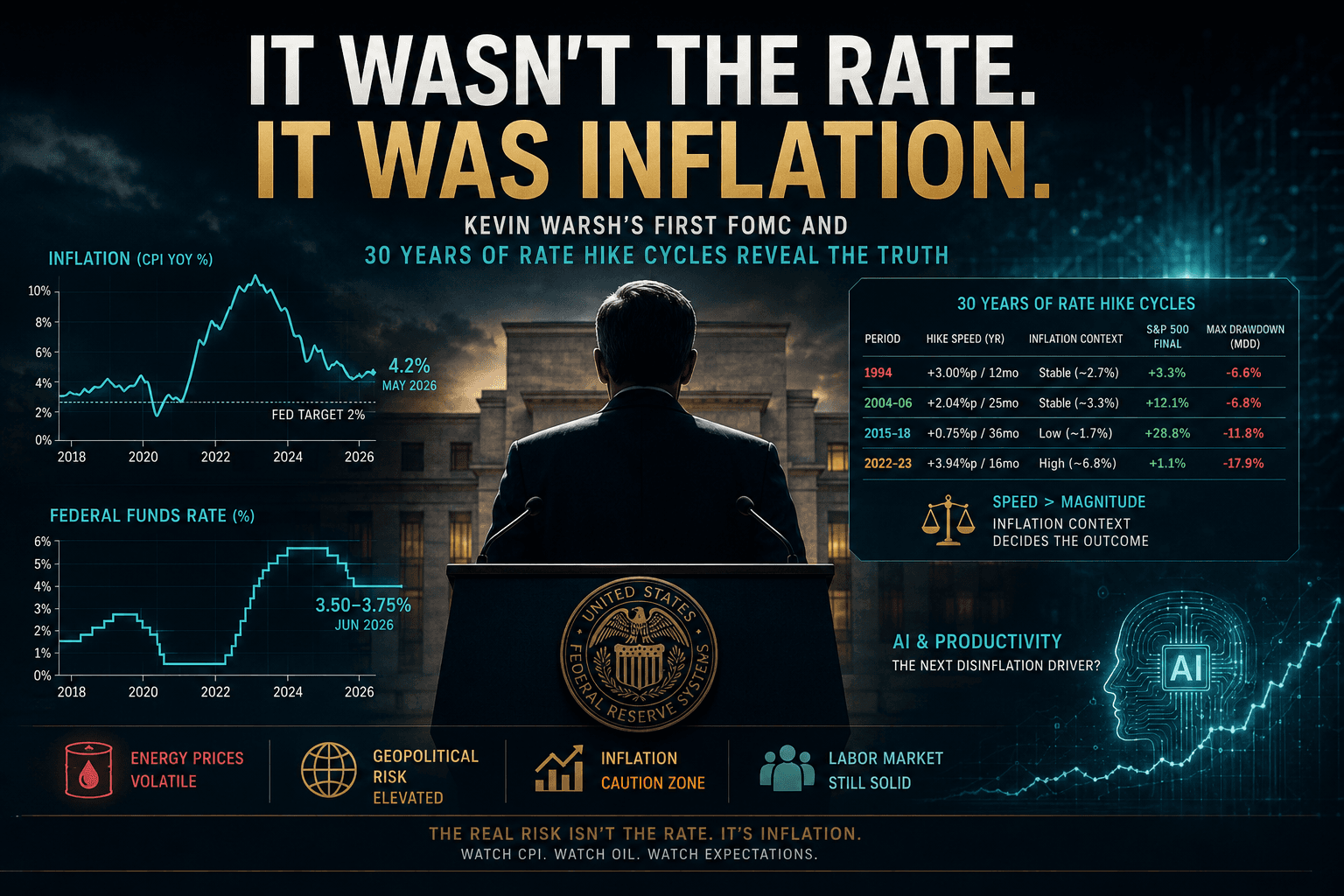
| What do you think will happen to interest rates? Is there a possibility of another hike? | Based on OECD forecasts, Japan (currently 0.75%) has the potential to raise its rate to 2% within the year, and the Eurozone (currently 2%) is also expected to raise it once. The U.S. is likely to freeze its rate at 3.75% under a scenario of a limited, prolonged war. However, if the war is prolonged and inflationary pressures intensify, the possibility of a rate hike opens up for the U.S. as well. It is advisable to factor this variable into investment plans for 2027. |
| If an agent economy and stagflation occur simultaneously, which assets are advantageous? | The infrastructure layer directly linked to the proliferation of AI agents (data centers, power grids, and HBM semiconductors) has demand that is relatively independent of the macroeconomic environment. As energy supply costs rise, the demand for energy-efficient AI solutions may also increase. On the other hand, revenue structures dependent on advertising face a double headwind of stagflation and the shift to agents. |
| How should we view Korean platforms (Naver and Kakao) in this environment? | Deconstructing the revenue structure is the first step. Business units with a high proportion of advertising revenue and lack agent API integration face structural pressure because agents do not view ads. Conversely, if revenue is based on transaction fees or if the unit is preparing to adopt standards like UCP or AP2, agents can actually increase transaction volume. It is appropriate to examine the revenue structure at the business unit level rather than the company as a whole. |
| Is it not too late to buy AI-related stocks now? | The choice of layer is a more critical question than timing. Structural demand for the infrastructure layer, the physical foundation of the agent economy, is just beginning. If Goldman Sachs’ forecast of 24x token growth by 2030 materializes, the current price could be at an intermediate point. However, since a short-term correction is possible at any time, dollar-cost averaging is a wise strategy. Rather than buying "all AI-related stocks," it is advisable to select and approach stocks whose revenue structures are directly linked to the demand for AI infrastructure . |
Conclusion — Where Should the Portfolio Stand Amidst Game Warnings
The OECD warns that the global economy is under the pressure of stagflation. Google is designing a world where agents handle even payments. In Korea, a single semiconductor is boosting its economic performance. While these three things may seem like separate stories, they are actually part of a single trend.
The energy crisis triggers fiscal stimulus, that money flows into AI infrastructure, and the HBMs that power that infrastructure boost Korean exports. Everything connects in this sequence. This is why the OECD's warning and the blueprint presented at Google I/O are not separate stories.
So, what will happen going forward? Frankly, it is difficult to speak with confidence because a single variable like war could change everything. If the war ends within June or July, stagflationary pressures will ease rapidly, and concerns about interest rate hikes will diminish. In that scenario, current trends could continue without significant fluctuations. Conversely, if the war drags on like the Russian War, the environment in 2027 will be completely different.
If there is one more criterion to add when evaluating a portfolio right now, it is probably this: Does the company's revenue depend on the perceived economic conditions of the real economy, or on the demand for AI infrastructure? When viewed through that lens, even among the same "Korean AI-related stocks," their directions can be completely different.
There are still many variables. However, identifying now which positions actually benefit structurally when the macroeconomic environment is unfavorable seems to be the most effective task we can undertake right now.
All figures and analyses in this article are for informational purposes only and do not constitute investment advice. OECD economic outlook figures are based on reports published in June 2026 and are subject to update thereafter. All scenarios are subject to change depending on the course of the war in the Middle East. You bear full responsibility for your own investment decisions regarding the companies and stocks mentioned. Consulting with a professional financial advisor before making any important decisions is recommended.
📌 Was this analysis helpful?
In the next post, we plan to cover “Korean Stocks Benefiting from the Agent Economy Amidst Stagflation Pressure — A Guide to Breaking Down Earnings Structures.”
We continue to track investment opportunities where the transition between the macroeconomic and agentic economies meets. Subscribe to notifications so you don't miss out.
How this content was produced
Aleph's research AI agent assisted with collecting and analyzing public data, creating charts and visuals, and structuring the draft. Davar personally reviewed and edited the sources, figures, reasoning, and final conclusions.
This content is for informational purposes only and is not personalized investment advice or an individual stock recommendation. Read the full disclaimer

Davar
Davar builds and operates Aleph's research AI agent and writes and reviews analysis on macroeconomic developments and AI industry trends.
© Aleph. All rights reserved.