
World Economic Outlook
Economic shock from the Middle East war
Increase in defense spending
Korean Investor Strategy
2026.04.14
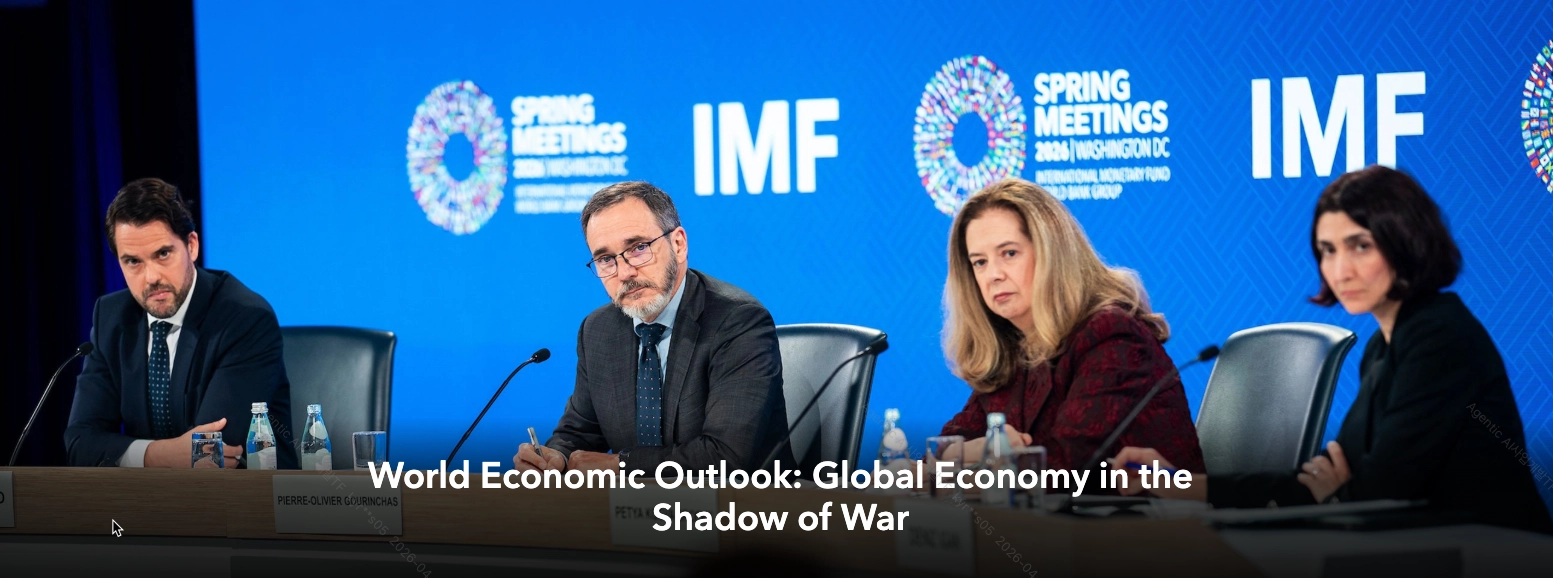
The IMF has attached an unusual subtitle to its April 2026 World Economic Outlook (WEO): “Global Economy in the Shadow of War.” The tone is heavier than when the OECD warned a month ago that “growth opportunities have been completely offset.” This IMF report is not merely a collection of growth rate figures. It is a substantial report that analyzes, using 80 years of data, how war devastates the economy, how increased defense spending changes livelihoods, and why recovery remains so slow even after the war ends. While the sheer volume of numbers may make it seem difficult, I will summarize and explain only the essential points that investors need to know.
1OECD Next is the IMF — Two institutions said the same thing with different weight.
When the OECD released its emergency report last month, the key sentence was: “The growth opportunity to raise it to 3.2% has been entirely erased.” If you read that post ( Analysis of the OECD Report → ), the conclusion of this IMF report will not be unfamiliar. The direction is the same. However, the IMF has come forward with much more substantial evidence.
The IMF's reference forecast projects a global growth rate of 3.1% in 2026 , assuming the war ends in a relatively short period. Since 3.4% was possible before the war, this represents a downward revision of 0.3 percentage points . However, the important point is that this figure is based on an 'optimistic scenario.' If the war drags on, the situation changes.
Placing the perspectives of the two institutions side by side reveals the structure. The OECD focused on the “immediate shock,” while the IMF analyzed “how the shock will persist and through what channels.” This is precisely why the IMF report is more useful for investors.
| organ | time of announcement | Global growth rate forecast | Key message |
|---|---|---|---|
| OECD | 2026.03 | 2.9% (offsets upward opportunity) | The opportunity to raise it to 3.2% is “entirely erased” |
| IMF (baseline) | April 2026 | 3.1% | Optimistic scenario assuming a short-term end to the war |
| IMF (Worsening Scenario) | April 2026 | About 2.5% | Oil Prices Surge 80%, Inflation Expectations Rises 50bp |
| IMF (Severe Scenario) | April 2026 | About 2.0% | Oil prices surge 100%, Asian gas up 200%, prolonged |
2 Three Pathways of Intensifying Shocks — Energy, Supply Chains, and Finance
The IMF analyzed three pathways for the transmission of the war's economic shock. The first is rising energy prices, the second is supply chain disruptions, and the third is financial market tightening due to risk-off sentiment.
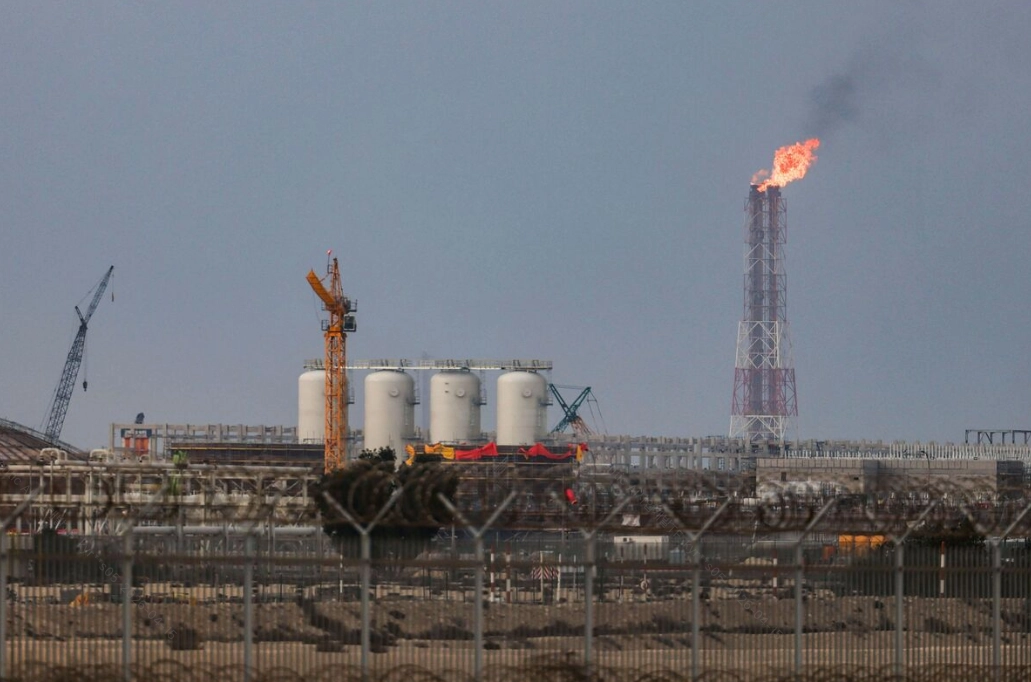
Let's look at the energy sector first. Qatar's Ras Laffan complex is the core site of this shock. It is significant enough that IMF Managing Director Kristalina Georgieva mentioned it personally. This complex produces approximately 93% of the Gulf's LNG, with over 80% of that exported to the Asia-Pacific region. This structure means South Korea, Japan, and Taiwan will bear the brunt of the direct impact. Oil prices are projected to reach $82 per barrel under the baseline, $100 under the aggravated scenario, and as high as $110 under the severe scenario. The impact on natural gas could be even greater than that on oil prices, due to the technical complexity of restarting operations and the relatively small reserves.
Supply chain shocks are manifesting in both shipping and aviation. The IMF has stated that maritime and air traffic in the Strait of Hormuz and surrounding waters is being severely disrupted. A particular problem is that food prices are rising as well. When energy prices rise, fertilizer costs increase, and when transportation costs rise, food prices follow suit. Inflation is not simply a matter of oil prices.
What about the financial markets? The IMF assessed that financial market volatility to date remains “accommodative from a historical perspective.” This means there is risk-off sentiment, but not at the level of a panic. However, emerging economies, particularly those that are energy importers with weak currencies, are taking a much harder hit. If a strong dollar and rising oil prices occur simultaneously, energy costs in domestic currencies could more than double.
3 What Happens If the War Is Prolonged — A Complete Explanation of the 3 IMF Scenarios
In this report, the IMF presented three unprecedented scenarios side by side. The fate of the global economy will change completely depending on “when it ends.” We explain this in a way that even beginners can understand.
| scenario | Prerequisites | Oil price (barrel) | global growth rate | The biggest risk |
|---|---|---|---|---|
| 🟢 Baseline (Reference) | War to end within weeks, normalization by mid-2026 | About $82 | 3.1% | The optimistic assumption itself is a risk |
| 🟡 Worsening (Adverse) | Prolonged war, prolonged infrastructure damage | About $100 | About 2.5% | Renewed Inflation Expectations, Pressure for Another Interest Rate Hike |
| 🔴 Serious (Severe) | War to last through 2026, gas surges 200% | About $110~125 | About 2.0% | Emerging market defaults, global stagflation |
The numbers in the severe scenario are chilling. Oil prices surge by 100% , and gas prices for Europe and Asia rise by 200% . Food prices are assumed to increase by an additional 5% in 2026 and 10% in 2027. Inflation expectations jump by up to 100 basis points in developed countries and up to 130 basis points in emerging markets. Readers who remember the oil shock of the 1970s will likely get the picture.
No one can guarantee which scenario the current situation is closest to. Even the IMF itself has firmly stated that “even the most optimistic scenario entails a downward trend in growth.”
4Will Increasing Defense Spending Improve the Economy? — IMF Chapter 2 Complete Explanation
The answer to the question of whether increasing defense spending is good or bad for the economy is that it is “slightly good in the short term and quite bad in the medium term.” This is the conclusion reached by the IMF after analyzing data from 164 countries since 1946. Knowing this gives a different perspective on the current debate surrounding South Korea’s defense budget.
According to the IMF, in a typical defense spending boom, defense expenditures increase by an average of 2.7 percentage points of GDP and last for an average of over 2.5 years . Approximately two-thirds of this additional spending is funded by an expansion of the fiscal deficit . In other words, instead of collecting more taxes or cutting other expenditures, the government simply takes on debt.
In the short term, there is clearly an economic stimulus effect. Orders for defense-related companies increase, soldiers' salaries lead to consumption, and the production of military equipment boosts manufacturing capacity utilization. The IMF estimates that the defense spending multiplier is approximately 1 on average. This means that spending 1 trillion won increases GDP by about 1 trillion won.
However, the medium term is the problem. As debt accumulates, it crowds out private investment. When the government raises funds by selling government bonds, interest rates rise, making it difficult for companies to borrow money for investment. A more serious issue is that welfare spending is cut . With the total fiscal pie fixed, it is a matter of arithmetic that increasing defense spending leads to reductions in education, healthcare, and the social safety net. This effect is even more pronounced in a wartime situation.
Short-term positive effects — stimulating demand
Increased demand for military equipment and personnel leads to expanded orders in related industries. This results in higher revenue for defense companies, increased military-related employment, and positive effects on infrastructure investment. With a multiplier of approximately 1, it generates a GDP effect equivalent to the scale of the expenditure.
Medium-term negative effects — fiscal deterioration
Average fiscal deficit widens by 2.6 percentage points, national debt increases by 7 percentage points. Private investment contracts due to rising interest rates. Budgets for education, healthcare, and welfare are eroded. In wartime, debt surges by 14 percentage points, and real welfare benefits decrease.
Conditional Affirmation — Long-term R&D Investment
Converting defense R&D into civilian technology can improve long-term productivity. This is supported by the historical fact that the Internet, GPS, and semiconductors originated from military research. However, this effect is minimal if the focus remains on weapons procurement.
This analysis is particularly important given that NATO has set a defense spending target of 5% of GDP by 2035. South Korea is no exception. The economic impact varies completely depending on how defense spending is utilized (weapons imports vs. domestic R&D) and how it is financed (tax increases vs. deficit financing).
5Why Does the Economy Recover Slowly Even After a War Ends?
The core message of Chapter 3 of the IMF is this: “The damage from war is greater than that of financial crises or natural disasters, and recovery is much slower.” To reach this conclusion, they conducted a comprehensive analysis of global conflict data since World War II.
The average GDP of a war-affected country suffers a cumulative 7% loss over the five years following the start of the conflict. This loss is greater than that of a financial crisis or a major natural disaster. Moreover, in many cases, it does not fully recover even after ten years. Why is this the case? It is because capital (factories, roads, and schools) is destroyed, skilled workers die or evacuate, and institutions and the legal order collapse. These things cannot be restored quickly simply by having money.
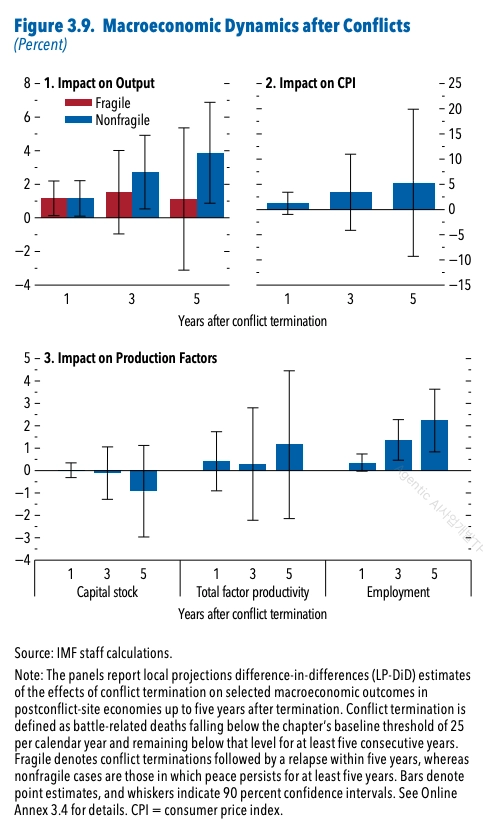
The recovery, however minimal, is primarily due to the return of the workforce . GDP rebounds as refugees return and the unemployed find employment. On the other hand, capital accumulation and productivity remain sluggish for a long time. This is because it takes time for companies to gain confidence in whether they should invest in this country again.
The most decisive factor determining the speed of recovery is the sustainability of peace . If war ends only to resurface, an economy that was just beginning to recover collapses again. According to IMF data, the recovery trajectories differ completely between cases where "peace lasts for more than five years" and cases where "war resurfaces within five years." The former recovers, albeit gradually, while the latter barely recovers.
6What Korean Investors Should Pay Attention To
What position does Korea stand in amidst this shock? As analyzed in the OECD report at the time, Korea has a high dependence on energy imports, a large manufacturing sector, and an export-oriented economy. According to the IMF's analytical framework, it falls into the category of a typical "vulnerable energy importing country."
However, it is worth noting that the IMF maintained Korea's growth rate at 1.9% . Why did it not decrease, given the clear adverse effects of the war? The IMF's assessment is that this was due to the government's compilation of a supplementary budget . It implies that the government actively released fiscal funds to offset the growth shock caused by the war. This means that fiscal policy played a significant buffering role, and as long as this structure is maintained, the picture emerges that the Korean economy is holding up relatively well compared to other major energy importing countries.
| nation | IMF 2026 Growth Rate | note |
|---|---|---|
| USA | 2.3% | Slightly lowered from the existing 2.4%, fiscal capacity exists |
| china | 4.4% | End of the high-growth era, structural slowdown in progress |
| korea | 1.9% | Supplementary budget offsets war shock — relatively strong performance |
| Eurozone | 1.1% | Sharply lowered from the previous 1.4%, energy and manufacturing sectors hit hard |
However, they are not merely playing the role of victims. The IMF has explicitly stated that exports of semiconductor and AI-related technologies are a key driving force supporting the Asian economy. The structure in which South Korean companies SK Hynix and Samsung Electronics benefit from increased demand for HBMs remains intact. Defense exports are also a variable to watch. If NATO’s 5% defense spending target is realized, global demand for weapons will explode, and South Korean defense companies that have already built a track record of exports could benefit.
| area | Implications of IMF Analysis | Korean Investment Perspective |
|---|---|---|
| Rising energy costs | Downward pressure on growth rates of energy-importing countries, rising inflation | Rising Manufacturing Costs, Increased Utility Expenses — Focus on Energy Efficiency Companies |
| Semiconductor and AI exports | Technology-related exports are the pillar of the Asian economy | Structural Continued Increase in Demand for HBM and AI Semiconductors — SK Hynix a Key Beneficiary |
| Increase in defense spending | NATO 5% Target, Global Defense Demand Surges | Export defense companies such as Hanwha Aerospace and LIG Nex1 to benefit in the mid-to-long term |
| Risk of prolonged war | 5-Year Cumulative GDP -7%, Prolonged Capital and Productivity Slump | Construction and plant companies with significant Middle East exposure need to assess risks |
| Strong dollar | Safe-haven preference, dollar reaffirmed | Increased volatility in the KRW/USD exchange rate — Short-term favorable for export companies but burden on import costs |
8 Low growth does not necessarily mean stock prices will fall.
Many people get confused at this point. Since the IMF has lowered its growth forecast, shouldn't we sell our stocks now? The real economy and the capital market move differently. Historically, there are many instances where stock prices rose even in years of low GDP growth. Conversely, there are also cases where stock prices fell when the growth rate was high.
As a war drags on, an interesting phenomenon emerges in the market. Initially, there is a sharp decline driven by fear, but as the conflict drags on, the market becomes accustomed to that fear. Known risks are priced in, and barring a new shock, the momentum for further declines diminishes. Furthermore, if governments supply liquidity to stimulate the economy, the capital market can react in a different direction, even if the real economy remains weak.
Real Economy — Slow, Long-Lasting
According to IMF forecasts, global growth will slow by 2026, and there is a risk of further downside as the war drags on. Small and medium-sized enterprises in energy-importing countries, companies exposed to the Middle East, and consumption-sensitive sectors will feel direct pressure on the real economy. Recovery is also slow.
Capital Markets — The Speed of Getting Used to Fear
If the war is prolonged, liquidity could actually support the market once the initial shock is absorbed. Expectations of interest rate cuts, fiscal stimulus, and benefits for the defense and energy sectors could drive the market in a direction different from the overall index. The equation “bad macroeconomics = bad stock prices” is dangerous.
Conclusion — Must be viewed at the sector and individual stock level
Even in a low-growth environment, there are sectors that benefit. The defense industry, energy production (based on importing countries), dollar assets, and AI and semiconductor export companies are relatively advantageous in this environment. This is a time when sector rotation and individual stock selection are more important than the overall index.
9Frequently Asked Questions
| question | answer |
|---|---|
| What is the IMF WEO? Why is it important? | This is the World Economic Outlook report released by the International Monetary Fund (IMF) every April and October. It forecasts growth rates, prices, fiscal policy, and trade by analyzing data from over 190 member countries. It is effectively the 'report card' of the global economy, used by central banks and finance ministries of various countries as a reference for policy decisions. |
| The baseline scenario is 3.1%; is this good or bad? | Looking solely at the numbers, it doesn't seem bad, but context is important. Had there been no war, 3.4% would have been possible, and even this 3.1% is based on the optimistic assumption that the war ends quickly. Under worsening or severe scenarios, it drops further. It is also a low level compared to OECD standards. |
| Do stock prices rise if defense spending is increased? | In the short term, it is positive for the stock prices of defense companies. Increased orders and expanded revenue are directly linked. However, as analyzed by the IMF, medium-term burdens are accumulating on the overall economy. The defense sector and the overall market index may move in different directions. |
| Will the market recover quickly once the war ends? | According to IMF analysis, whether peace is sustained is more important than the end of the war itself. A gradual recovery is possible when peace is maintained for more than five years without recurrence. While the market reacts faster than the real economy, the scars on the real economy (capital destruction and declining productivity) linger for a long time. |
| Which should we trust more, the recent IMF report or the OECD report? | Both are reliable, but they serve different purposes. The OECD is useful for quickly assessing the magnitude of current shocks, while the IMF provides deeper analysis for understanding the structural causes and medium-to-long-term trajectories of such shocks. It is advisable to consult both institutions when making investment decisions. |
Conclusion — The “shadow of war” lingers longer than expected.
The latest IMF report can be summarized in a single line: Wars start quickly, but their economic wounds heal slowly. Even if the war ends quickly as predicted by the baseline, global growth rates will decline, energy prices will rise, and national finances will deteriorate. If the severe scenario becomes reality, a phase of structural stagflation similar to that of the 1970s could emerge.
The IMF paints a bleaker picture than when the OECD stated a month ago that “opportunities have vanished.” However, there is no need to be unconditionally pessimistic. As emphasized by the IMF Managing Director, the attitude of “learn to think of the unthinkable and then stay calm, adapt” applies equally to investors.
The market is currently reflecting the baseline scenario to some extent. There are two things to check in your portfolio. One is to review positions vulnerable to rising energy costs, and the other is to maintain an appropriate weighting in sectors that are relatively safe or benefit from a prolonged war scenario (defense, energy efficiency, dollar assets).
All figures in this article are based on the IMF WEO April 2026 report and publicly available data, and are for informational purposes only, not investment advice. Geopolitical situations and economic outlooks are subject to rapid change. All investment decisions and responsibilities lie with the individual, and consulting with a professional financial advisor before making any important decisions is recommended.
📌 Was this analysis helpful?
Following the OECD, the IMF is also pointing in the same direction. In the next post, we plan to cover “ A Portfolio to Survive a Prolonged War Scenario — The 3-Axis Strategy of Defense, Energy, and Dollar Assets.”
We will continue to translate geopolitical risks and macroeconomics into investment language. Subscribe to our notifications so you don't miss out.
How this content was produced
Aleph's research AI agent assisted with collecting and analyzing public data, creating charts and visuals, and structuring the draft. Davar personally reviewed and edited the sources, figures, reasoning, and final conclusions.
This content is for informational purposes only and is not personalized investment advice or an individual stock recommendation. Read the full disclaimer

Davar
Davar builds and operates Aleph's research AI agent and writes and reviews analysis on macroeconomic developments and AI industry trends.
© Aleph. All rights reserved.