
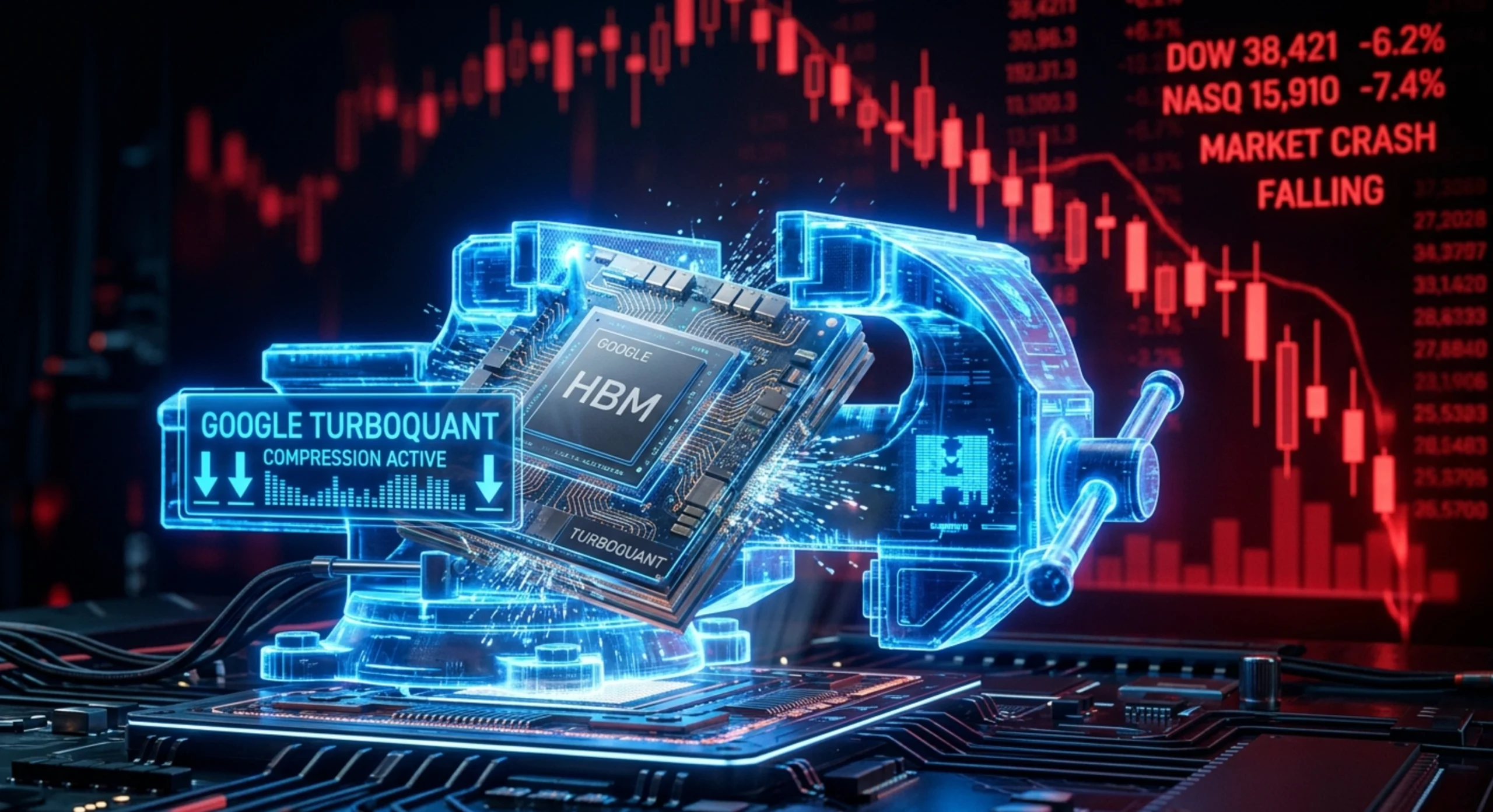
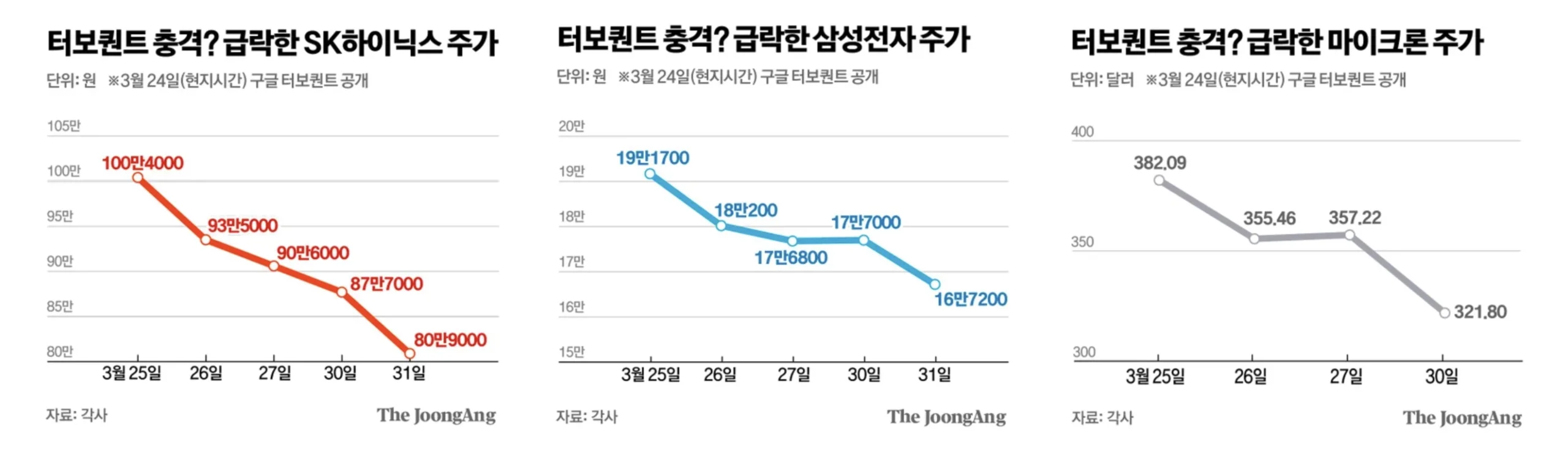
Following a single announcement by Google last week, SK Hynix plummeted 6.2%, Samsung Electronics 4.7%, and US-based Micron 6.97% in a single day. Anxiety spread among investors, with questions like, "They say AI uses six times less memory; should I sell semiconductor stocks?" However, experts are saying the exact opposite. Let me explain exactly what happened in simple terms.
What is 1TurboQuant that caused semiconductor stocks to plummet?
When engaging in long conversations with AIs like ChatGPT or Claude , the AI responds by continuously remembering what was discussed previously. The space where this memory is stored is the Key-Value Cache (KV Cache, the AI's short-term task memory) . As the conversation gets longer, this memory grows larger, requiring a corresponding amount of high-performance memory (HBM/DRAM). This is one of the reasons why AI companies have purchased tens of trillions of won worth of semiconductor chips.
TurboQuant , announced by Google on March 24, is a compression technology that reduces the size of this notepad by up to one-sixth . It doesn't reduce the content of the note itself, but rather fits the same information into a much smaller space. It is similar to how high-quality photos do not become blurry when compressed into JPG format. In fact, based on the H100 GPU, memory usage was reduced by at least six times, and processing speed improved by up to eight times. It can be applied directly to existing AI models without the need for separate retraining.
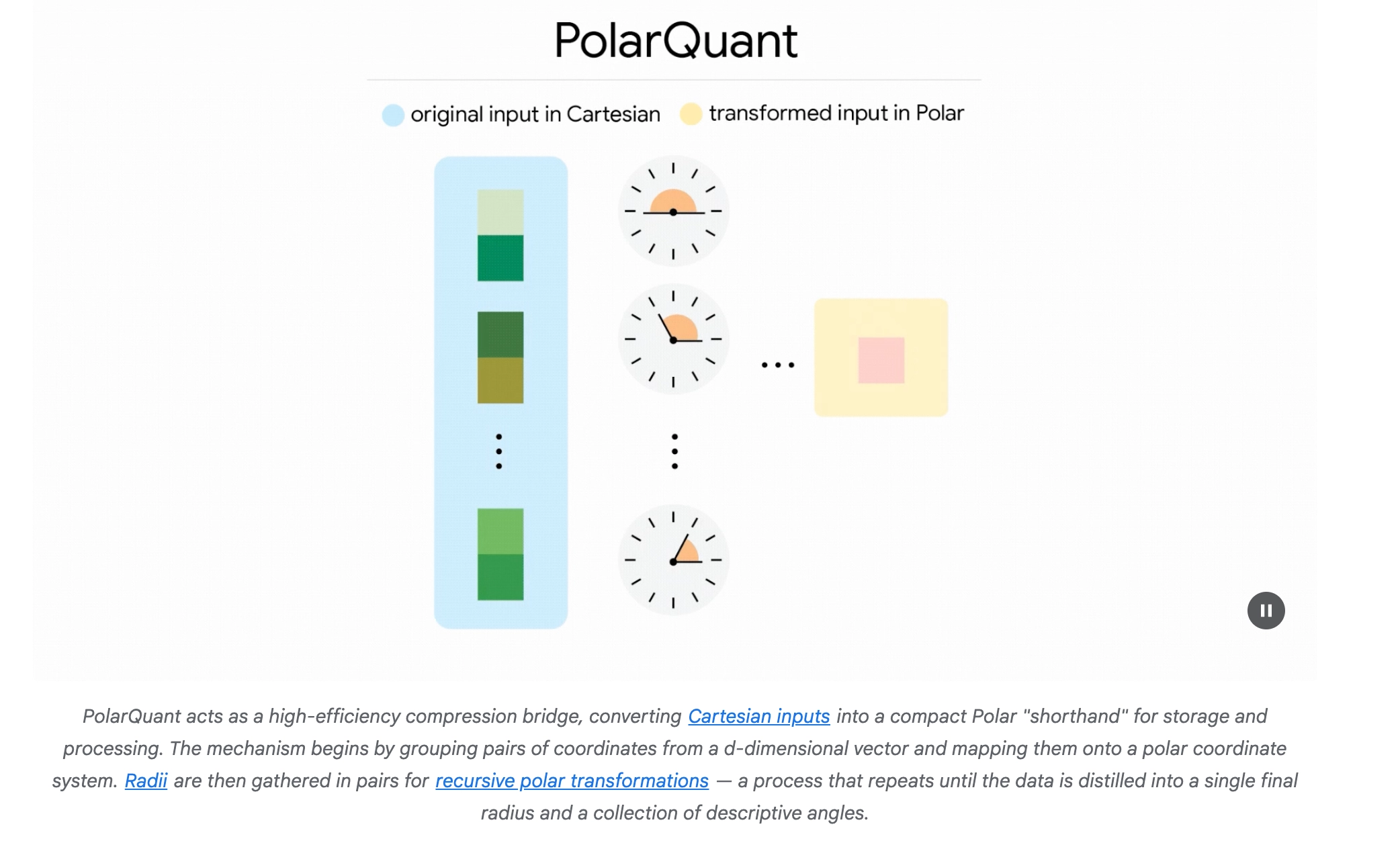
PolarQuant — It is a method that guides you like a compass, saying, “Go 5 steps in the 2 o’clock direction!” instead of giving complex instructions like “Go 3 spaces to the right and 4 spaces up” when playing a treasure hunt. Since the directions indicated by AI data are similar, you can use very little notebook (memory) by simply writing down ‘direction stickers’ and ‘total distance’ instead of complex numbers.
QJL — A technology that improves accuracy by correcting very small errors that occur during the data reduction process with a short signal of 'exactly 1 bit (level of O/X check)'.
The paper is scheduled for formal presentation at ICLR 2026, and Professor In-Soo Han of KAIST (currently a visiting researcher at Google Research) participated as a co-author.
The market's reaction was immediate. “If we use six times less memory, won't the demand for semiconductors decrease by that much?” — This fear triggered the sell button.
2 Stock Price Crash: What Is the Real Reason?
Let's look at the numbers first. This is the change over the day immediately following the TurboQuant announcement.
The logic of fear was simple: “AI uses less memory → Semiconductor companies’ revenue decreases → Sell.” However, there are two things missing from this logic.
First, TurboQuant only affects a portion of the memory used for inference. The process of training AI and the process of actually using the trained AI (inference) are completely different. TurboQuant reduces a portion of the memory used during the "use phase." It does not touch the weight of the model itself (tens of billions of numbers, weights). Morgan Stanley analyst Joseph Moore stated, "TurboQuant does not affect HBM demand or training workloads."
Second, as efficiency increases, demand actually explodes. This is known in economics as the Jevons Paradox . Discovered in 1865 by British economist William Stanley Jevons, this phenomenon observed that as the fuel efficiency of steam engines improved, coal consumption did not decrease but rather increased explosively. Why? Because there were far more factories using the more economical steam engines. The same applies to AI. As costs decrease, small and medium-sized enterprises and startups that had previously been unable to adopt AI will enter the market in large numbers. This is the common conclusion reached by analysts at KB Securities, Samsung Securities, and Hana Securities.
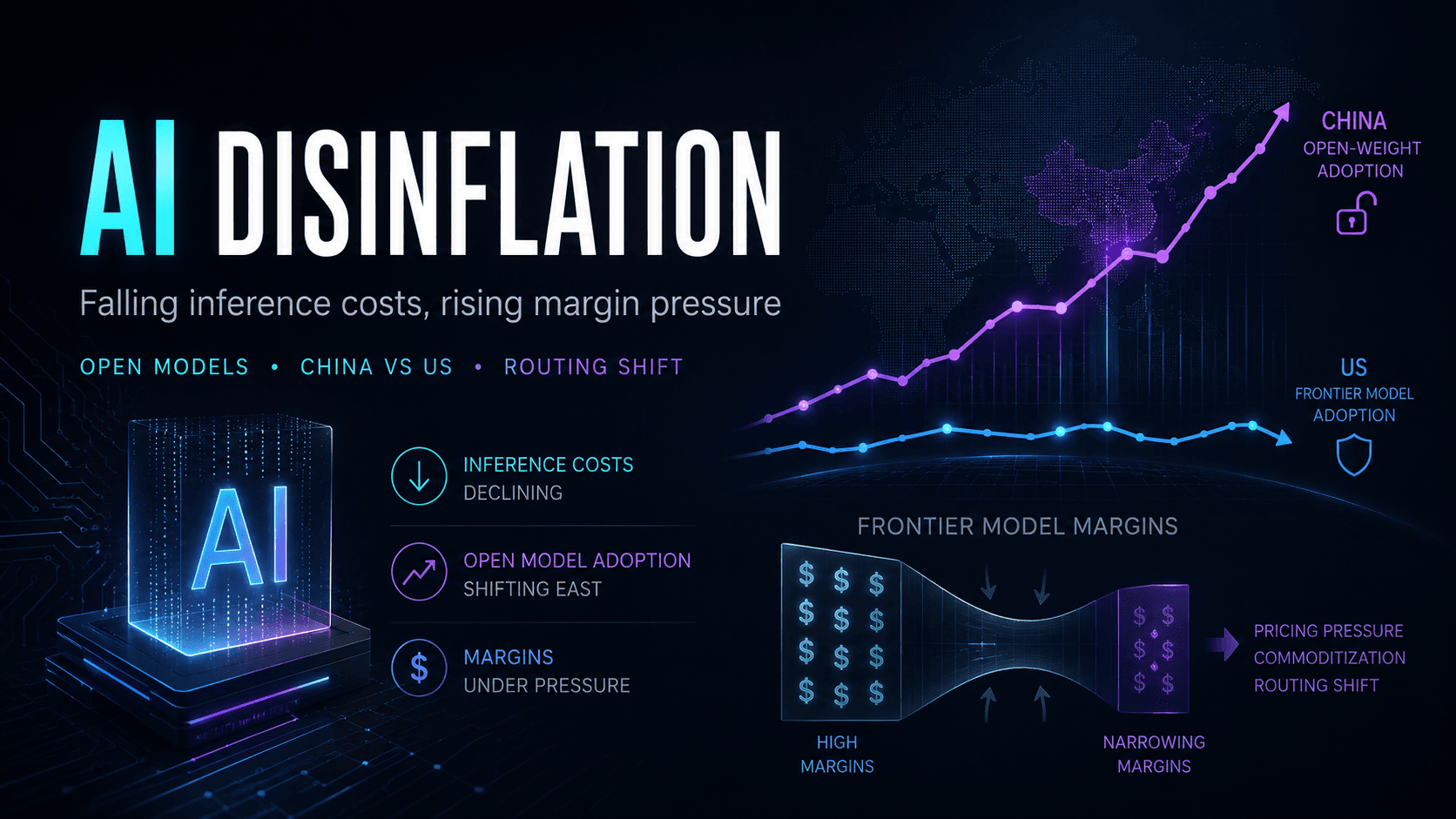
The same panic sell-off occurred when China's DeepSeek unveiled a "much cheaper AI model." NVIDIA's stock price plummeted 17% in a single day. However, demand for AI chips has since strengthened. This is because cheaper AI began to be used in more areas. TurboQuant can be interpreted in the same context.
An Evercore analyst warned, “If TurboQuant is widely adopted, it could exert substantial downward pressure on demand for DRAM and NAND.” Currently, TurboQuant is a technology in the research phase. It is not expected to begin large-scale application in actual AI services until at least the second half of 2026. While the current stock price shock is largely driven by fear, the speed of adoption must be monitored to assess its long-term impact.
The World Opening After NUM2 Efficiency — If AI Runs Everywhere
The true meaning of TurboQuant can be summarized in one sentence: “The cost of running AI is reduced to less than half.” VentureBeat analyzed that enterprise-level AI inference costs can be reduced by more than 50%.
Until now, properly operating AI services required spending massive amounts of money on large-scale clouds like AWS or Azure. Only large corporations that directly owned infrastructure—such as multi-billion dollar GPU servers and massive amounts of memory—were able to build competitive AI. As TurboQuant lowers this threshold, AI spreads beyond data centers to small servers, edge devices, and even offline environments.
However, this raises a new question. If AI agents (AI that makes decisions and acts on its own) run simultaneously in multiple distributed environments— “Who guarantees that this agent is truly using that AI model honestly?” This is precisely the problem that 0G Labs is trying to solve.
40G Labs — “AI Agent’s Notary Office”
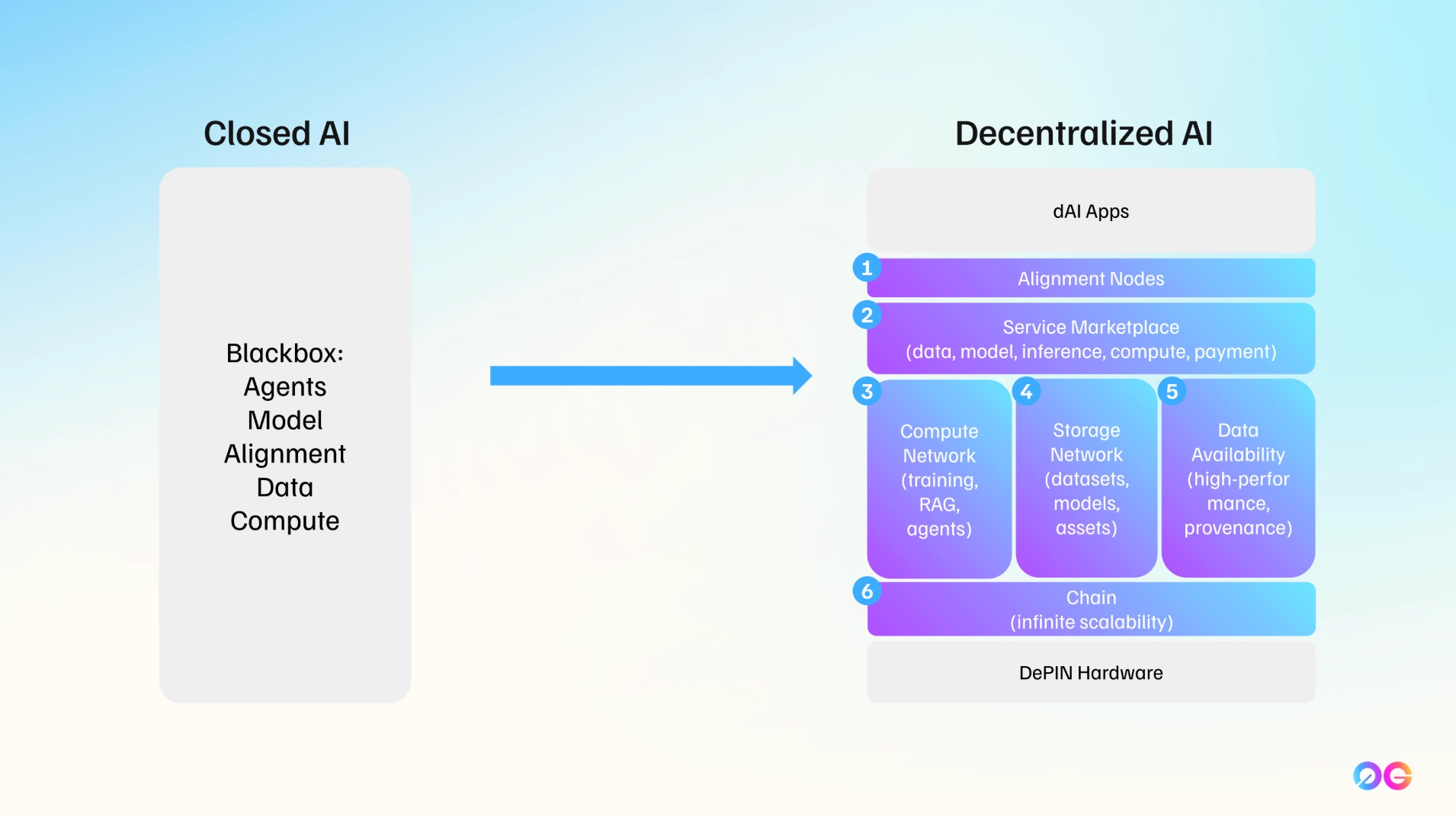
A notary office is necessary when conducting real estate transactions. It is a place where a third party guarantees that “this contract was genuinely concluded on this date under these conditions.” The same need arises in the era of AI agents . It must be possible to prove that “this AI executed this reasoning exactly according to the defined model, without any manipulation.”
0G Labs implements this using blockchain technology. To borrow the words of CEO Michael Heinrich, “AI agents are software that makes decisions and takes actions on behalf of users. If those agents run on infrastructure controlled by someone else, they aren’t autonomous — they’re tenants.” This means that AI agents running on someone else’s server are not truly autonomous, because tenants can be evicted at the landlord’s discretion.
| What 0G Labs provides | Simply put | Reasons why it is important for investors |
|---|---|---|
| Verified Compute (Verified AI computation) | Issuance of an encrypted certificate stating “this result has not been tampered with” whenever the AI executes a reasoning | Regulations such as the EU AI Act have started requiring “proof of source of AI results.” |
| 0G Storage (Decentralized storage) | Store AI agent memory and data on a distributed network rather than on a specific company's server | Eliminating cloud outage risks (AWS, Claude downtime, etc.) |
| Ultra-high-speed data processing | Data processing 50,000 times faster and 100 times cheaper than existing Ethereum | Achieving the speed to process large-scale data in real time |
0G Labs launched its mainnet in September 2025 and secured over 100 partners, including Chainlink, Google Cloud, and Alibaba Cloud, based on approximately 400 billion KRW ($290M) in funding. In July 2025, it also succeeded in training a large AI model with 107 billion parameters in a decentralized manner in an environment with standard home internet speeds (1Gbps).
Jensen Huang announced at GTC 2026 that the AI agent market would grow to $1 trillion. OG Labs is essentially creating the land where those $1 trillion agents actually 'live and work.' As the number of agents increases, the value of the infrastructure they can trust also grows.
5When Two Technologies Meet — The Next Step in AI Democratization
TurboQuant and 0G Labs are solving different problems, but they point in the same direction. One is to “run AI more cheaply,” and the other is to “make it reliable wherever it is run.”
| TurboQuant (Google) | 0G Labs | |
|---|---|---|
| Key role | Reduce AI inference costs by over 50% | Verification and assurance of AI agent execution |
| Who receives the benefits? | AI service operators, end users | AI Agent Developers, Companies Needing Regulatory Response |
| Current status | Research presentation completed, live service application in progress | Mainnet operational, built 100+ partner ecosystem |
The logic behind the combination is as follows: As the cost of AI inference decreases with TurboQuant, far more AI agents will run in much more diverse locations than before. As the number of agents increases, the demand for verification regarding whether “this agent truly operated honestly” grows. Centralized clouds find it difficult to provide such objective verification—because they are structured to self-verify what happened on their own servers. 0G Labs enables a third party (a blockchain network) to take on this role.
6So How Should Investors View This?
I will summarize in three points what all of this means for investors in their 40s and 50s holding SK Hynix and Samsung Electronics.
Memory Stocks Plunge — Check Before Selling
SK Hynix's 2026 HBM supply is already sold out. The same applies to Micron. The current decline is a price correction driven by fears of a potential drop in supply, rather than a "decrease in actual demand." Remember the trend where memory stock prices eventually recovered after the Deep Seek. However, the principle is to approach the stock in stages while monitoring Micron's quarterly earnings announcement (scheduled for June 2026).
Themes regarding AI infrastructure are expanding.
Until now, AI investment has been concentrated in NVIDIA, Microsoft, and Amazon (AWS). The direction indicated by TurboQuant and 0G Labs is that AI is spreading beyond large cloud services. Once this trend accelerates, there is a possibility that capital will flow into companies related to edge computing and decentralized infrastructure. Currently, we are in a stage of studying and monitoring.
0G Labs ($0G Token) — Just observe for now
The $0G token is listed on Binance, OKX, and Bybit. While the concept is compelling, we must first verify whether the AI agent economy actually adopts this infrastructure. Key indicators are the monthly number of on-chain AI inference requests and the rate of new partner influx. If these numbers rise steadily, it will not be too late to decide on the position size at that point.
All content in this article is for informational purposes only and does not constitute investment advice . TurboQuant is currently a technology in the research phase, and large-scale production deployment has not been confirmed. Figures related to 0G Labs are based on official press releases, and token investment entails high volatility and the possibility of loss. All investment decisions and responsibilities rest with the individual, and consulting with a professional financial advisor before making any significant decisions is recommended.
Conclusion — Analyzing fear reveals opportunities
When more efficient steam engines were introduced in 1865, there was fear that the coal industry would collapse. In reality, the opposite was true. Efficient machinery led to the expansion of factories, and these expanded factories burned more coal.
TurboQuant is in the same vein. It is not a signal of a “collapse in AI memory demand,” but rather a signal of a transition where AI is being used more in more places . The message from 0G Labs that “agents should not be tenants” could become a reality sooner than expected—now that EU AI Act regulations and the risks of cloud concentration are growing simultaneously.
Aleph will continue to track this trend. In the next post, we plan to cover the HBM4 mass production race and the differentiating points of SK Hynix and Micron .
📌 Was this analysis helpful?
In the next post, we plan to cover “HBM4 Race — Can SK Hynix Overtake Micron?”
Please leave your thoughts on TurboQuant and memory stocks in the comments.
How this content was produced
Aleph's research AI agent assisted with collecting and analyzing public data, creating charts and visuals, and structuring the draft. Davar personally reviewed and edited the sources, figures, reasoning, and final conclusions.
This content is for informational purposes only and is not personalized investment advice or an individual stock recommendation. Read the full disclaimer

Davar
Davar builds and operates Aleph's research AI agent and writes and reviews analysis on macroeconomic developments and AI industry trends.

© Aleph. All rights reserved.