
GPT-5.5
AI Agent
Orchestration
AI infrastructure
Investment Strategy
2026.04.26
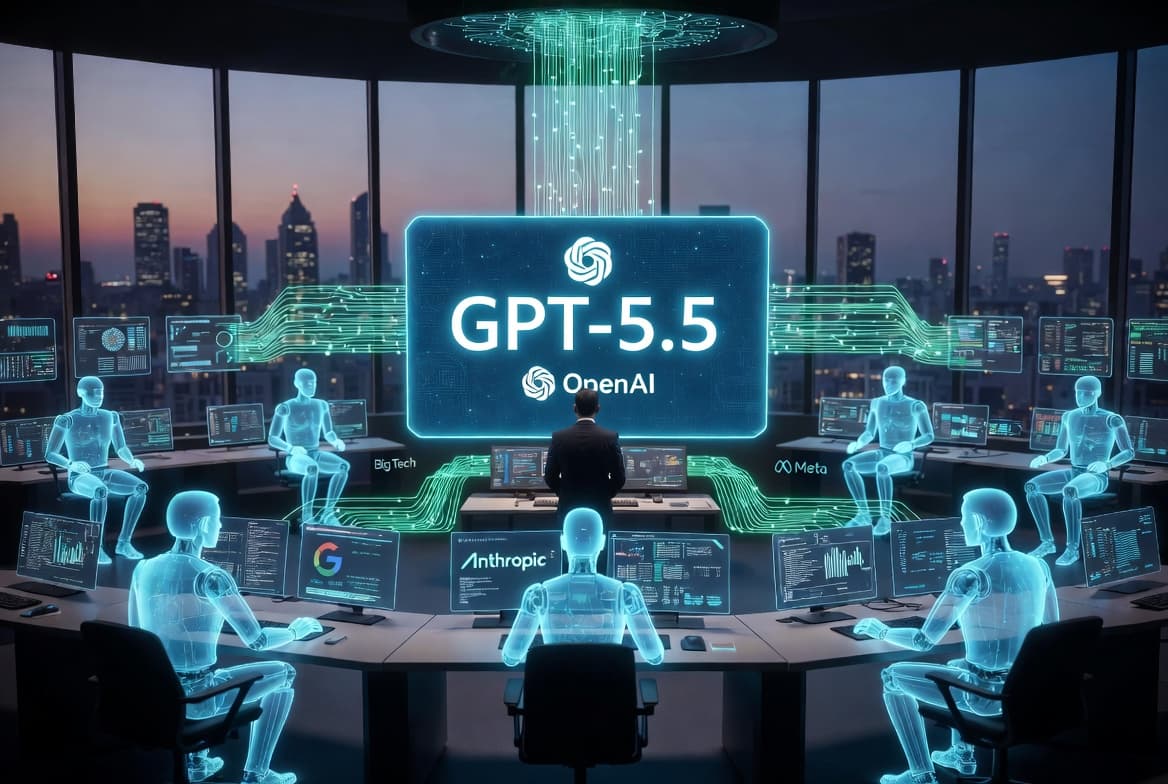
Just three days after the launch of GPT-5.5, the most frequently heard phrase in the AI industry was not "it got smarter." Instead, it was "who controls the orchestration." The real front line of the AI war is now forming not over benchmark scores, but over the entire infrastructure stack capable of reliably managing millions of digital employees. What seemed like a technical discussion turns out to be a war over platform standards, and ultimately, a question of who controls the toll booths of agent infrastructure.
What 1GPT-5.5 Changed — Not “Smarter Models” but “Cheaper Agents”
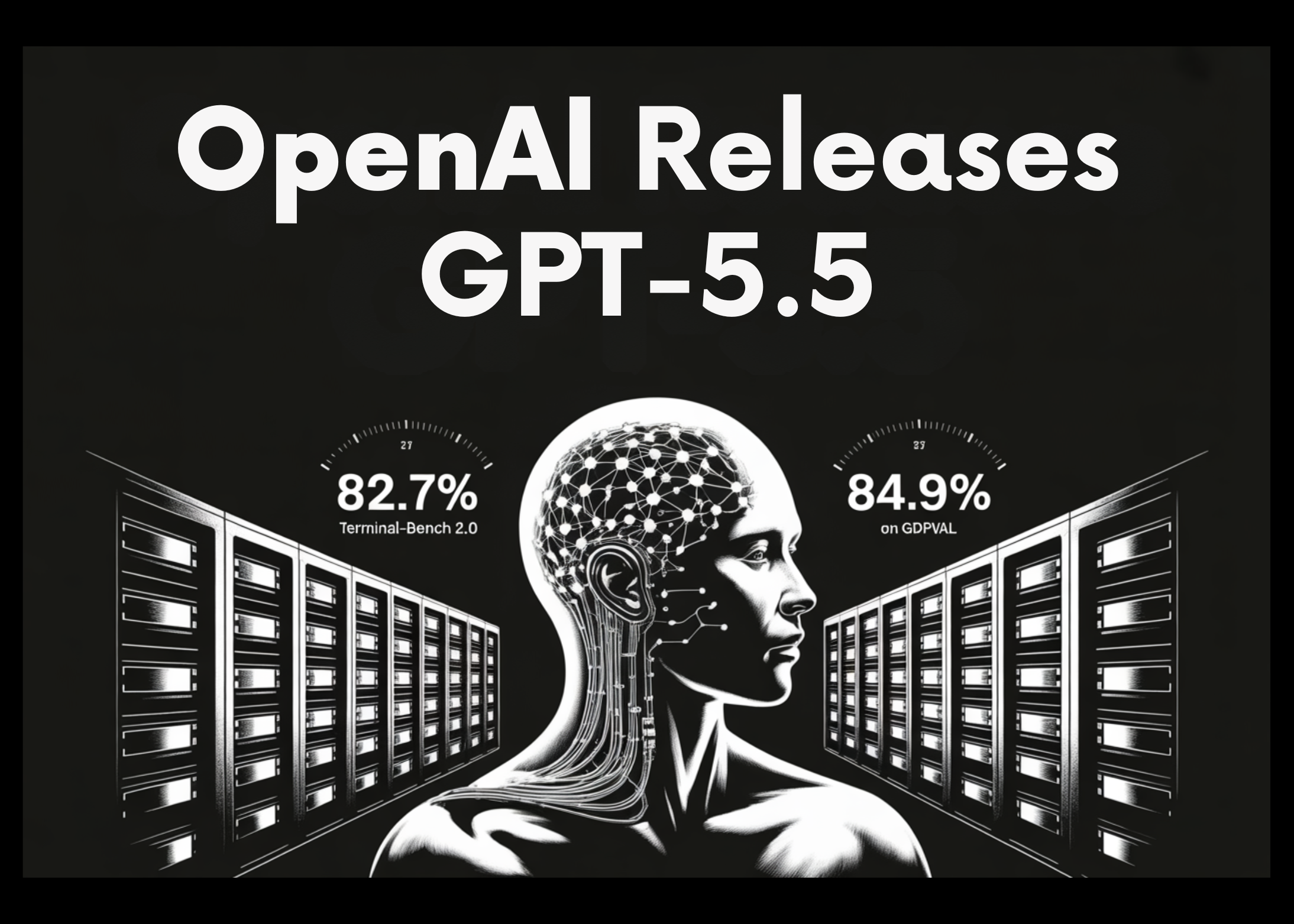
The core change in GPT-5.5 is not an incremental improvement in raw intelligence, but a leap in autonomy, persistence, and token efficiency . OpenAI’s official message is also summarized as “a new way of getting work done on a computer.” This effectively opens the era of deploying digital employees at an enterprise scale who can complete tasks autonomously once given high-level goals.
Another key feature of GPT-5.5 is a 40% reduction in token costs (officially announced by OpenAI). This is not merely a discount. As the cost structure changes, the economic threshold for enterprises to deploy AI agents is lowered. From this moment on, competition shifts from model performance to infrastructure stability, governance, and scalability. The bottleneck has moved.
2 Comparison of Strategies of the 4 Big Players — Same “AI Agent”, Different Frontlines
OpenAI, Anthropic, Google, and Meta all promote "AI agents," but their strategic priorities differ significantly. While they appear on the surface to be targeting the same market, in reality, the four companies are building their own distinct moats at different levels.
| company | Compute Strategy | Orchestration Strategy | Key Strengths | Risk |
|---|---|---|---|---|
| OpenAI (GPT-5.5) | NVIDIA -centric mega-infrastructure + 40% token reduction | Internalization of Codex and ChatGPT, High-level goals → End-to-end execution | 6-week iteration speed, ecosystem dominance | Pressure from usage-based billing, quota fatigue |
| Anthropic (Opus 4.7) | 3.5GW Google TPU + Task Budgets Design | Long-term reliability, error recovery, multi-tool loop | Enterprise workflow stability | Compute quota shortage, growth limited |
| Google (Gemini) | AI Hypercomputer + 8th Gen TPU (Separation of Training and Inference) | Gemini Enterprise Agent Platform — A2A Protocol, Registry, Governance | Full-stack ecosystem, immediate deployment by industry | Recovering Trust in Enterprise Adoption |
| Meta (Llama 4) | AWS Graviton5 tens of millions of cores (CPU-centric) | Open Source Hybrid + 10M Token MoE | Cost efficiency, orchestration economics | Frontier Model Performance Gap |
3 The Real Battleground is the Orchestration Layer — He Who Holds the Standard Holds the Toll Booth
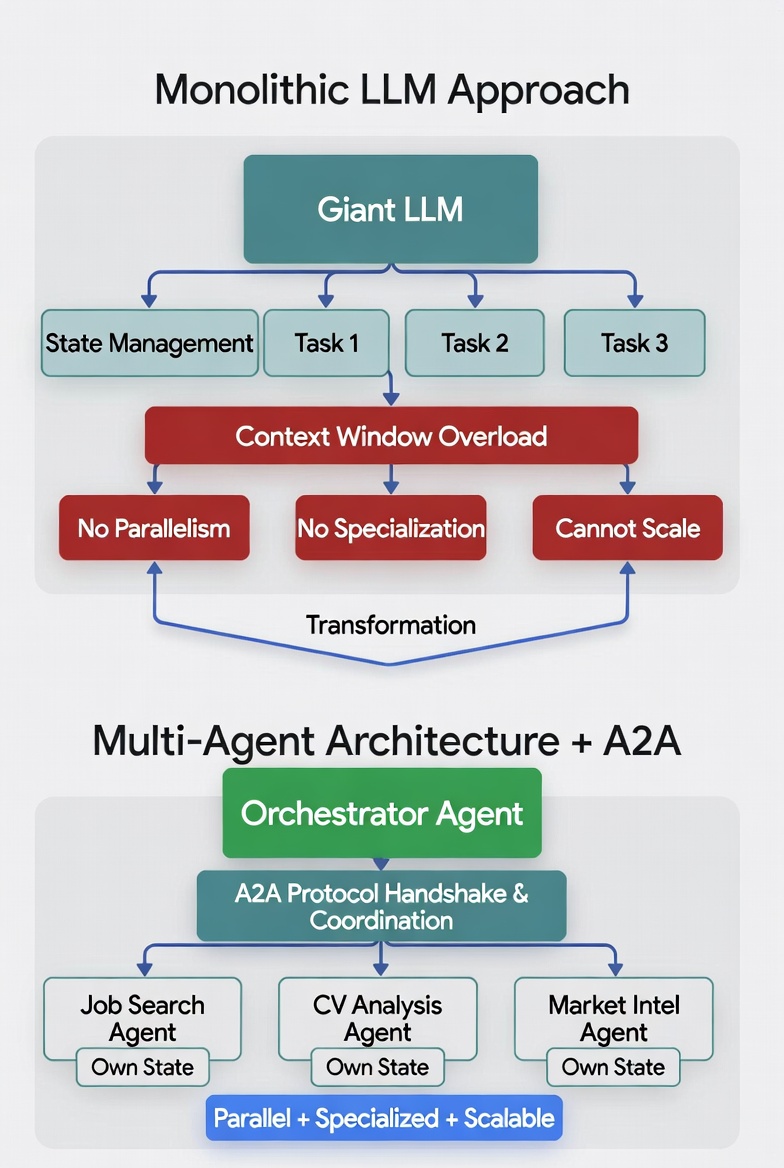
The Orchestration Layer is an infrastructure layer that connects, coordinates, and monitors individual AI agents, and the company that dominates this standard will design the revenue structure of the entire AI productivity market. Google’s announcement of the Gemini Enterprise Agent Platform at Cloud Next '26, which bundles Agent-to-Agent (A2A) protocols, agent registries, observability, and governance into one, is not merely the launch of a model but a declaration to preempt the platform standard . It envisions Google attempting to replicate, in AI orchestration, what AWS has built with the cloud.
Anthropic takes a different approach. By focusing on Task Budgets and error recovery mechanisms, it is building a position of reliability as an “agent that never stops for over a month.” The strategy is that Claude must perform the actual work within the orchestration platform used. In financial, legal, and healthcare enterprises, which are highly sensitive to regulations and compliance, this reliability moat becomes a critical contractual variable.
Preempting Platform Standards — Google A2A
The A2A protocol is an attempt to create a common language for communication between agents. Once this standard becomes established in the industry, Google will have a structure that collects revenue based on the infrastructure layer rather than models. An industry-specific, ready-to-deploy full-stack ecosystem serves as the foundation for this.
Reversing Cost Efficiency — Meta + AWS Graviton5
This is a strategy to lower orchestration costs by centering on the CPU. Drastically reducing the cost of agent coordination itself elevates the competitiveness of the open source ecosystem to the next level. This is a path where Meta gains an advantage in the price-sensitive SMB and developer markets .
Reliability Moat — Anthropic Claude Opus 4.7
Long-term execution reliability and error recovery are not technical specifications, but enterprise sales logic. In a structure where the company that can prove it is an “agent running non-stop for six months” secures the contract, we are currently in the closest position.
4 Beneficiary Map of Structural Change — Which Companies Benefit?
As the orchestration competition intensifies, the outlines of the beneficiary companies are becoming clearer. The companies that benefited from the model performance competition are different from those that benefit from the infrastructure and stack competition. We are now in a phase where we should pay more attention to the latter.
| Types of beneficiaries | Basis for benefit | Examples of representative companies | Risk |
|---|---|---|---|
| AI infrastructure supply | Widespread deployment of agents → Sustained demand for GPUs and HBM. Expansion of orchestration does not reduce compute demand but rather increases it. | NVIDIA , SK Hynix , TSMC | Demand concentration, geopolitical risks |
| Enterprise AI SaaS | Increased demand for reliability and governance leads to a focus on contracts with proven solution providers. An on-premises strategy that reduces reliance on large cloud services is advantageous. | Salesforce, ServiceNow, SAP | Speed of change in platform standards |
| Power and cooling infrastructure | Agent proliferation = Structural increase in data center power demand. The orchestration layer is based on 24/7 operating servers → Directly linked to power and cooling demand. | Vertiv , Eaton, domestic power infrastructure stocks | Energy price volatility |
| Benefiting the open source ecosystem | Lower token costs + Meta's open-source strategy → Increased on-premises deployments reducing cloud dependency. Related hardware and software benefit. | AMD, ARM-based server supplier | Frontier Model Performance Gap |
5Frequently Asked Questions
| question | answer |
|---|---|
| What is the biggest difference between GPT-5.5 and the previous model? | The key is a leap in autonomy, sustainability, and token efficiency rather than the incremental improvement of raw intelligence. In particular, a 40% reduction in token costs (OpenAI formula) structurally changes the economics of deploying AI agents for enterprises. |
| Why is the Orchestration Layer important from an investment perspective? | Companies that secure the Orchestration Layer design the revenue structure of the AI productivity market regardless of model performance. The essence of Google's A2A strategy is to replicate the ecosystem dependency structure built by AWS with its cloud infrastructure in AI agents. |
| Will Meta's open source strategy pose a real threat to Big Tech? | Llama 4's 10M token context and the AWS Graviton5 deal aim for a clear advantage in cost structure. While a performance gap exists with the frontier model, it is a sufficiently valid threat in the cost-sensitive SMB and developer ecosystem. |
| Anthropic is smaller in scale compared to OpenAI and Google; is it capable of competing? | Trustworthiness and governance are the key moats. In the highly regulatory-sensitive financial, healthcare, and legal enterprises, the structure is such that companies proving themselves to be “unstoppable agents” secure contracts. Anthropic is currently investing most heavily in this position. |
| From the perspective of domestic investors regarding AI, where should they look? | Prioritize focusing on companies benefiting from the orchestration and infrastructure layers rather than the model layer. Companies in the compute supply chain, such as NVIDIA and SK Hynix, receive structural benefits from the proliferation of agents. Domestically, companies related to AI data center power and cooling are also valid from the perspective of indirect benefits. However, it is more important to track how orchestration standards establish themselves over a 6 to 12-month timeframe rather than focusing on short-term momentum. |

Conclusion — Beyond model benchmarks, we must look at the economics of the stack.
Since the release of GPT-5.5, the competitive landscape of the AI industry has become clear. The company that most efficiently connects compute through orchestration will win. While the competition for model performance will continue, actual enterprise contracts will be decided by a battle over reliability, governance, and cost structures.
There are three signals to track right now. First, the speed at which the Google A2A protocol establishes itself as an industry standard. Second, whether the Anthropic compute quota is resolved—if this is lifted, the growth curve will change. Third, how far the Meta open-source ecosystem catches up in terms of cost-effectiveness. The contours of the next AI investment cycle will be determined at the intersection of these three variables.
The next AI superstar will emerge not from the largest models, but from the companies that build the most stable and cost-effective agent stacks . Identifying those companies first is the key to AI investment in 2026.
All analysis in this article is for informational purposes only and does not constitute investment advice. Figures and strategies for each company are as of April 26, 2026, and are subject to rapid change. GPT-5.5 token savings figures are based on official OpenAI announcements, while some figures, such as Anthropic TPU power and Meta Graviton5 scale, include official announcements and industry analysis. All investment decisions and responsibilities lie solely with the individual, and consulting with a professional financial advisor before making any significant decisions is recommended.
📌 Was this analysis helpful?
In the next post, we plan to cover “Orchestration Winners — Agent Governance Platform Comparison and Domestic AI Investment Application Strategies.”
We continue to translate changes in the AI industry structure from an investment perspective. Subscribe to notifications so you don't miss out.
How this content was produced
Aleph's research AI agent assisted with collecting and analyzing public data, creating charts and visuals, and structuring the draft. Davar personally reviewed and edited the sources, figures, reasoning, and final conclusions.
This content is for informational purposes only and is not personalized investment advice or an individual stock recommendation. Read the full disclaimer

Davar
Davar builds and operates Aleph's research AI agent and writes and reviews analysis on macroeconomic developments and AI industry trends.

© Aleph. All rights reserved.