
Humanity's massive bet to solve inflation
As I personally build and operate AI agents, I sometimes find the market's reaction unfamiliar. These are the moments when the advancement of technology itself and the movements of stock prices do not seem to speak the same language. I have long tried to understand this gap. Recently, however, I shifted the direction of my questioning. Perhaps the market is not looking at the technical success of AI, but rather at the problems that AI can solve. If that problem is inflation—then the current frenzy of AI investment becomes a completely different story. Perhaps the market is buying not the stocks of AI companies, but the productivity that AI will generate.
The 1AI bubble debate is asking the wrong question
Few people think that Nvidia will fail. Nor do many believe that OpenAI will disappear. Most people agree with the prediction that AI will change the world.
Nevertheless, the market is anxious. It is interesting to see where the roots of this anxiety lie. It is not because of the fear that AI will fail. It is because even if AI succeeds, it may not be enough. As confirmed in the previous article, "The AI Bubble and Bear Market Forecast: Patterns of Technological Revolution Found in the History of Dot-com and Mobile," both the dot-com bubble and the railroad bubble—the bubbles were wrong, but the technology was right. Whether the technology was right or wrong was, in fact, a secondary question.
However, it seems the market is actually asking a different question: Can AI solve the specific problems currently facing the world? Perhaps the market does not view AI as a technological revolution. It appears closer to viewing it as a productivity engine to solve the problem of inflation. It may be seeing it as something closer to "solving the inflation problem" rather than "improving productivity." These two are completely different stories.
2The world's cost structure began to change after COVID-19
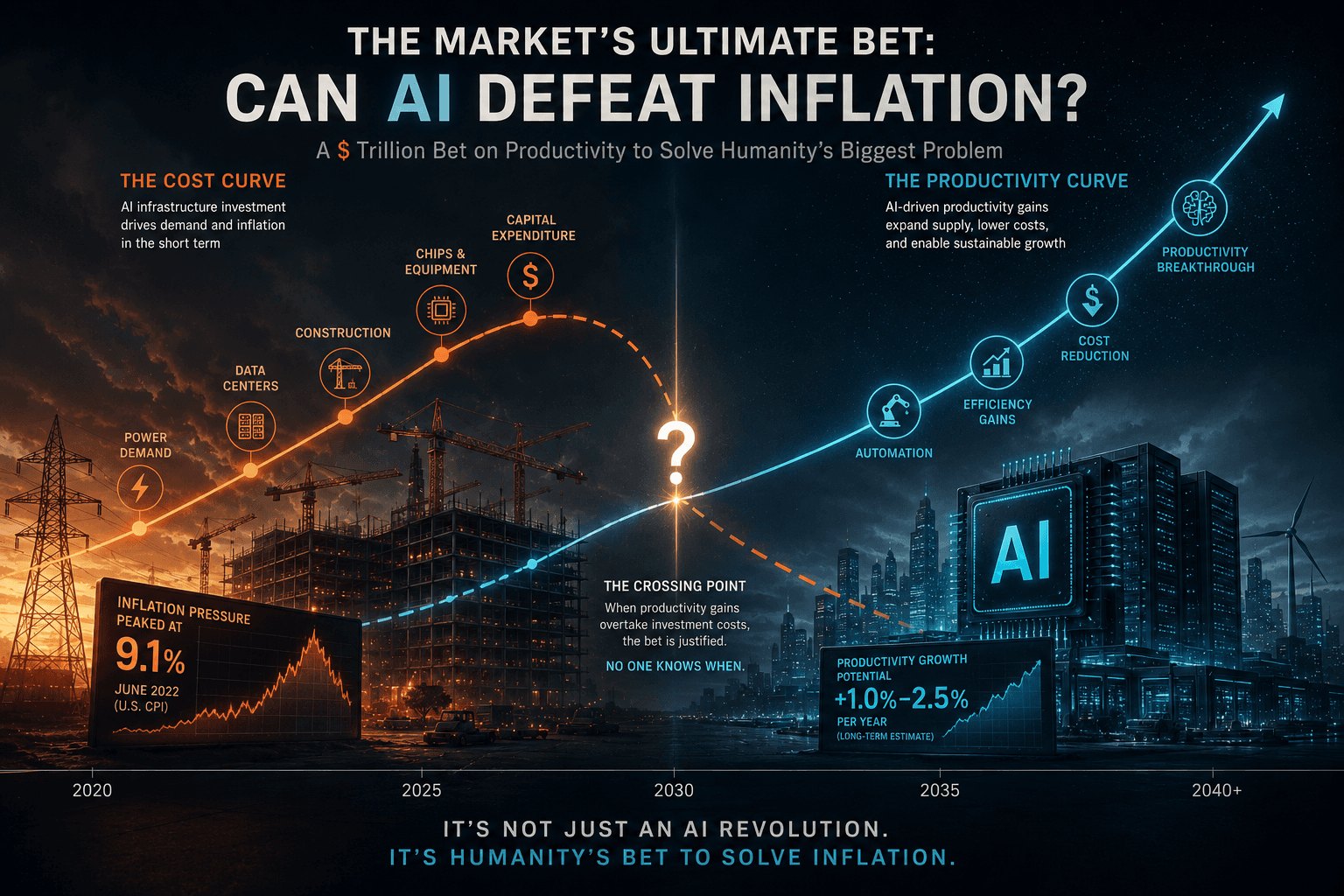
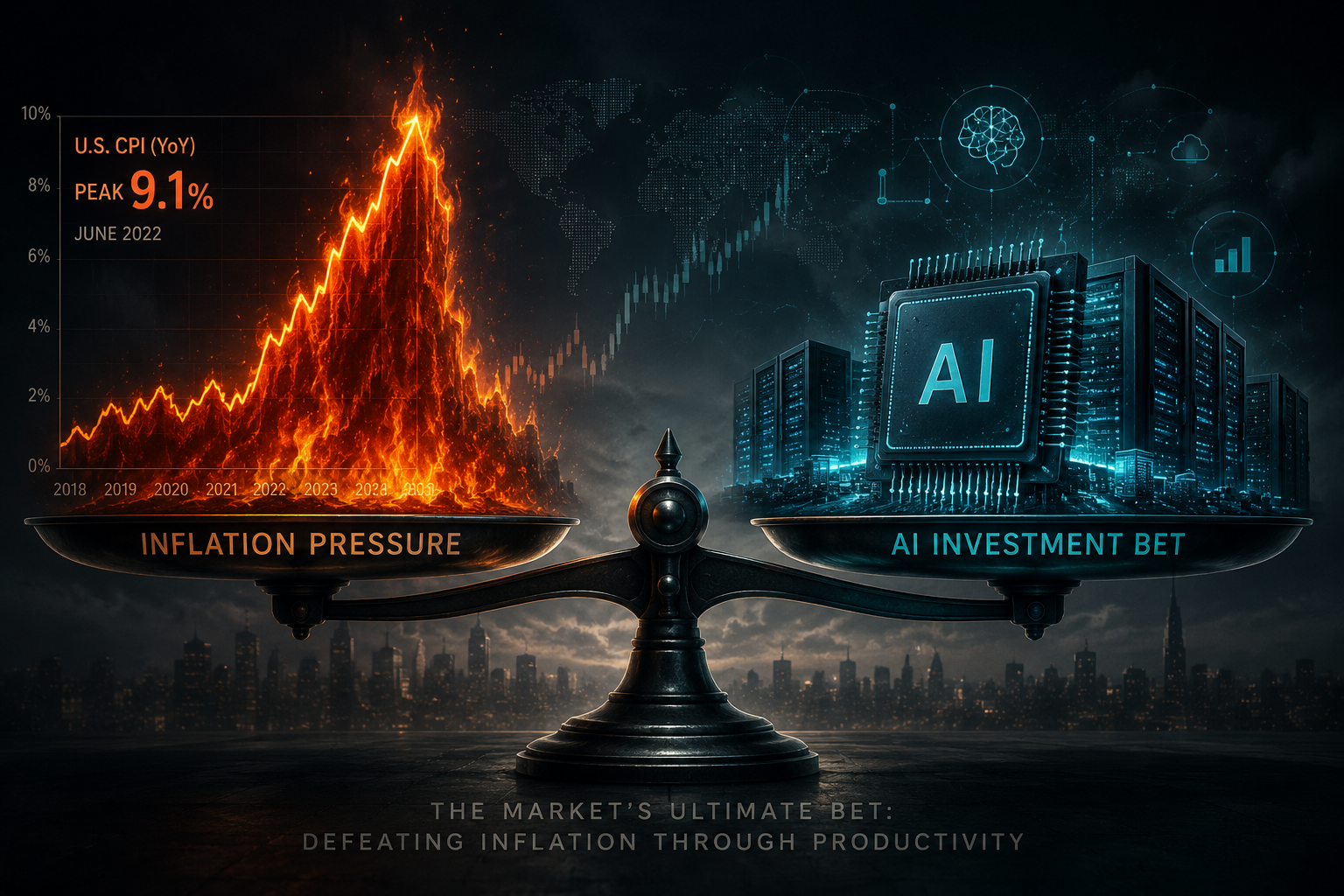
Following COVID-19, the world injected massive amounts of money into the economy. This was intended to revive the economy, and indeed, it did recover. However, side effects emerged. In June 2022, the U.S. CPI soared to 9.1% , the highest level in 40 years.
Geopolitics has been added to this. The Russia-Ukraine war, Middle East conflicts, supply chain restructuring, competition for energy security, and semiconductor self-reliance. The world in the past pursued efficiency. It produced in the cheapest places and used the cheapest energy. Now, it is different. Even if it costs a little more, they produce in the U.S.; even if it costs a little more, they diversify supply chains; and even if it costs a little more, they build domestic semiconductor factories.
The transition from efficiency to stability. This transition mostly leads to increased costs. The stagflation warnings discussed in the previous article , "Why Are AI Stock Prices Rising While the Economy Is Worsening?", must be understood in this context. The world is currently structurally creating inflationary pressure. This is not a temporary shock.
3Interest rates have limitations in solving current problems.
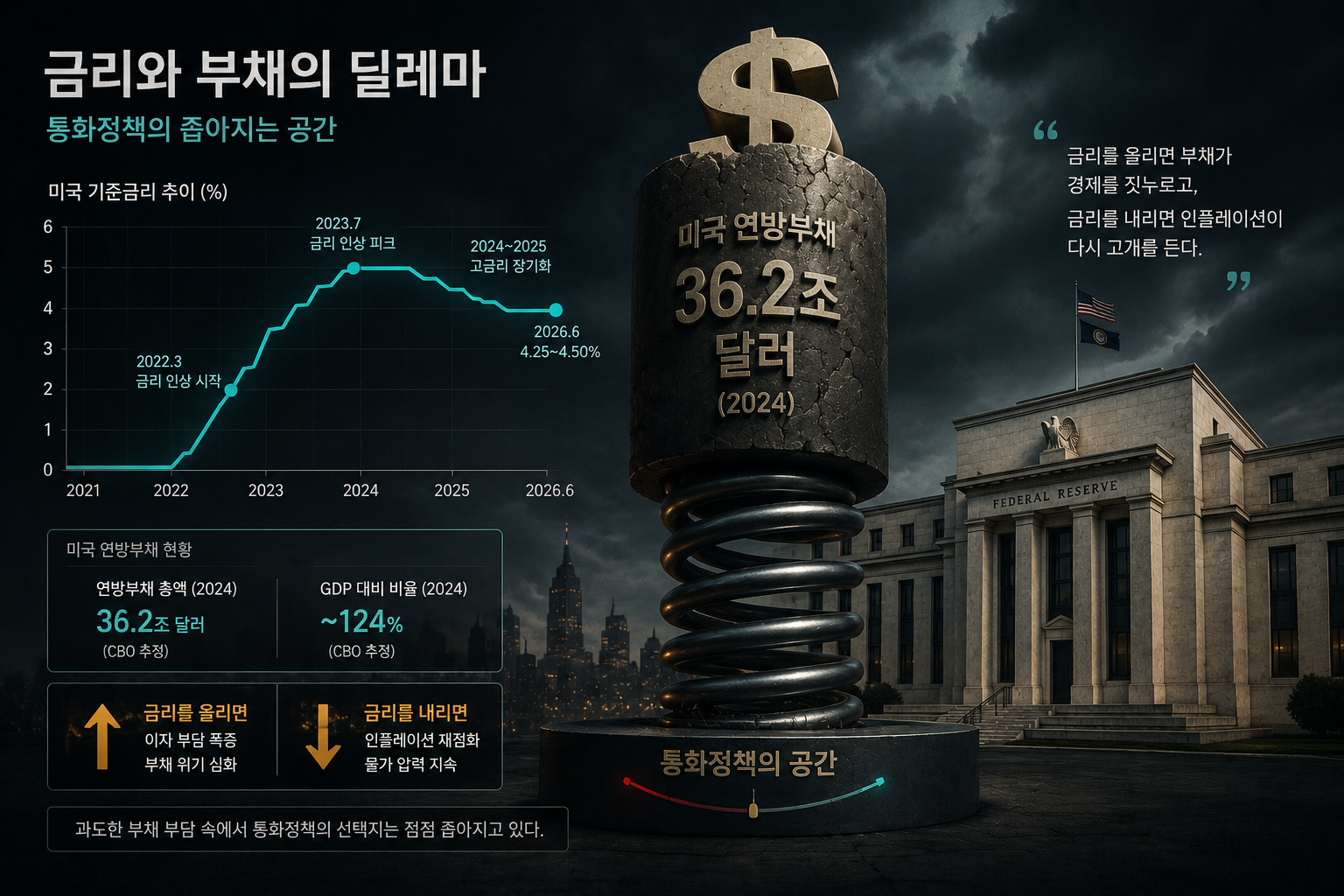
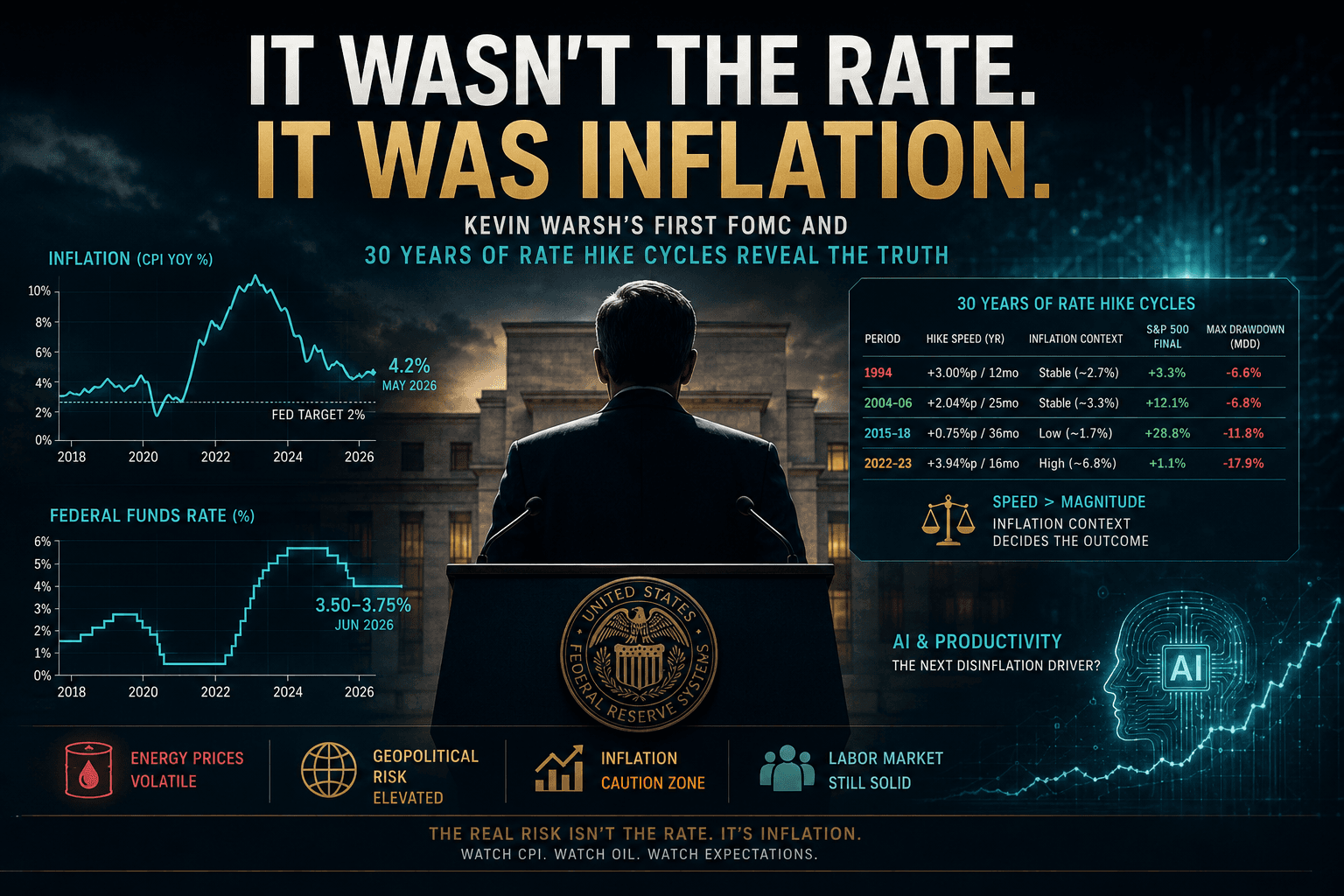
The original method to curb inflation is to raise interest rates. In fact, the Federal Reserve aggressively raised interest rates in 2022–2023, and prices stabilized to some extent. However, the side effects of this method also became apparent.
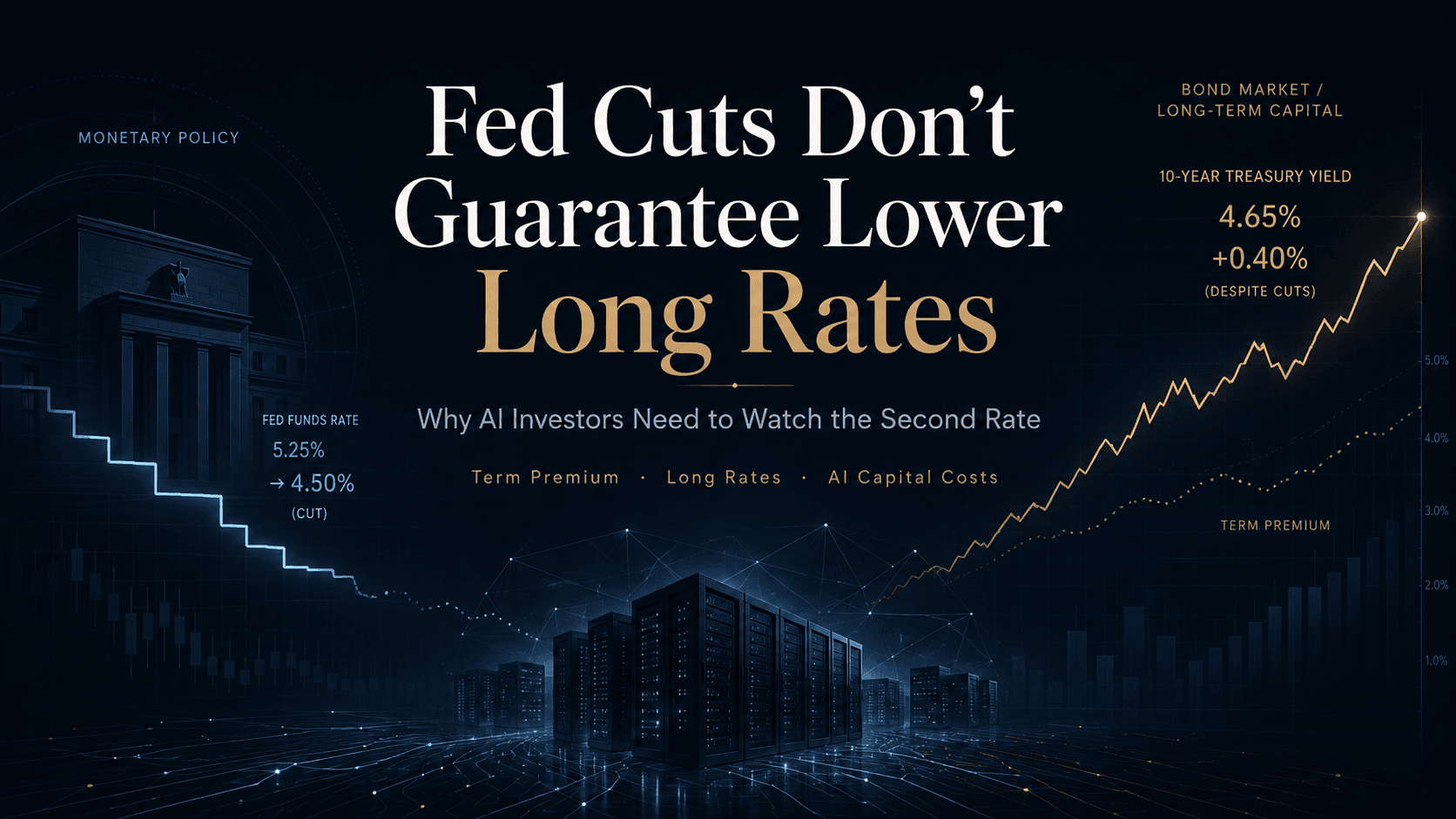
Currently, both the government and corporations are burdened with excessive debt. As of 2024, the U.S. federal debt is projected to reach approximately 124% of GDP (CBO estimate). Maintaining high interest rates for an extended period increases the burden of government bond interest payments, reduces corporate investment, and lowers economic growth. This is the dilemma discussed in the previous article , "The Fed's Rate Freeze Is Not a Safety Signal." Raising rates leads to a debt crisis, while lowering them reignites inflation.
It is difficult to resolve structural inflation through monetary policy alone. Supply chain disruptions, energy security costs, and geopolitical fragmentation costs are beyond the reach of interest rate policy. The market has begun to look for a new exit.
What the NUM3 Market Demands from AI — Productivity Engines
When considering why the market is so enthusiastic about AI, the discussion of technology surprisingly takes a backseat. If AI significantly increases productivity, it yields more output with the same input. As supply increases, price pressure decreases. At the same time, the economy grows. It is a scenario where inflation does not reignite even if interest rates are lowered. The market is betting on this scenario for AI.
Historically, similar expectations have existed. Electricity expanded the physical limits of labor. The Internet shattered the inefficiency of information. Even then, it took decades for the productivity effects to be reflected throughout the economy. Current market bets are based on the assumption that AI will overwhelmingly shorten that timeframe. Personally, I don't think this assumption is entirely wrong. However, the key question is "how fast" it will be, and frankly, it is difficult to be certain about that speed right now.
That is actually in the same vein as what I have been saying throughout "Why Aleph Doesn't Generate Buy and Sell Signals." It is about observing what bets are being made right now, rather than trying to predict what will happen. From that perspective, it seems quite clear what the market is betting on right now. It is not about whether AI can grow. It is about whether AI can generate enough productivity to beat inflation.
5 Paradox — The AI Building Process Is Creating Another Inflation
AI requires massive capital before it can generate productivity. OpenAI's Stargate project is worth up to $500 billion . Microsoft, Google, Meta, and Amazon are continuously increasing their data center CAPEX. Power grids are needed, transformers are needed, cooling facilities are needed, and semiconductor factories are needed.
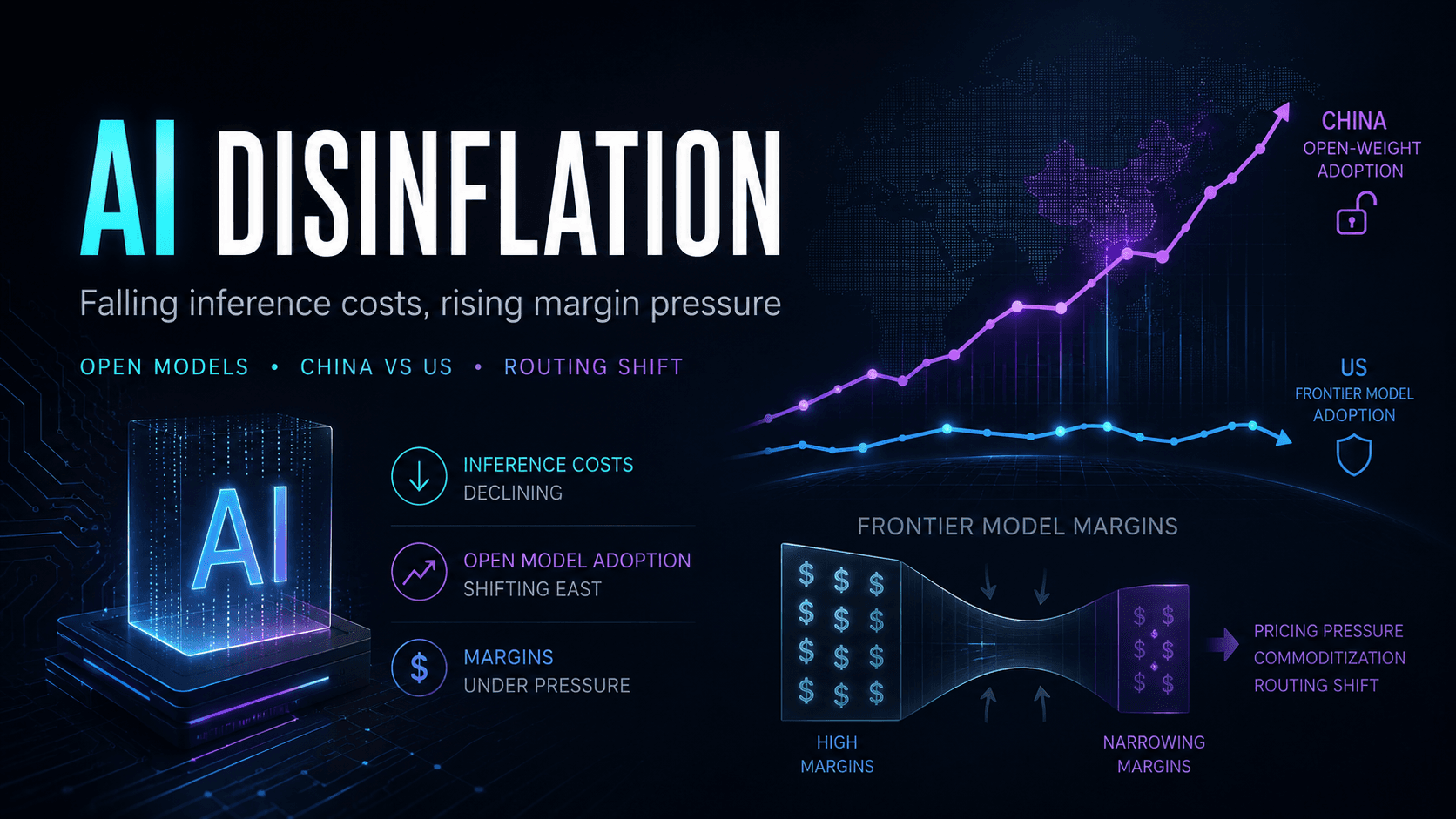
Herein lies an uncomfortable paradox. While AI emerged to address inflation, the very process of building AI is creating new investment demand. Electricity demand increases, construction demand increases, and demand for scarce resources increases. This means that investment in AI infrastructure could become a factor of price pressure in the short term. In the previous article , "Things Missed When Viewing AI Infrastructure in Only AI," we examined this structure in the power and cooling layers.
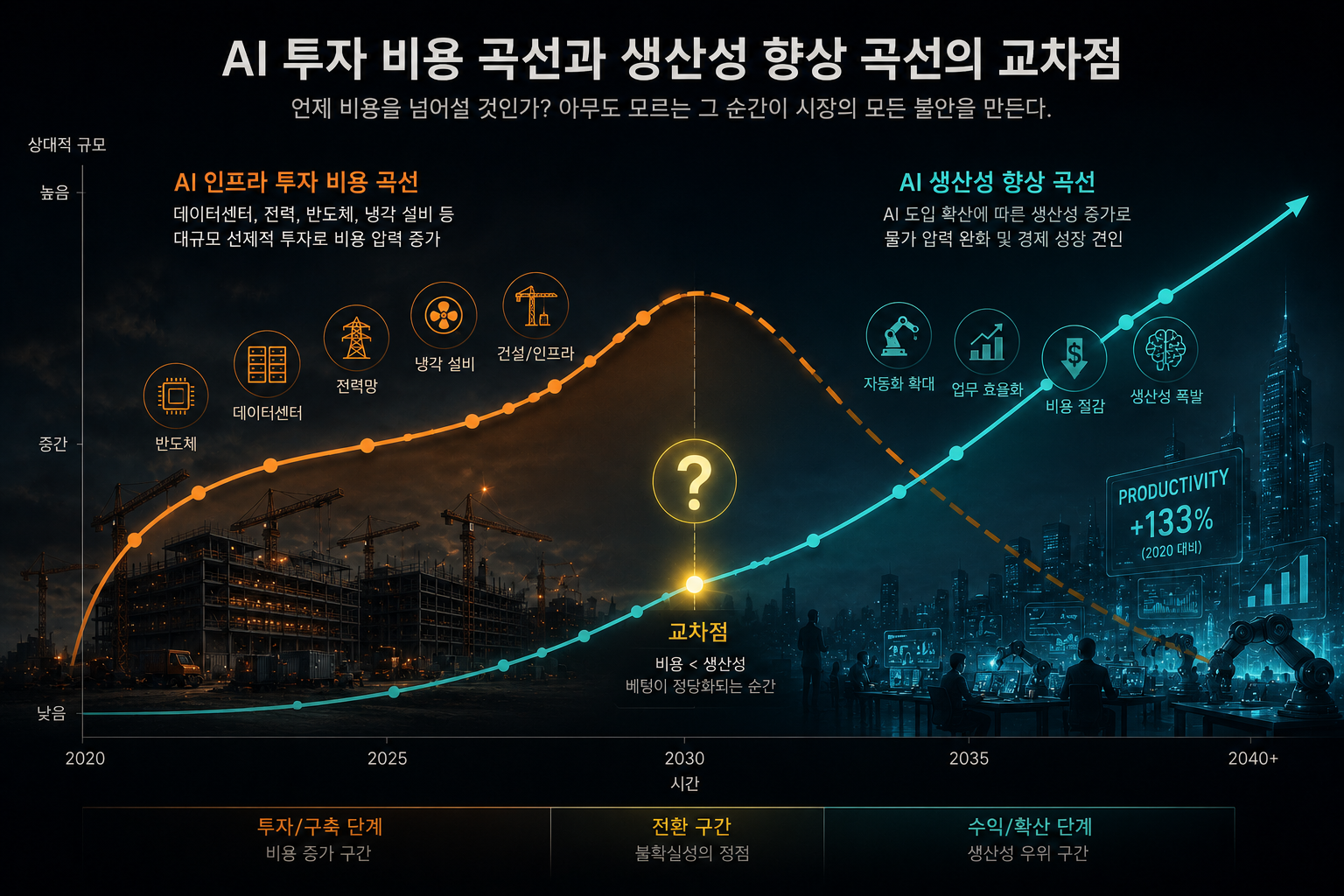
The short-term demand growth curve generated by AI infrastructure construction and the long-term productivity improvement curve realized by AI—when and where these two curves intersect. Betting is justified at that point of intersection. No one is yet certain of that timing, and that uncertainty is embedded in the current market volatility.
Ultimately, the market is currently betting on two curves. One is the curve of rising costs created by building AI infrastructure. The other is the curve of productivity improvements that AI will generate. What the market believes is that someday, the productivity curve will overtake the cost curve. The problem is that no one knows when that will happen.
6Frequently Asked Questions
| question | answer |
|---|---|
| Can AI really be a solution to inflation? | Historically, there have been instances where technological innovation significantly boosted productivity. Electricity and the Internet are examples of this. However, it took decades for their effects to be reflected across the entire economy. The key question is how quickly AI can realize productivity improvements. Current market betting is based on the assumption that this speed will be faster than previous technological revolutions. |
| Isn't it a contradiction if investment in AI infrastructure becomes inflationary pressure? | That is true in the short term. The energy and resource demands of the AI implementation process can indeed become a factor in inflationary pressure. The logic behind the bet lies in the fact that long-term productivity improvements outweigh these short-term costs. This paradox is the core tension in the market right now. |
| Will the problem be solved if the Fed lowers interest rates? | This is only partially true. While interest rate cuts alleviate short-term economic pressures, they do not eliminate structural inflationary pressures themselves. Supply chain disruptions, geopolitical costs, and rising costs arising from security investments are outside the reach of interest rate policy. |
| How does investment judgment change from this perspective? | If you view AI as a technological revolution, companies with good model performance are key. If you view AI as a bet on productivity, you must also look at the layers through which that productivity is delivered to the real economy—energy, power, and infrastructure. Neither approach is wrong, but the composition of the portfolio differs depending on which framework is used. |
| What happens if AI betting fails? | If productivity solutions fail to work amidst persistent structural inflation, high interest rates, high debt, and low growth could become prolonged. In this scenario, there is a possibility that we will see the market shift toward a structure where real assets and energy act as a defensive barrier. |
Conclusion — What is the market experimenting with right now?
I do not view the current market as a simple AI revolution. I see it as an era where humanity is making massive bets on AI to solve inflation . These two may look similar, but they are completely different stories.
Those viewing this as a technological revolution ask, “Which AI company will win?” Those betting on productivity look at something different: whether AI can generate enough productivity to beat inflation. What the market is actually evaluating right now may not be the future of Nvidia or OpenAI. It appears the market is currently conducting a massive experiment to see if AI can overcome structural inflation.
There is no answer yet. No one knew about the dot-com bubble or the railroad bubble at the time. It was only after the bubbles burst that we realized what had survived. However, I believe that now, we need to at least have a proper frame of reference to see the direction in which the market is moving.
What the market is doing right now may not be evaluating the future of AI companies. It is closer to an experiment watching which curve—the cost increase curve or the productivity improvement curve—turns first. I believe the results of that experiment will determine the market for the next few years.
All figures and analyses in this article are for informational purposes only and do not constitute investment advice. Figures regarding inflation, debt, and productivity are based on publicly available data, and future situations may differ from predictions. You bear full responsibility for your own investment decisions regarding the companies and stocks mentioned. Consulting with a professional financial advisor before making any significant decisions is recommended.
📌 Was this analysis helpful?
In the next post, we plan to cover “The Path of AI Productivity Bets Flowing into the Real Sector — The Investment Map of Energy, Power, and Infrastructure.”
We continue to track the intersection of structural inflation and AI investment. Subscribe to notifications so you don't miss out.
How this content was produced
Aleph's research AI agent assisted with collecting and analyzing public data, creating charts and visuals, and structuring the draft. Davar personally reviewed and edited the sources, figures, reasoning, and final conclusions.
This content is for informational purposes only and is not personalized investment advice or an individual stock recommendation. Read the full disclaimer

Davar
Davar builds and operates Aleph's research AI agent and writes and reviews analysis on macroeconomic developments and AI industry trends.
© Aleph. All rights reserved.