
OpenAI · Anthropic · SpaceX — A Combined $3.2 Trillion, 5 Realistic Ways for General Investors to Access
Since the beginning of this year, I have been repeatedly asked the same question by investors around me: “Can I buy OpenAI?” After answering several times that it is unavailable because it is privately held, I eventually found myself questioning whether that was actually correct. As of 2026, that is not entirely accurate. While direct subscriptions remain limited, there are more alternative routes than one might expect. However, each route has a different structure and a completely different risk profile. I have summarized the options available to Korean retail investors regarding the three IPO candidates—OpenAI, Anthropic, and SpaceX—and the risks involved with each.
1 Three Companies: Where Are They Now?
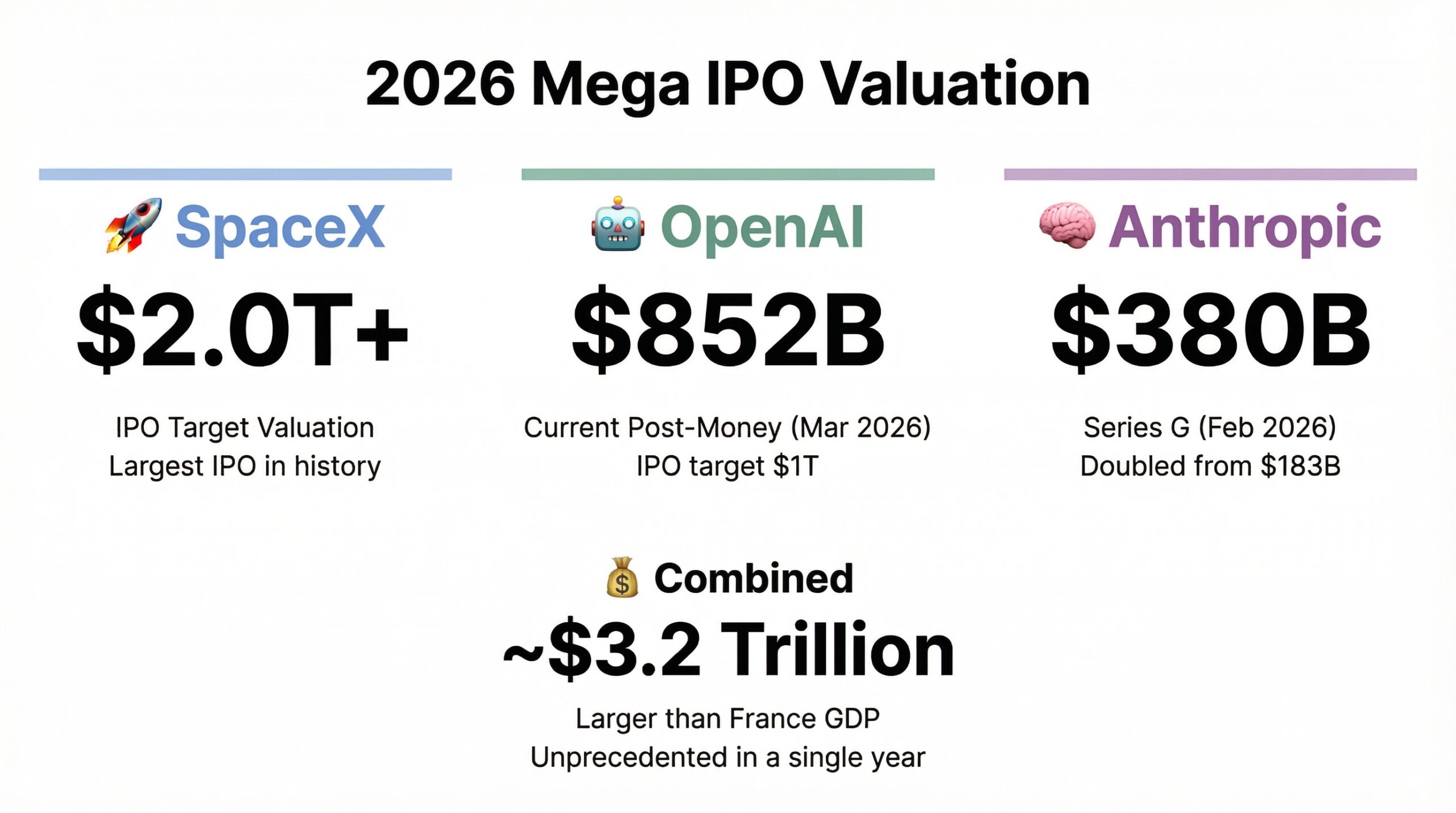
You must check the numbers before making an investment decision. This is because whether the figures are inflated by expectations or supported by actual performance is a completely different story.
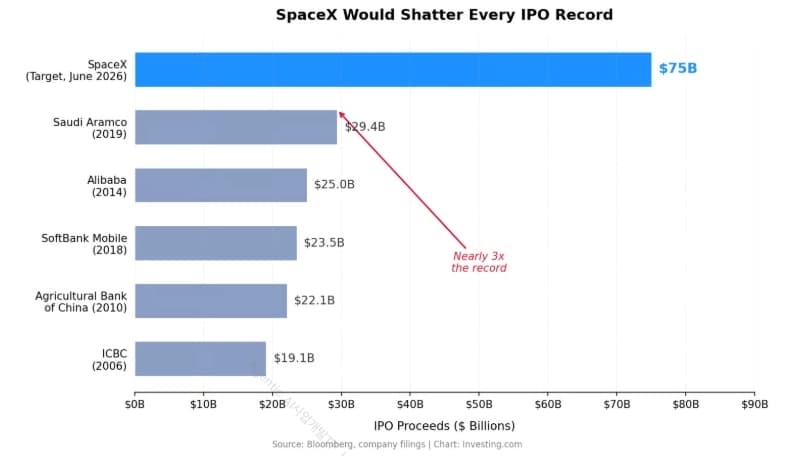
The nature of the three companies is actually quite different. OpenAI has the strongest brand power, but it still maintains a $14 billion deficit. Anthropic's enterprise revenue is growing rapidly—eight of the Fortune 10 companies are already its clients. We analyzed Anthropic's ARR growth structure in detail in a previous post , and the figure, which nearly doubled in just four months, cannot be attributed to a simple seasonal effect. SpaceX is the only one of the three that is profitable. Through the merger with xAI, it has become a diversified company comprising rockets, satellites, and AI, and plans to single-handedly more than double the record for the largest IPO offering ($29 billion) set by Saudi Aramco in 2019.
Frankly, it is still difficult to answer the question of which company is the most attractive investment. However, the risk profiles of the three companies differ, and the actual method of exposure varies depending on the approach taken. We must address this point first.
| enterprise | Current company value | Expected listing timing | 2025 Sales | Profitability |
|---|---|---|---|---|
| 🤖 OpenAI | $852B | Q4 2026 | $13.1B | ❌ $14B loss expected |
| 🧠 Anthropic | $380B | October 2026 | ~$10B | ❌ Deficit, target to turn to surplus by 2028 |
| 🚀 SpaceX | $2 trillion+ | June 2026 | $15.5B | ✅ $8B EBITDA Profit |
2 5 Ways for General Investors to Approach
The statement that "you can't buy it because it's unlisted" is not entirely wrong. However, that is no longer the whole story. As of 2026, there are five accessible avenues. Each avenue has a different structure and a completely different risk profile.
This is the most direct route. Mirae Asset Group is pursuing the securing of SpaceX IPO shares , and if realized, domestic investors will also be able to participate in the public offering subscription. The subscription procedure is as follows: ① Hold an account with Mirae Asset, Samsung, or NH Investment & Securities → ② Register for the MTS public offering service → ③ Apply when the SpaceX subscription opens → ④ Deposit the margin. However, competition is fierce as the allocation ratio for general investors is only around 10–20% of the total.
3XOVR vs DXYZ — You Lose Out If You Don't Know the Structure
Although the two funds look similar, they are completely different on the inside. XOVR has low fees and a stable ETF structure, but its exposure to unlisted stocks is limited to around 10%. If the goal is to bet heavily on SpaceX, its leverage is weak. On the other hand, DXYZ's strength lies in its concentrated exposure to SpaceX and OpenAI, but its structure of a 33% premium relative to NAV and an annual fee of 2.5% erodes long-term returns through compounding. Furthermore, if SpaceX actually goes public and direct purchase becomes possible, the very reason for DXYZ's existence is shaken. Which one is better depends on the investment objective and timeframe, but one thing is clear—you must understand the structure first before making a choice.
| item | XOVR (ERShares) | DXYZ (Destiny Tech100) |
|---|---|---|
| Fund structure | Publicly listed ETFs | Closed-end Fund (CEF) |
| Proportion of unlisted companies | Up to 15% (mainly public shares) | 100% private company |
| SpaceX's weight | About 10% | About 16% |
| Management fee | 0.75% | 2.5% (Total cost 5~6%) |
| NAV Premium | None (ETF structure) | Approximately 33% surcharge |
| Ease of domestic purchase | ✅ Available at most brokerage firms | ✅ Brokerage firms that allow U.S. stock trading |
| 5-year return rate | -34% (Underperforming compared to S&P 500 +75%) | Listed in 2024, short history |
These two ETFs were compared with other AI-related ETFs inthe AI Infrastructure Domestic & Overseas ETF Strategy Guide , and the difference in cost structure has a greater impact on returns when held for more than three years than expected.

4 Strategies by Investor Type — An Approach Tailored to My Personality
Not all methods are suitable for everyone. The approach must vary depending on the risk tolerance and investment objectives.
| Investor Types | Recommendation method | reason | caution |
|---|---|---|---|
| 🛡️ Stable type First time investing in US stocks or volatility avoidance | Alphabet · Amazon · MSFT related stocks | Holding blue-chip large-cap stocks + indirect exposure to Anthropic and OpenAI | Low leverage, long-term perspective essential |
| ⚖️ Balanced type ETF Preferred Investors | XOVR + ARKK in parallel | Diversification effect, ease of purchasing through domestic brokerage firms, reasonable fees | Considering ARKK's volatility, it is recommended to allocate within 5–10%. |
| 🚀 Offensive type Prefers concentrated investment, able to tolerate volatility | DXYZ + IPO Subscription in Concurrent | Direct exposure to unlisted companies, access to pre-IPO prices | DXYZ High Costs & High Premiums, Public Offering Allocation Uncertain |
5 3 Risks to View Coolly
The more attractive a company is, the more strangely lenient people tend to be when it comes to numbers. All three companies have valuations unprecedented in history. The stronger the brand, the harder it becomes to see the gap between expectations and actual figures.
Valuation is the first hurdle. OpenAI is valued at $852 billion with $25 billion in revenue, resulting in a Price-to-Sales Ratio (PSR) of 34 times. Considering that Google's current PSR is around 6 times, this price reflects growth expectations in extreme advance pricing. SpaceX, with a PSR of 130 times, outperforms Palantir (79 times) in the S&P 500. PitchBook also analyzed that OpenAI ranked lowest among the three AI IPO candidates in terms of business quality metrics. This is not to say these figures are wrong. The key question is whether the growth necessary to justify that price will actually follow.
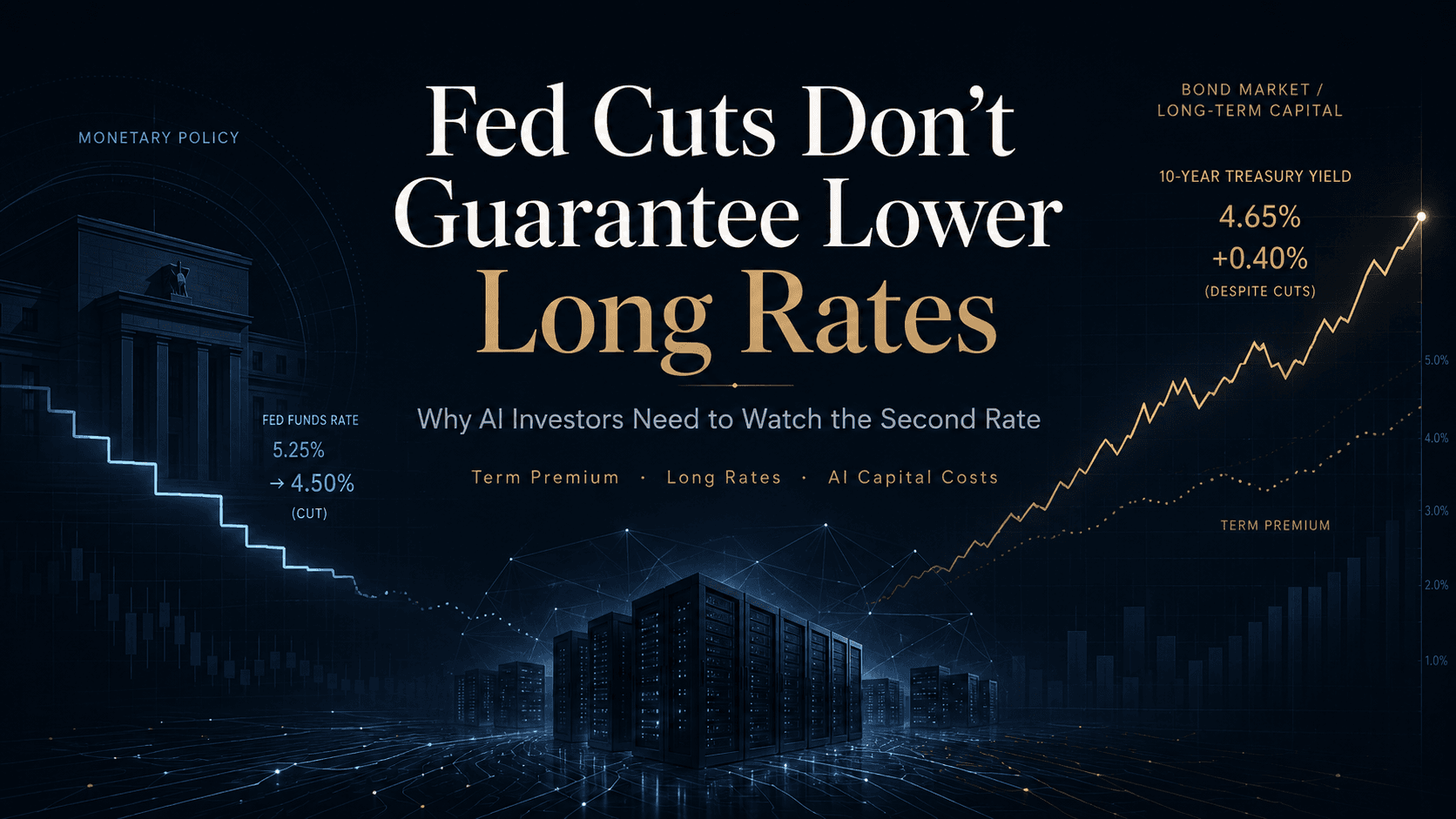
To be honest, OpenAI's current valuation is difficult to explain using the existing SaaS framework. No matter how you apply a multiple relative to ARR, the numbers do not add up. The problem is that the market is already aware of this fact. Yet, the fact that it is trading at $852 billion implies that the market is buying not current earnings, but a "stake in the new economy that AI will create." Whether this is the right bet was discussed in an article analyzing rising long-term interest rates and the compressed structure of AI valuations , but ultimately, it is a story that depends entirely on the direction the interest rate environment takes.
Accessibility is also narrower than expected. This is due to the public offering structure, which is structurally disadvantageous to Korean investors. Unlike in Korea, there is no institutionally open channel for general investors to receive allocations in U.S. IPOs. Subscription agency services provided by domestic securities firms are virtually the only route, and the allocation ratio for general investors is only 10–20% of the total. OpenAI and Anthropic have not yet even publicly released their direct subscription services.
The schedule is not yet finalized. The figures for SpaceX in June and Anthropic in October are merely "estimates" at this point. There have also been reports that OpenAI CFO Sarah Friar internally warned that the 2026 IPO schedule is "too aggressive." Considering why the Fed's decision to freeze interest rates is not a safety signal for the market , it is difficult to rule out the possibility that changes in the interest rate environment could put pressure on IPO schedules. This is why one should approach this with a mid-to-long-term position rather than a short-term bet.
OpenAI PSR 34x · SpaceX PSR 130x · Google's current PSR of about 6x. If your excitement does not subside even after seeing these numbers, it could be a signal that you are considering buying the entire stock rather than taking a staggered approach.
6Frequently Asked Questions
| question | answer |
|---|---|
| Can I buy Anthropic or OpenAI stocks directly? | It is currently impossible. Realistic paths are ARKK (indirect acquisition of OpenAI), DXYZ (exposure to SpaceX and OpenAI), or shares of major shareholders AMZN, GOOG, and MSFT. |
| Can Korean investors directly subscribe to the SpaceX IPO? | Mirae Asset Group is pursuing the securing of shares. If realized, participation will be possible via MTS, but competition is extremely fierce as the general allocation accounts for only 10–20% of the total. It is essential to register for the IPO service in advance. |
| Which is better, XOVR or DXYZ? | If you want concentrated exposure to unlisted stocks, DXYZ is suitable, while XOVR is suitable if you want low fees and a diversified structure. However, with DXYZ, you must first accept a premium of over 33% relative to NAV and a high-cost structure. |
| Which of the three companies is the most attractive for investment? | SpaceX has the strongest fundamentals among the three companies, being the only profitable firm with an EBITDA of $8 billion. Anthropic is impressive with its 80% share of enterprise revenue and growth rate ($9 billion to $19 billion in 4 months). While OpenAI possesses the strongest brand power, it faces the greatest burden due to its loss structure and valuation. Frankly speaking, it is difficult to say that any one is by far the best. |
| Which is more advantageous: buying immediately after listing or approaching it through an ETF now? | Historically, large-scale IPOs have been extremely volatile immediately after listing. The most rational approach is to secure a small position in an ETF now, and then make additional direct purchases once the stock price stabilizes following the IPO. |
7 3 Things to Do Right Now
If the SpaceX June schedule works out, there are less than two months left. It would be the biggest waste if we couldn't get in because we weren't actually ready.
Immediately — Register for brokerage IPO service
You must register in advance for the US IPO subscription service on the MTS platforms of Mirae Asset, Samsung, and NH Investment & Securities. If you are not registered when the subscription opens, participation itself will be impossible. Since registration takes time, please check immediately. It is also advisable to secure a position by purchasing a small amount of ARKK or XOVR (5–10% of the total portfolio). Viewing this in conjunction with the portfolio allocation strategy by AI infrastructure layer helps to establish a clearer overall position structure.
Within 1–2 months — Establish an IPO schedule monitoring system
SpaceX aims for a June IPO, but the schedule may change depending on market conditions. You must set up alerts for TradingView, Bloomberg, and Yonhap News to establish a system that allows you to check SpaceX's S-1 filings as soon as they are released. The financial data disclosed on the S-1 serves as the key basis for actual investment decisions.
Post-IPO — Spin-off Approach + Principle Setting
Volatility is extreme during the first month immediately following an IPO due to factors such as demand for index inclusion, meme investing, and the release of lock-ups. Buying the entire position at once is strictly prohibited. It is advisable to establish a principle in advance to make additional purchases when the price falls 20% from the IPO price and to partially sell when the profit reaches 50%. IPO investing without a set of rules is the riskiest in this sector.
Conclusion — There is a chance. However, there are conditions.
It is true that if you had invested $1,000 in the Google IPO in 2000, it would be worth $3.5 million today. I also understand why that story sounds appealing. The problem is what you do after looking at those numbers.
It is historically rare for OpenAI, Anthropic, and SpaceX to prepare for simultaneous IPOs in 2026. However, this is not an unconditional buy signal. We are entering the market with variables already reflected in the stock prices—such as SpaceX's 130x PSR, OpenAI's $14 billion deficit structure, and the profitability issues hidden behind Anthropic's rapid growth—rather than the variables disappearing. Given the confluence of the OECD's 2026 growth forecast and commodity shock scenarios, it is necessary to view IPO timing with even greater caution.
On the one hand, the likelihood of all three companies failing simultaneously is low. It is structured so that even if one is wrong, the others are right. Approaching this with a portfolio allocation across the entire AI infrastructure layer diversifies risk compared to betting on a single IPO. Honestly, I do not yet know which company is the best investment. I do know that SpaceX has the most stable profitability structure, Anthropic has the most impressive growth rate, and OpenAI has the strongest brand. I think we will have to wait and see how those three factors are reflected in the stock price as S-1 filings are released, earnings accumulate, and the market reacts. I believe it is better to follow that process rather than pretending to be able to answer right now.
All figures and analyses in this article are for informational purposes only and do not constitute investment advice. IPO schedules, valuations, and listing conditions are subject to change at any time depending on market conditions. All investment decisions and responsibilities rest with the individual, and consulting with a professional financial advisor before making any significant decisions is recommended.
📌 Was this analysis helpful?
In the next post, we will cover “SpaceX S-1 Complete Dissection — 10 Numbers Investors Must See.”
Please let me know in the comments which of the three companies' IPOs you are most curious about. I will use it as a reference for the priority of my next analysis.
How this content was produced
Aleph's research AI agent assisted with collecting and analyzing public data, creating charts and visuals, and structuring the draft. Davar personally reviewed and edited the sources, figures, reasoning, and final conclusions.
This content is for informational purposes only and is not personalized investment advice or an individual stock recommendation. Read the full disclaimer

Davar
Davar builds and operates Aleph's research AI agent and writes and reviews analysis on macroeconomic developments and AI industry trends.
© Aleph. All rights reserved.