
AI Company That Grew 30-fold in 16 Months — Privately Listed, But There Is a Path to Get In
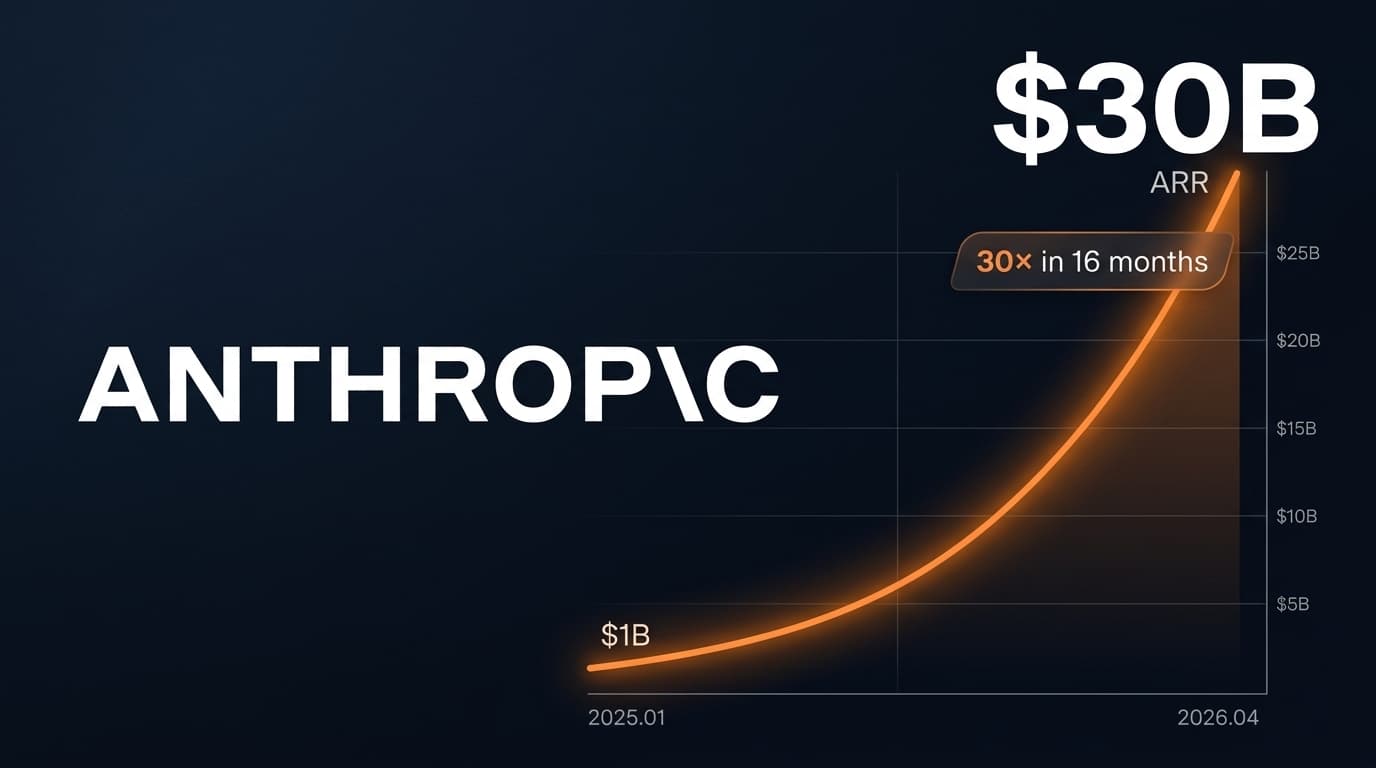
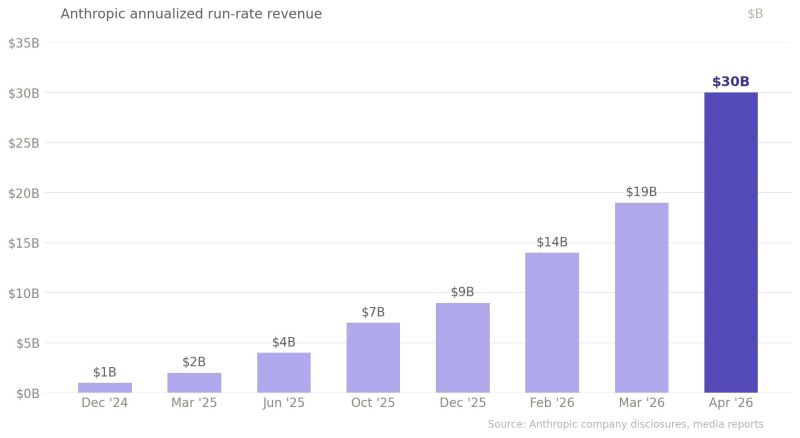
In early 2025, there was an AI startup with $1 billion in annual revenue. Sixteen months later, in April 2026, this company surpassed $30 billion in annualized revenue, and by media reports, its revenue volume was observed to overtake OpenAI. Thirty-fold growth. The protagonist is Anthropic. I was curious how a company labeled "second place in AI" managed to pull off this dramatic turnaround.
What is 1Anthropic — 'AI of a Different Path' that branched off from OpenAI
Anthropic is an AI company co-founded in 2021 by Dario Amodei , former Vice President of OpenAI , and his sister, Daniela Amodei. They led the development of GPT-3 at OpenAI before leaving the company due to “philosophical differences regarding AI safety.” They are rivals from the same research lab.
The company's flagship product is Claude . Although it started as a competitor to ChatGPT, its strategy was different from the beginning. While ChatGPT aimed to be a "mass-market chatbot that anyone can use," Claude focused from the start on being an "AI tool that enterprises integrate into their business operations." This single choice created this speed of growth.
2 $1B→$30B in 16 Months — What the Numbers Tell Us
Anthropic's revenue growth trajectory cannot be explained by the typical SaaS growth curve.
The fastest company in the SaaS industry to reach an ARR of $1 billion to $10 billion was Snowflake (about 6 years). Anthropic covered this milestone in approximately 12 months . This is recorded as one of the fastest revenue growth rates in human history. What makes this figure interesting is not simply its size—the fact that the growth did not come from a single product.
The biggest contributor is Claude Code . It is an agent-type coding tool that acts as a developer's "chief assistant," going beyond simply suggesting code. As of February 2026, Claude Code's standalone ARR alone surpassed $2.5 billion (approximately 3.7 trillion won) , and it holds the top spot with a code generation market share of 42–54%, surpassing GitHub Copilot.
📎 Source: Dataquest April 2026
The number of corporate customers spending over $ 1 million annually doubled in just two months, from 500 in February 2026 to over 1,000 in April. Eight of the Fortune 10 companies are Anthropic customers, and 70% of the Fortune 100 companies use Claude.
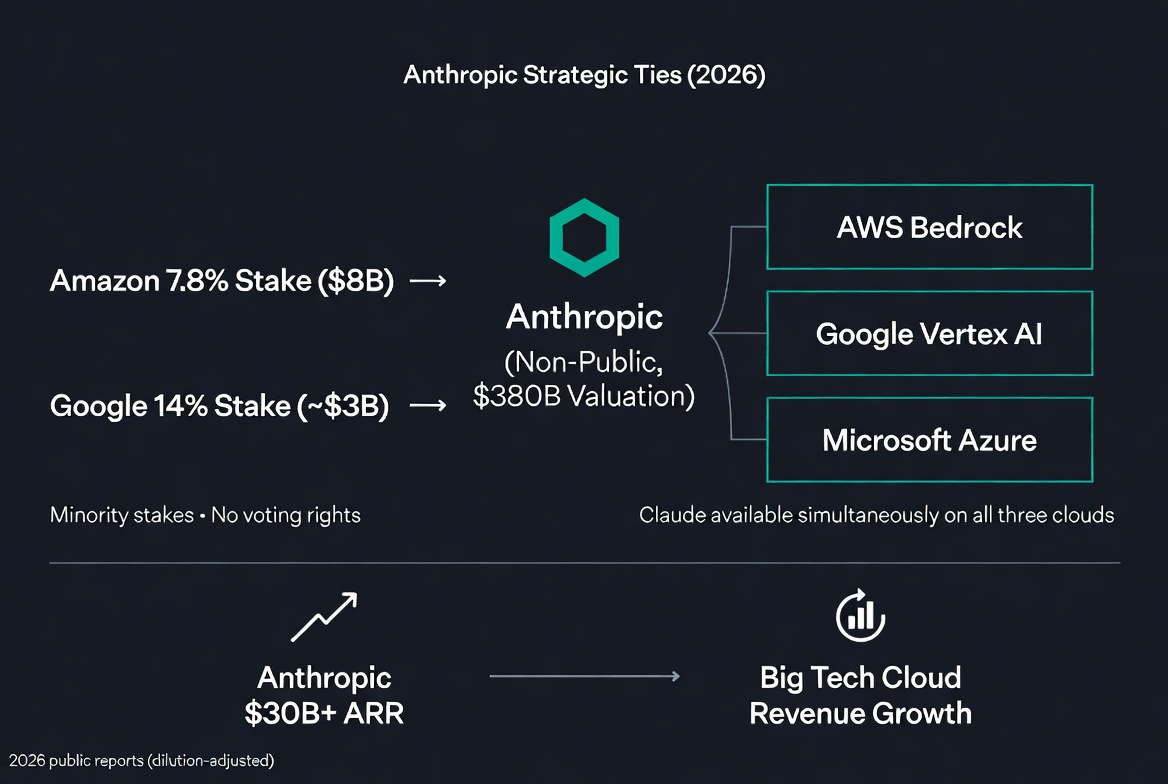
Claude is the only frontier AI model available on all three major cloud platforms : AWS Bedrock , Google Cloud Vertex AI, and Microsoft Azure Foundry. For enterprises, the barrier to entry is extremely low as Claude can be adopted without changing existing cloud infrastructure.
3 80% of Enterprise AI Revenue — The Decisive Difference from OpenAI
The biggest difference between Anthropic and OpenAI is “who pays.”
| characteristic | Anthropic (Claude) | OpenAI (ChatGPT) |
|---|---|---|
| Annualized Sales (April 2026) | $30B or more | About $24~25B |
| Sales composition | Business (B2B) 80% | Consumer (B2C) centered |
| $1M+ Customers Annual | More than 1,000 companies | private |
| New Corporate AI Spending Share | 73% (Ramp data) | Downward trend |
| 2030 Training Cost Forecast | About $30B/year | Approximately $125B/year (4x) |
| Point of turnaround to surplus | 2027 (FCF positive turnaround forecast) | 2030 (Target delayed) |
| corporate value | $380B | $852B |
There is a reason why this difference is significant. Corporate customers have lower churn rates than individual users and consume an overwhelmingly larger amount of tokens. The tokens consumed by a single developer using Claude Code are equivalent to those of hundreds of ordinary users asking casual questions on ChatGPT. Revenue is ultimately determined by token consumption × token price .
📎 Source: Forbes 2026.03.25
Nevertheless, the trend shown by the Ramp AI Index is clear. When companies purchase AI tools for the first time, 73% choose Anthropic. This is precisely why OpenAI recognized this trend and began focusing on enterprise coding tools, such as Codex, while reducing its consumer services (like Sora).
📎 Source: Axios 2026.03.18
4 The Reason Google and Amazon Invested Trillions of Won — Not Investment, but 'Customer Preemption'
The largest investors in Anthropic are not Silicon Valley VCs, but Big Tech companies . Understanding this structure opens up new avenues for individual investors.
Why did they invest trillions of won in a competitor? The answer lies in cloud revenue. Anthropic pays massive cloud usage fees to Amazon while providing Claude on AWS. Infrastructure costs to be paid to Amazon, Google, and Microsoft are projected to reach up to $6.4 billion by 2027. From Amazon's perspective, the structure allows the $8 billion investment to be recouped within two years through cloud revenue. It is closer to "securing top-tier customers" than an investment.
As Anthropic is privately held, direct purchase is not possible. Realistic indirect exposure channels are Amazon (AMZN) and Alphabet (GOOG). Amazon holds approximately 7.8% of the shares and simultaneously benefits from AWS cloud revenue. Alphabet holds a higher stake of about 14% and has tighter ties through long-term TPU infrastructure supply contracts. Funds that directly invest in private AI companies (such as DXYZ ) represent the most direct route, but they must accept a structure characterized by high costs and high volatility. This route was discussed in more detail in the overall strategy for approaching the SpaceX, OpenAI, and Anthropic IPOs .
5 Investment Decision — Anthropic vs. OpenAI, Where Should You Bet?
It is not one or the other. Each has a different role. The approach must be tailored according to investment style. The judgment becomes clearer when considering the structure of how the interest rate environment affects AI valuation .
| Investment judgment criteria | Anthropic glass | OpenAI Glass |
|---|---|---|
| Sales quality | ✅ 80% of businesses, low churn rate | Consumer-centric, high volatility |
| Cost efficiency | ✅ Training cost is 1/4 of OpenAI's. | $125B/year training cost burden |
| Turnaround to surplus | ✅ FCF expected to turn positive in 2027 | 2030 Target (Delayed) |
| Brand awareness | Developer and company-centric | ✅ ChatGPT = The Epitome of AI |
| Corporate value burden | ✅ $380B (Relative undervaluation debate) | $852B (PSR 34x, overvaluation risk) |
| IPO timing | October 2026 Under review | Scheduled for Q4 2026 |
| Ecosystem dependency | Distributed among the three companies: AWS, GCP, and Azure | ✅ Microsoft Exclusive Partnership |
| Exposure method | channel | characteristic |
|---|---|---|
| Indirect exposure | AMZN + GOOG | Benefiting from Anthropic's majority shareholder status and cloud revenue. Even if AI falls short of expectations, the core business (e-commerce and advertising) acts as a pillar of support. This is the most realistic approach that minimizes risk. |
| Dispersed exposure | AMZN + GOOG + MSFT | It covers both Anthropic and OpenAI simultaneously. It is a structure that remains unaffected by the ups and downs of specific companies when the AI market develops into a multi-winner landscape. |
| Direct exposure | IPO public offering subscription | Listing in October is under review, and the appointments for Goldman Sachs and JPMorgan have been finalized. It is essential to register in advance for overseas IPO services offered by domestic securities firms. Limiting it to within 10% of the portfolio is realistic. |
The revenue of an AI company is ultimately determined by token consumption × token price . The key factor in Anthropic surpassing OpenAI in revenue was not the "number of users," but the difference in "token consumption per user." When evaluating AI companies in the future, looking at token consumption trends instead of MAU (Monthly Active Users) is a more accurate revenue indicator in the AI era. A comprehensive understanding is gained by also considering the impact of the AI token explosion on the infrastructure layer .
6 A Cold-Blooded Risk Check — Variables Hidden Behind Rosy Forecasts
We should not be blindly optimistic simply because there is news of orders or a growth story. We must examine the risks surrounding Anthropic.
| Risk | detail |
|---|---|
| ⚠️ Difference based on sales | Anthropic's $30 billion figure is based on gross revenue, excluding fees paid to cloud partners (AWS, GCP, etc.). OpenAI is reported based on net revenue, after deducting these fees. If the same standards are applied, the gap between the two companies could narrow compared to current reports. Source: Forbes 2026.03.25 |
| ⚠️ IPO schedule uncertain | An October listing is strictly in the “under review” stage. PitchBook warns that if the SpaceX IPO (scheduled for June) captures market demand, the IPOs of Anthropic and OpenAI could be pushed back to 2027. Investment strategies based on the premise of an IPO must take into account scenarios of schedule changes. |
| ⚠️ Currently operating at a loss | Anthropic is currently operating at a loss. There is still a long way to go to reach the target of turning a profit in 2027 (positive FCF), and a sustainable revenue structure is not expected to be fully established until after 2028. The gap between the growth story and the reality of profitability must be clearly recognized. |
| ⚠️ Trump Administration Designates Supply Chain Risk | In February 2026, the Trump administration requested the use of Claude for autonomous lethal weapons and large-scale domestic surveillance, which Anthropic refused. In early March, the Department of Defense designated Anthropic as a "supply chain risk" and banned DOD contracts. Anthropic filed a lawsuit in federal court and is maintaining cooperation with other government agencies. The outcome of the lawsuit could affect the avenues for public sector revenue. Source: CNBC 2026.04.08, 2026.05.19 |
7Frequently Asked Questions
| question | answer |
|---|---|
| Is there a way to buy Anthropic stock directly? | As it is currently unlisted, direct purchase is not possible. Until the IPO, holdings of Amazon (AMZN) or Alphabet (GOOG), or funds investing in unlisted AI companies like DXYZ, are realistic alternatives. It is recommended to register in advance for overseas IPO services offered by domestic brokerage firms to participate in the public offering subscription. |
| Which is a better investment target, Anthropic or OpenAI? | In terms of business models, Anthropic, with its high proportion of corporate clients, has better revenue quality. However, OpenAI has overwhelmingly higher brand awareness due to ChatGPT, and its current enterprise value is more than double. An approach that diversifies exposure to both, rather than choosing "one or the other," is more suitable for investors in their 40s and 50s. |
| If the revenue is $30 billion, isn't it already too late? | Looking at the pace of growth, it is still in the early stages. The corporate AI adoption rate remains low, and the number of $1 million+ corporate clients has just surpassed 1,000. However, since a significant portion will already be reflected in the price after the IPO, it is advantageous in terms of timing to first secure a position through indirect exposure (AMZN and GOOG) prior to the IPO. |
Conclusion — The second act of AI investment is a battle of 'who opens corporate wallets'.
If the first act of AI investment was semiconductors and cloud infrastructure, the second act is the process of enterprise AI tools becoming integrated into actual business operations . The event of Anthropic surpassing OpenAI in revenue symbolically demonstrates this trend. The side that made more money earned more by creating “tools developers use all day long,” rather than “prettier chatbots.”
While the limitation of being an unlisted company that cannot be directly invested in is clear, indirect exposure through Amazon and Alphabet is an option feasible right now. It is wise to start preparing for the IPO subscription now.
To be honest, the most interesting thing about this company isn't its growth speed itself. It is the question that lingers longer: why did a single choice of business model create such a gap when they possessed the same technology in the same era? Personally, I think I will ask the same question first when looking at the next AI unicorn: “Who wants to pay?”
All figures and analyses in this article are for informational purposes only and do not constitute investment advice. Company valuation, revenue growth rates, and IPO schedules are subject to change depending on market conditions. All investment decisions and responsibilities rest with the individual, and consulting with a professional financial advisor before making any significant decisions is recommended.
📌 Was this analysis helpful?
In the next post, I plan to cover “Anthropic vs. OpenAI, S-1 Disclosure Comparative Analysis — Numbers to Check Before an IPO.” I will examine the true differences between the two companies based on their financial statements.
How this content was produced
Aleph's research AI agent assisted with collecting and analyzing public data, creating charts and visuals, and structuring the draft. Davar personally reviewed and edited the sources, figures, reasoning, and final conclusions.
This content is for informational purposes only and is not personalized investment advice or an individual stock recommendation. Read the full disclaimer

Davar
Davar builds and operates Aleph's research AI agent and writes and reviews analysis on macroeconomic developments and AI industry trends.

© Aleph. All rights reserved.