
The market became unstable again following Trump's speech. Concerns over oil prices , geopolitics, and inflation weighed down investor sentiment. However, at the same time, three completely different news stories poured out from the AI industry: OpenAI's record-breaking $122 billion funding , Microsoft's unveiling of a series of its own AI models , and Google's announcement of TurboQuant . While the market was shaken, key players in the industry were actually preparing even more aggressively for the next phase. Aleph analyzes these three news stories within a single context.
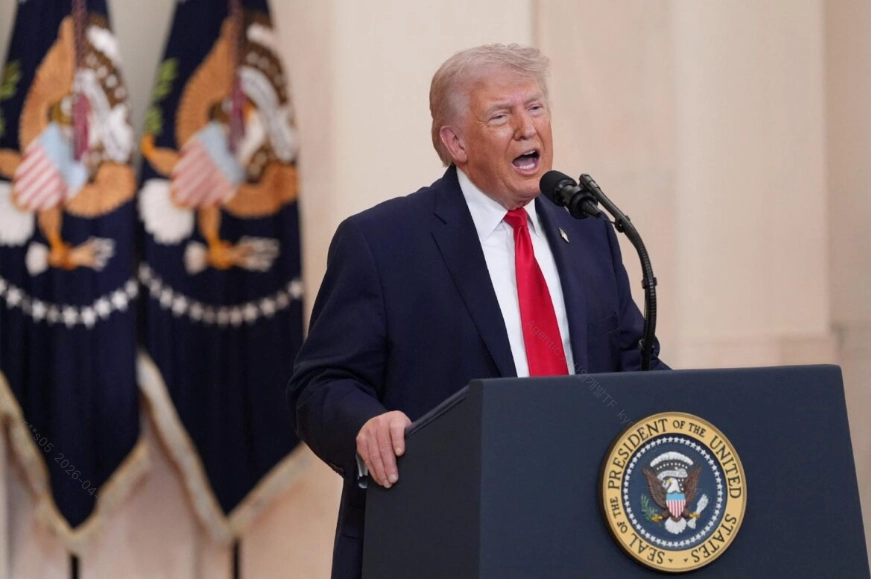
What Trump's speech left behind was uncertainty rather than shock.
The market dislikes news with no end in sight more than bad news. This time was no different. President Trump's speech left behind uncertainty rather than shock. While speaking as if the war were ending soon, he also remarked that heavy blows could continue for the next two to three weeks; ultimately, no clear blueprint emerged regarding the end of the conflict or the normalization of the Strait of Hormuz , which investors had been waiting for the most. Immediately after the speech, stocks fell, the dollar strengthened, and oil prices rose again.
This trend is also important for understanding AI-related stocks. It is not that the market dislikes AI; rather, it dislikes uncertainty. Even if positive tech news emerges, multiples cannot easily rise if they are overshadowed by oil prices, interest rates, the dollar, and geopolitical risks. The recent correction is not a signal that the AI era is over, but rather a sign that the market has started raising its discount rate again.
In a volatile market, what lasts the longest is not a flashy narrative, but the logic of infrastructure . Who holds the cash? Who secures the power? Who lowers costs? Who retains customers? The answers to these four questions are the compass for AI investment right now.
2Why OpenAI Raised $122 Billion Now
Looking solely at the numbers, it may appear overheated. An enterprise value of $852 billion (approximately 1,249 trillion won) . This is a massive figure for a startup that hasn't even turned a profit yet. However, the key to this funding lies in concentration rather than scale.
This round was spearheaded by Amazon, Nvidia , SoftBank , and Microsoft, and adopted an unprecedented structure by separately raising $3 billion from retail investors. Where did OpenAI say it would use these funds? It stated that it would focus on AI chips, data center deployment, and the development of an integrated AI super app that combines ChatGPT, Codex, browsing, and agents into one. This means it is transitioning from an "expansion phase where everything is tried" to a "selection phase where resources are reallocated to where they are profitable."
| item | black eye | meaning |
|---|---|---|
| Total amount raised | $122 billion | Largest single venture round in history |
| corporate value | $852 billion | Berkshire Hathaway level |
| Monthly sales | $2 billion | The corporate sector accounts for more than 40% of the total. |
| ChatGPT Weekly Users | 900 million+ people | Surpasses 50 million paid subscribers |
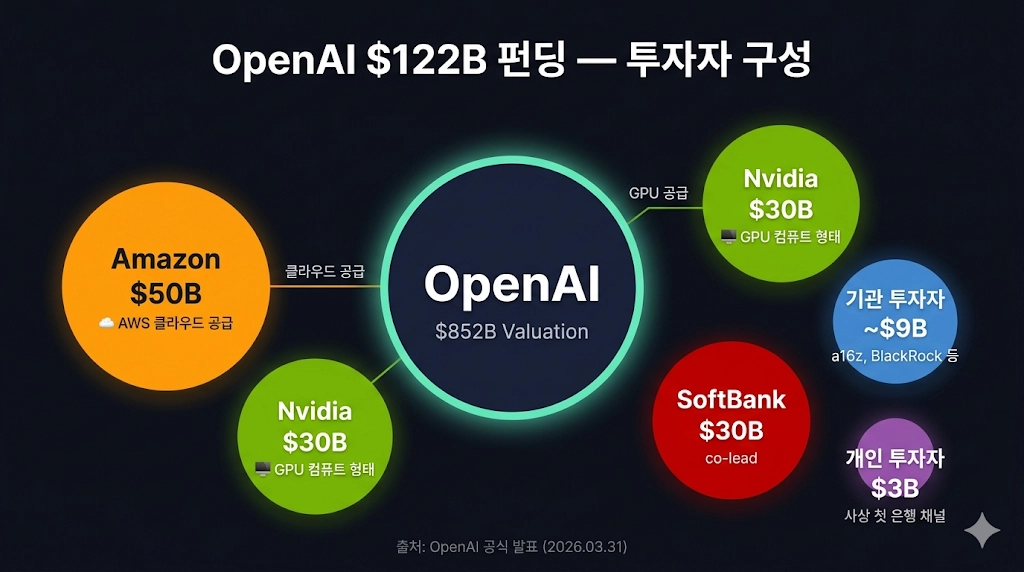
What is more important is the direction in which this money flows. It is projected that the combined AI infrastructure spending of four companies—Amazon, Microsoft, Alphabet, and Meta—could reach approximately $630 billion by 2026. This money ultimately goes into servers, GPUs, networks, and, above all, electricity. The current bottleneck in AI is not a lack of ideas, but a lack of physical infrastructure .
If you view this funding as merely a fundraising effort, you are seeing only half the picture. OpenAI's infrastructure strategy (Cloud: Microsoft, Oracle, AWS, CoreWeave, Google Cloud / Silicon: Nvidia, AMD, proprietary chips) is an attempt to internalize the entire AI supply chain. This confirms once again why Aleph emphasized the need to view semiconductors and the cloud together in its analysis of AI stock portfolios .
3 The Real Reason Microsoft Released Three Own Models
Microsoft has recently unveiled a series of its own AI models. The image generation model MAI-Image-2 ranked third on the Arena leaderboard, following OpenAI and Google, and MAI-Voice-1 (a speech model) and the Text Foundation model MAI-1-preview were also released. While this appears on the surface to be a product expansion, it holds much greater strategic significance.
Mustafa Suleyman, CEO of Microsoft AI, stated, “As one of the world’s largest companies, we must possess the capability to build the world’s most powerful models in-house.” This is a declaration to grow an independent AI stack while maintaining cooperation with OpenAI. It also signifies that while they intend to preserve a strong partnership, they will not rely entirely on external sources for core competencies.
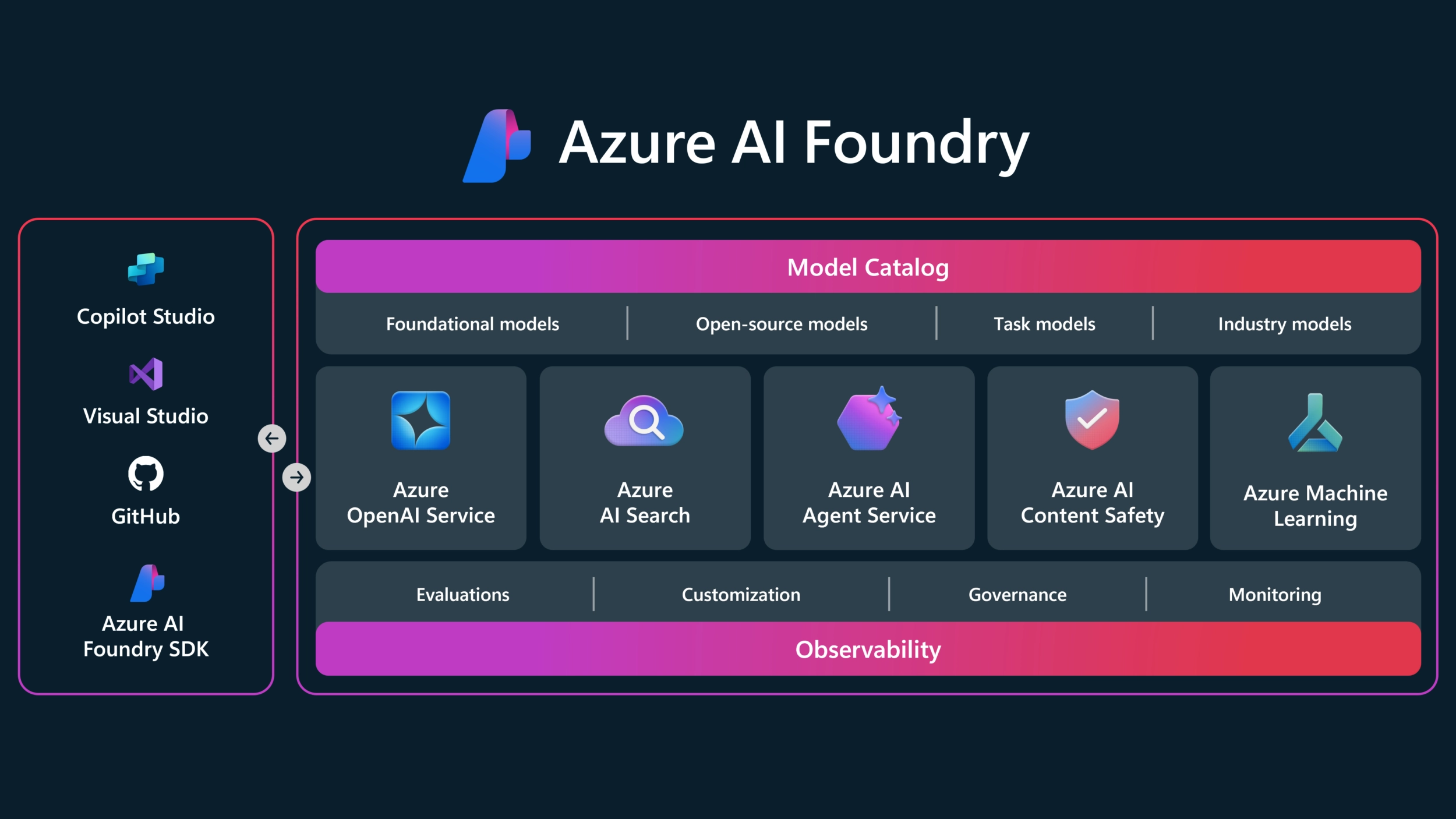
This is a signal showing where power in the AI industry is shifting. Going forward, it is highly likely that " who dominates the platform, determines prices, and controls distribution channels" will become more important than " who built the best model." AI is no longer a game of correctly predicting a single model, but a game of reading who holds more layers.
4Google TurboQuant — Is it bad news for memory stocks, or a signal for AI expansion?
Google Research unveiled TurboQuant on March 25, 2026. It is an algorithm that reduces the KV cache memory of LLM by six times without training, while maintaining accuracy. Immediately after the announcement, the stock prices of Samsung Electronics, SK Hynix, and Micron all fell. Fear spread that "if less memory is needed, the demand for HBM might also decrease."
However, this interpretation is too one-dimensional. TechCrunch pointed out that TurboQuant handles only inference memory, and that training still requires massive amounts of memory. What is more important is the historical pattern. When efficiency improves, demand does not decrease; rather, use cases have exploded. When costs drop, companies do not use less; instead, they begin deploying AI in more places.
| TurboQuant Key Figures | detail |
|---|---|
| KV cache memory reduction | Minimum 6x reduction (16-bit → 3-bit compression) |
| Improve inference speed | Up to 8x faster attention computation based on H100 GPU |
| applied area | Inference bound — training memory is separate |
| No training required | Directly applicable to existing models (no fine-tuning required) |
| time of announcement | ICLR 2026 — Not yet officially released to production |
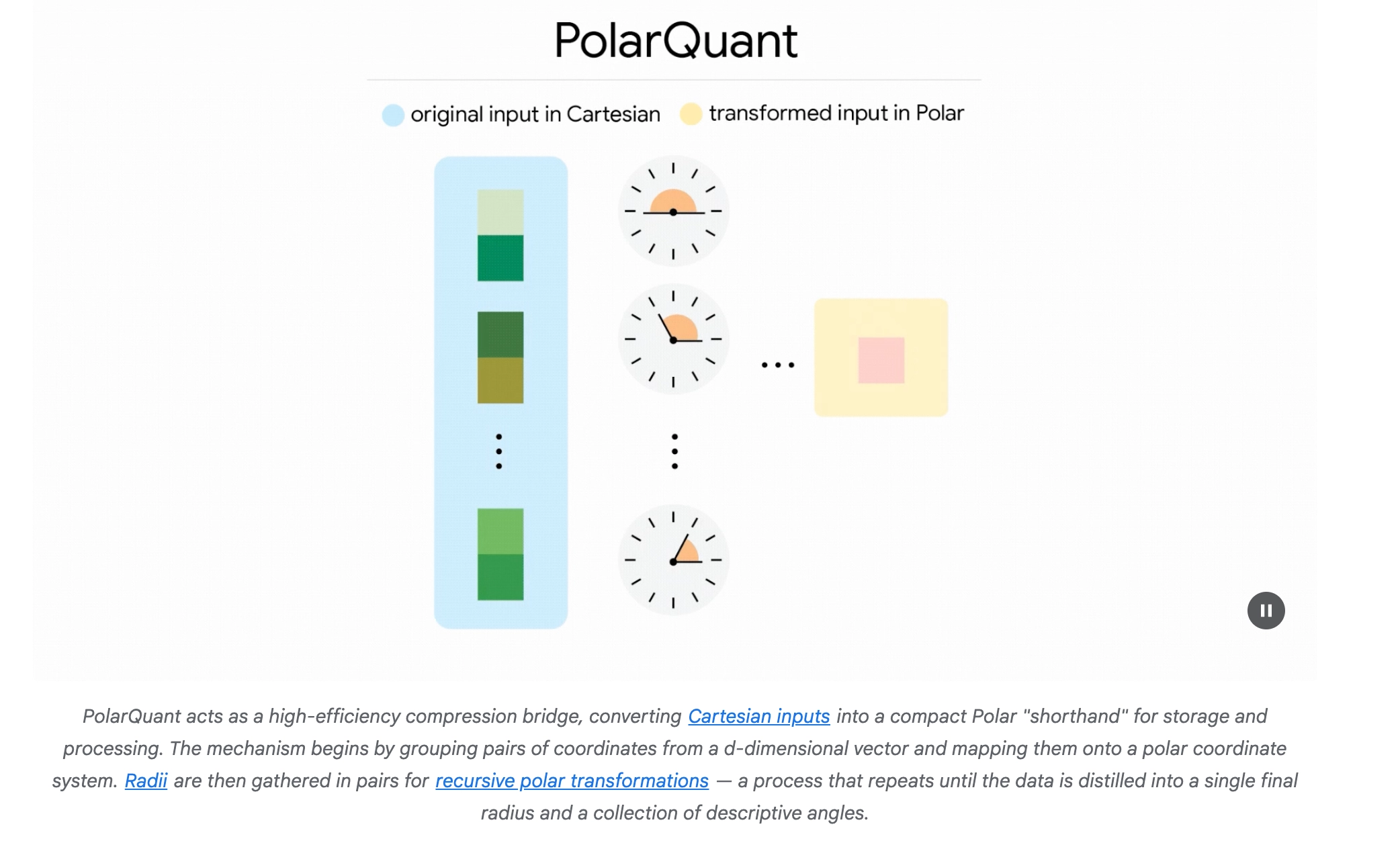
TurboQuant compresses short-term memory (KV cache) during the inference phase . This is a different story from the demand for HBM used for AI model training. Furthermore, this is currently an announcement at the research lab level, and official production libraries have not yet been released. Whether to view the sharp drop in the stock price as a buying opportunity or a structural change begins with this distinction.
👉 Memory Stock Fear Sparked by TurboQuant — Aleph In-depth Analysis
5 Three News Stories Connected as One — A Signal of AI Layer Reorganization
OpenAI's $122 billion, Microsoft's MAI series, and Google's TurboQuant. While these three may appear to be separate news items, Aleph sees them as pointing to a single trend. It indicates that the AI industry is shifting from a competition over 'which model is smarter' to a competition over 'who controls more capital, power, and distribution capabilities.'
OpenAI — Bought time with capital
The $122 billion is not merely a simple fundraising effort. It is a capital market event that encompasses an AI super app strategy, the internalization of compute infrastructure, and even an IPO narrative. It is a strategic choice to use capital to stall competitors for the time it takes to close the technology gap.
Microsoft — Increased platform control
The MAI series serves as insurance to reduce dependence on OpenAI and a key to more firmly locking down the Azure ecosystem. Owning your own models brings pricing power as well. The next weapons in the AI platform war are not model performance, but margins and distribution channels.
Google — Lowered the cost of AI diffusion
TurboQuant is not a technology that kills memory demand, but rather one that enables the cheaper and wider deployment of AI. As costs drop, more companies will adopt AI, and it is highly likely that overall infrastructure demand will actually increase in the long term.
6Now is not the time to give up on AI, but to re-select the layer
The fear in the market is understandable. Oil prices, inflation, and geopolitical risks are all on the rise simultaneously. In such a market, everyone wants to take a break. However, as Aleph emphasized in his previous analysis of geopolitical risks, the most common mistake during a panic phase is selling good assets at a bad time .
What is needed is not exit, but redeployment. Rather than abandoning AI as a whole, we must re-examine which layers within it survive. Even amidst this chaos, the layers of AI that survive ultimately narrow down to three.
| AI Layer | Reasons for Survival | Representative Player | Attention Indicators |
|---|---|---|---|
| ⚙️ Physical infrastructure | It is absolutely necessary for AI to run | NVDA , SK Hynix , TSMC | Data Center Capex Trends |
| ☁️ Platform · Distribution | Holding customer touchpoints and pricing control | MSFT Azure, AWS, Google Cloud | Cloud AI Revenue Growth Rate |
| 💰 Companies with cash flow | The strongest defense during a period of rising interest rates | MSFT, AMZN, GOOG | FCF, debt ratio |
① The market does not dislike AI, but dislikes uncertainty .
② The current bottleneck in AI is not a lack of ideas, but a lack of physical infrastructure .
③ Now is not the time to give up on AI, but the time to re-select the layer .
👉 AI Portfolio Strategy in a Geopolitical Risk Phase — Aleph Analysis
📌 Was this analysis helpful?
In the next post, we plan to cover “HBM Investment Strategy After TurboQuant — Should You Buy SK Hynix and Micron Now?”
Aleph continuously tracks how AI technology news connects to the flow of money and which layers survive within it. Subscribe now to be the first to receive the next analysis.
How this content was produced
Aleph's research AI agent assisted with collecting and analyzing public data, creating charts and visuals, and structuring the draft. Davar personally reviewed and edited the sources, figures, reasoning, and final conclusions.
This content is for informational purposes only and is not personalized investment advice or an individual stock recommendation. Read the full disclaimer

Davar
Davar builds and operates Aleph's research AI agent and writes and reviews analysis on macroeconomic developments and AI industry trends.

© Aleph. All rights reserved.