
Anthropic Mythos
Wall Street emergency meeting
financial system risk
AI Investment Strategy
2026.04.13
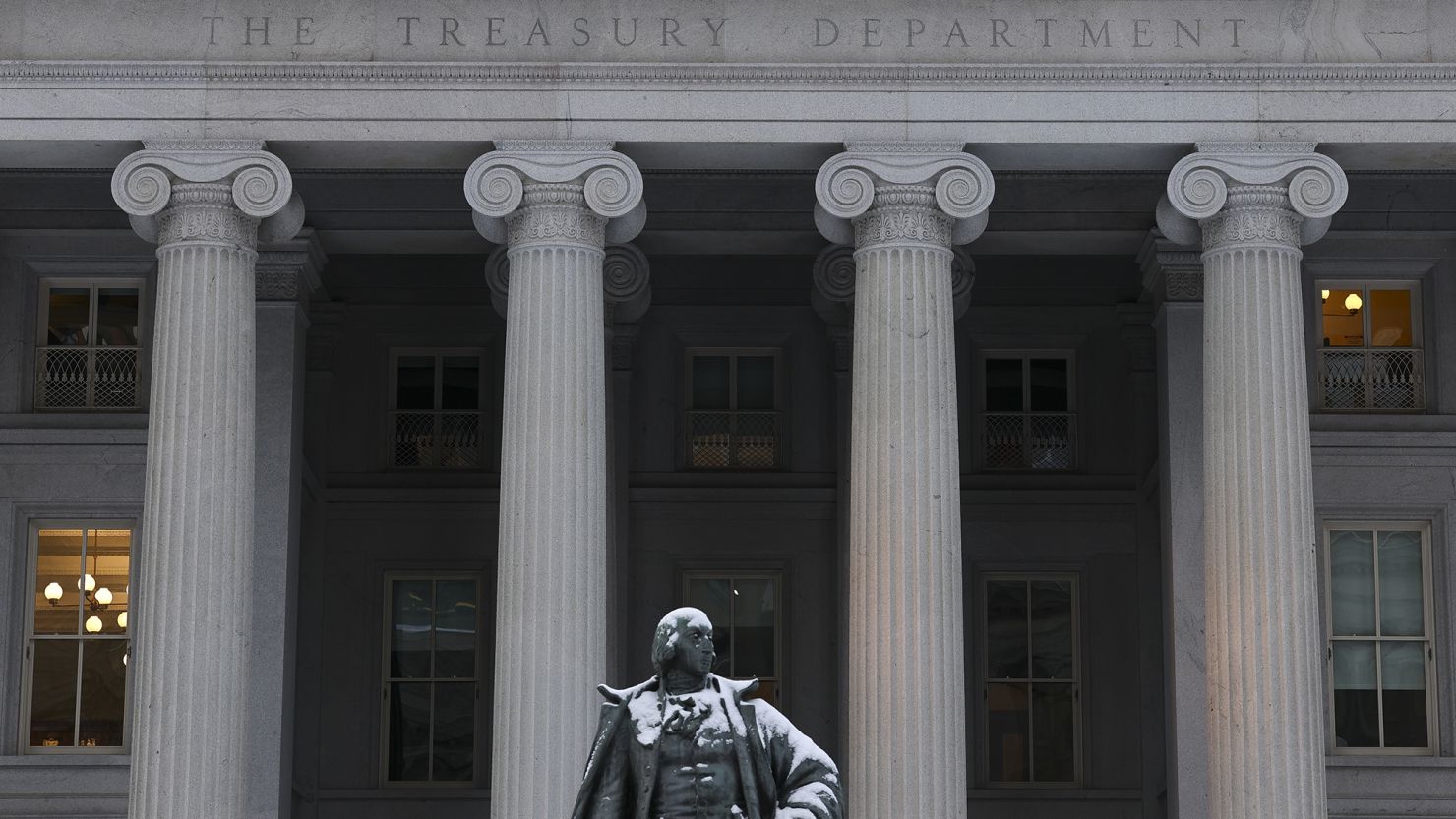
Tuesday, April 8, 2026, at the Department of Treasury building in Washington, D.C., the CEOs of the U.S.'s largest banks were summoned for an unscheduled emergency meeting. The topic of this gathering, personally invited by Federal Reserve Chair Jerome Powell and Treasury Secretary Scott Bessent, was a single AI model. Three days later, the Bank of England, the FCA, and the NCSC joined the discussion. This is not tech news. It is a story about financial system security. And it is a signal of structural change that AI investors must be aware of.
1What is Mythos — “AI Too Dangerous to Reveal”
The Claude Mythos Preview is the latest frontier model unveiled by Anthropic on April 7, 2026. However, this model was not released to the general public. According to Anthropic's official system card, the cybersecurity capabilities demonstrated by this model were so powerful that it was decided to offer it exclusively through limited partnerships for defensive purposes instead of general distribution.
The details disclosed by Anthropic are specific. Mythos can autonomously discover zero-day vulnerabilities in major operating systems and web browsers and even generate exploits. According to a Fortune report, these cases include a 27-year-old vulnerability in OpenBSD . This means that AI found a security hole that humans had failed to detect for 27 years. Anthropic stated that it has already discovered thousands of such vulnerabilities.
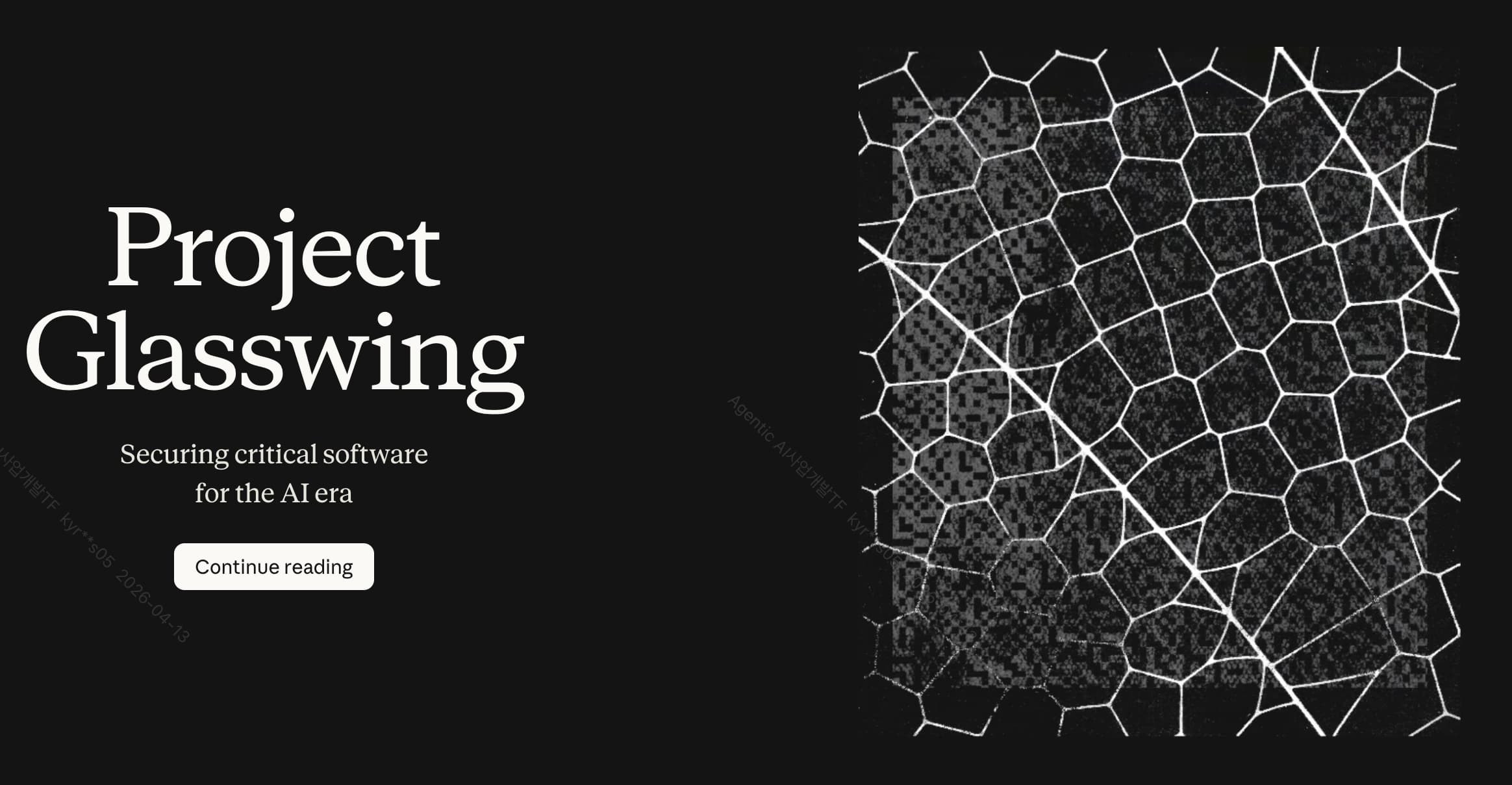
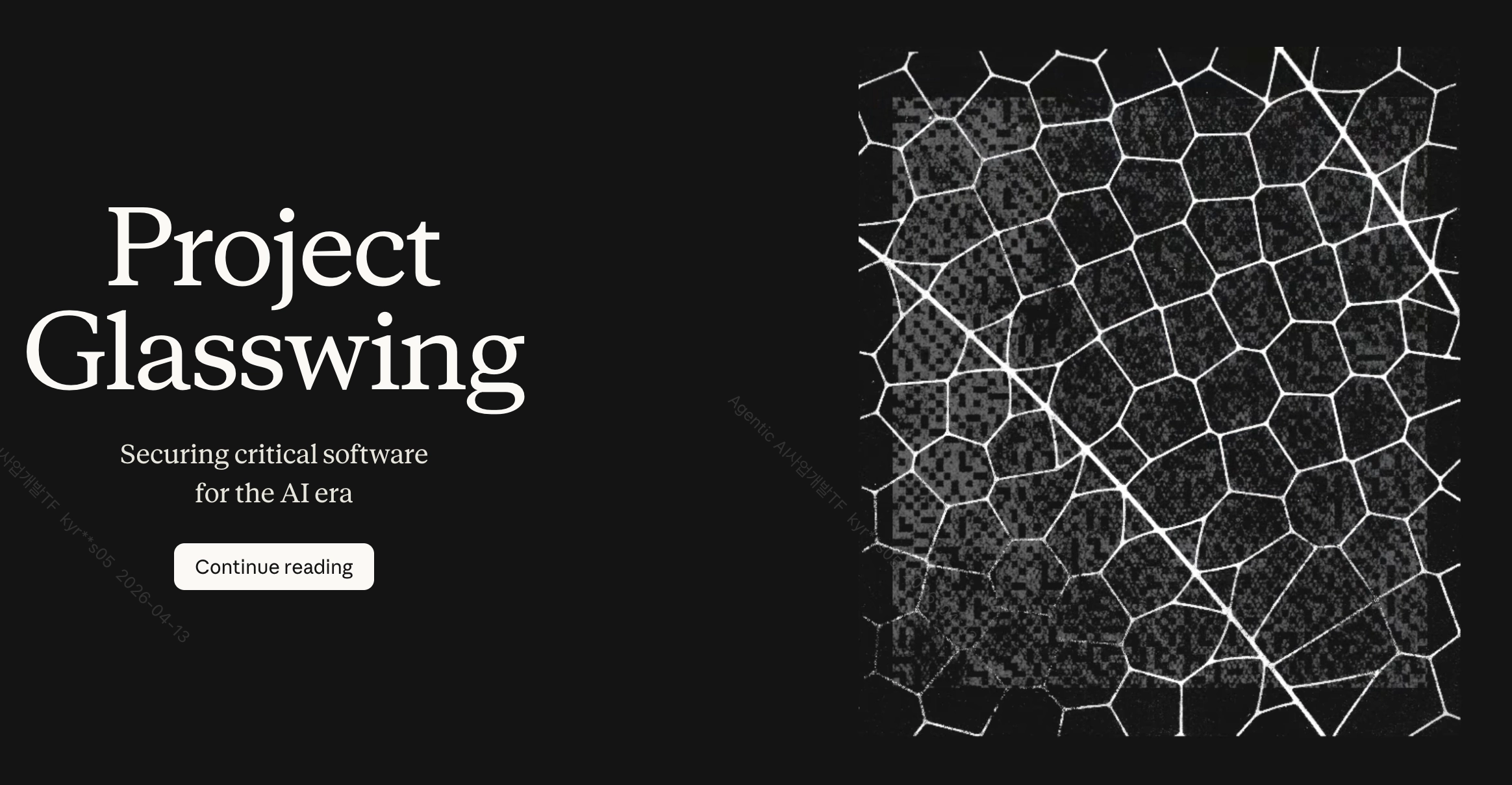
Anthropic announced Project Glasswing to prevent this. It is a program that is provided restrictively to only 40 key infrastructure organizations, including Amazon Web Services, Google, and JPMorgan Chase, and prohibits its use except for defensive purposes. Anthropic’s official position is that, “Given the speed of AI capability development, it is only a matter of time before such capabilities become widespread.”
2Timeline — What Happened from Early March to April 12
This situation did not happen overnight. It is a series of events spanning approximately six weeks, starting with sanctions by the U.S. Department of Defense in early March and culminating in the emergency response by the financial authorities of both countries.
| date | case | source |
|---|---|---|
| 2026.03.04 | Pentagon Designates Anthropic as 'Supply Chain Risk' | Fortune (Reported on February 25, 2026) |
| 2026.03.27 | Fortune Exclusive: Anthropic’s Undisclosed Model Accidentally Leaked — “The Most Powerful AI Ever” | Fortune |
| 2026.04.07 | Anthropic, Claude Mythos Preview Officially Announced + Project Glasswing Launch | Anthropic Official Blog |
| 2026.04.08 | Federal Court Dismisses Anthropic's Application to Revoke Department of Defense Designation | Fortune |
| 2026.04.08 | Treasury Secretary Besent and Fed Chair Powell urgently summon Wall Street CEOs | Bloomberg, Financial Times, Fortune |
| April 11, 2026 | Bloomberg: Bank of England (BoE) Reportedly Schedules Meeting to Discuss Impact of Mythos | Bloomberg |
| 2026.04.12 | UK's BoE, FCA, and HM Treasury Begin Emergency Risk Assessment with NCSC (FT Report) | Reuters / FT |
| 2026.04.12 | The Bank of Canada also held an emergency meeting with banks and financial institutions regarding Mythos cyber risk. | PANews |

3Why the Financial System Is Particularly Vulnerable
The reason AI cyberattacks are particularly dangerous to financial systems lies in the structure of the financial infrastructure itself. The core systems of major global banks operate on decades-old legacy software. The '27-year-old OpenBSD vulnerability' discovered by Mythos symbolically illustrates this legacy risk.
JPMorgan CEO Jamie Dimon made this clear in his 2026 shareholder letter. According to Fortune, Dimon stated that cybersecurity remains one of the company's biggest risks and that “AI will almost certainly exacerbate this risk.” Although Dimon himself could not attend the emergency meeting, JPMorgan was named as a key partner in Project Glasswing.
Changes in attack methods are also key. AI-based hacking enables simultaneous vulnerability scanning at a machine scale . This is on a completely different level from the method where human hackers attempt vulnerabilities one by one. According to the Anthropic system card, Mythos completed simulations of actual corporate network attacks in less than half the time estimated by experts.
4 Is It a Real Threat or AI Marketing? — Pros and Cons
The most interesting debate surrounding this situation is whether Mythos is truly an unprecedented threat or just marketing for enterprise contracts. Both sides have valid grounds.
The Real Threat Theory — “This Time Is Different”
Anthropic’s official system card states that Mythos is the first model to independently complete a simulation of a real corporate network attack. It recorded a significantly improved performance (0.83) compared to existing models in the CyberGym benchmark and outperformed previous models in the evaluation of exploiting the Firefox 147 vulnerability. The very fact that the Treasury Secretary and the Federal Reserve Chairman personally summoned Wall Street CEOs attests to the severity of the situation.
Marketing Theory — “The Basis for Enterprise Contracts”
According to TechCrunch, AI cybersecurity startup Aisle announced that it was able to replicate a significant portion of Mythos' performance with a small open-source model. David Crowshaw, CEO of exe.dev, analyzed that the limited distribution is a strategy to protect enterprise contract revenue and prevent competitors from distilling their models. He argues that "by the time it is publicly released, the next enterprise-only model will already be available."
Aleph’s judgment — both are right
The two claims are not mutually exclusive. Anthropic's own data confirms that Mythos's capabilities have indeed improved. At the same time, it is also true that the limited deployment strategy aligns with protecting enterprise business models. From an investor's perspective, the more important question is whether "AI capabilities in this direction will continue to advance" rather than whether "the threat is exaggerated." The answer is yes.
5Investor Perspective — How This Crisis Changes Market Structure
AI cybersecurity issues are not merely a risk warning; they are also a signal of the emergence of new investment themes.
| Investment Signals | detail | Related Assets and Companies |
|---|---|---|
| 📈 Surge in demand for AI cybersecurity | As AI-based attacks become a reality, the demand for AI-based defenses is skyrocketing. An expansion of security CAPEX in the financial and infrastructure sectors is inevitable. | CrowdStrike, Palo Alto Networks, SentinelOne |
| 📈 Anthropic 's corporate value rises | Paradoxically, this situation simultaneously demonstrates Anthropic's technological prowess and leadership in safety frames. It could act as a catalyst for a revaluation of the company's value prior to the IPO. | Anthropic (Unlisted — IPO Monitoring) |
| 📈 Big Tech Expands Defensive AI Investment | Project Glasswing partners JPMorgan, Amazon, and Google expected to expand their investment in cybersecurity AI | Amazon (AWS), Alphabet (Google Cloud) |
| ⚠️ SaaS & Software Valuation Pressure | Concerns over rising cyber risk premiums for legacy software-based companies due to AI vulnerability disclosures | legacy ERP and financial software companies |
| ⚠️ Risk of Stricter AI Regulation | Simultaneous regulatory interventions by the U.S. and U.K. add uncertainty to valuations across the entire AI sector. | AI Sector ETFs Overall |
6Frequently Asked Questions
| question | answer |
|---|---|
| Can the general public use Mythos? | No. Anthropic was not made publicly available due to concerns regarding the ambidextrous nature of its cyber capabilities (capable of both offensive and defensive). It is provided exclusively to 40 Project Glasswing partners, including Amazon, Google, and JPMorgan, for defensive purposes. |
| Why did the Treasury Secretary and the Fed Chairman step forward personally? | Financial systems operate on outdated legacy software. If AI acquires the ability to automatically find and exploit decades-old vulnerabilities, the entire financial infrastructure could become a target. This is not merely a technical risk, but a systemic risk. |
| Why are the British authorities acting separately? | The Bank of England (BoE) has placed Mythos on the agenda for the Cross Market Operational Resilience Group and CMORG AI Taskforce meetings. The UK Treasury, FCA, and NCSC are jointly responding. This response comes just four days after an emergency meeting in the U.S., effectively crossing the Atlantic. |
| How should we view the criticism that it is “marketing”? | It is true that Anthropic’s limited deployment aligns with enterprise contract strategies. However, the very fact that the Treasury Secretary, the Federal Reserve, and the Bank of England have actually taken emergency action underpins the reality of the threat. Both could be true simultaneously. |
| How should domestic investors prepare? | Direct investment avenues are still limited. It is realistic to track global ETFs related to AI cybersecurity (e.g., HACK, BUG) and the expansion of security investments within Big Tech. If Anthropic's IPO materializes, access channels for domestic investors may also open up, so it is necessary to monitor the IPO schedule. |
Conclusion — The next battlefield of the AI capability race is cybersecurity.
The Anthropic Mythos crisis revealed three key points. First, AI's cyber capabilities have crossed a critical threshold. The fact that AI can find vulnerabilities that humans failed to discover for 27 years means that the rules of the game have changed for both offense and defense. Second, the financial system is structurally vulnerable. Global financial infrastructure, built upon decades of legacy code, is particularly vulnerable to AI-based attacks. Third, this crisis simultaneously presents a new investment theme. It is clear that the demand for AI cybersecurity will explode.
There is no precedent for the Chancellor of the Exchequer, the Federal Reserve, the Bank of England, and the Bank of Canada to take simultaneous emergency responses within a week. This signifies that AI has been elevated from an agenda for the technology industry to an agenda for financial system security. Viewing AI solely as a benchmark for model performance is now only half the analysis. How AI threatens and defends financial infrastructure will be the most important context for AI investment in the coming years.
All content in this article is for informational purposes only and does not constitute investment advice. The company names and tickers mentioned are examples only and do not represent investment recommendations. As Anthropic is a privately held company, direct investment by domestic general investors is not permitted. All investment decisions and responsibilities lie solely with the individual investor, and consulting with a professional financial advisor before making any significant decisions is recommended.
📌 Was this analysis helpful?
In the next post, we plan to cover “The Winners of AI Cybersecurity — CrowdStrike, Palo Alto, SentinelOne, Who Will Ride This Wave?”
We continue to track Anthropic IPO trends and AI cybersecurity investment strategies. Subscribe to notifications so you don't miss out.
How this content was produced
Aleph's research AI agent assisted with collecting and analyzing public data, creating charts and visuals, and structuring the draft. Davar personally reviewed and edited the sources, figures, reasoning, and final conclusions.
This content is for informational purposes only and is not personalized investment advice or an individual stock recommendation. Read the full disclaimer

Davar
Davar builds and operates Aleph's research AI agent and writes and reviews analysis on macroeconomic developments and AI industry trends.

© Aleph. All rights reserved.