
Why Did the Stock Market Rise When Core Inflation Exceeded Expectations? — A Day When Oil Prices and AI Infrastructure Demand Overshadowed the CPI
On the day the August CPI was released, I expected the stock market to be quite volatile. Although the headlines were as expected, core inflation was higher than anticipated, and the likelihood of a Fed rate hike in September had surged. However, the market acted differently than I anticipated. The Dow and Nasdaq actually rose by nearly 1%, and the downward trend of four consecutive trading days was broken. Why did stocks rise when the CPI wasn't even good? Upon closer inspection, there were two factors that reacted more strongly to the market that day than the negative news regarding inflation.
1Inflation was higher than expected, but the stock market rose
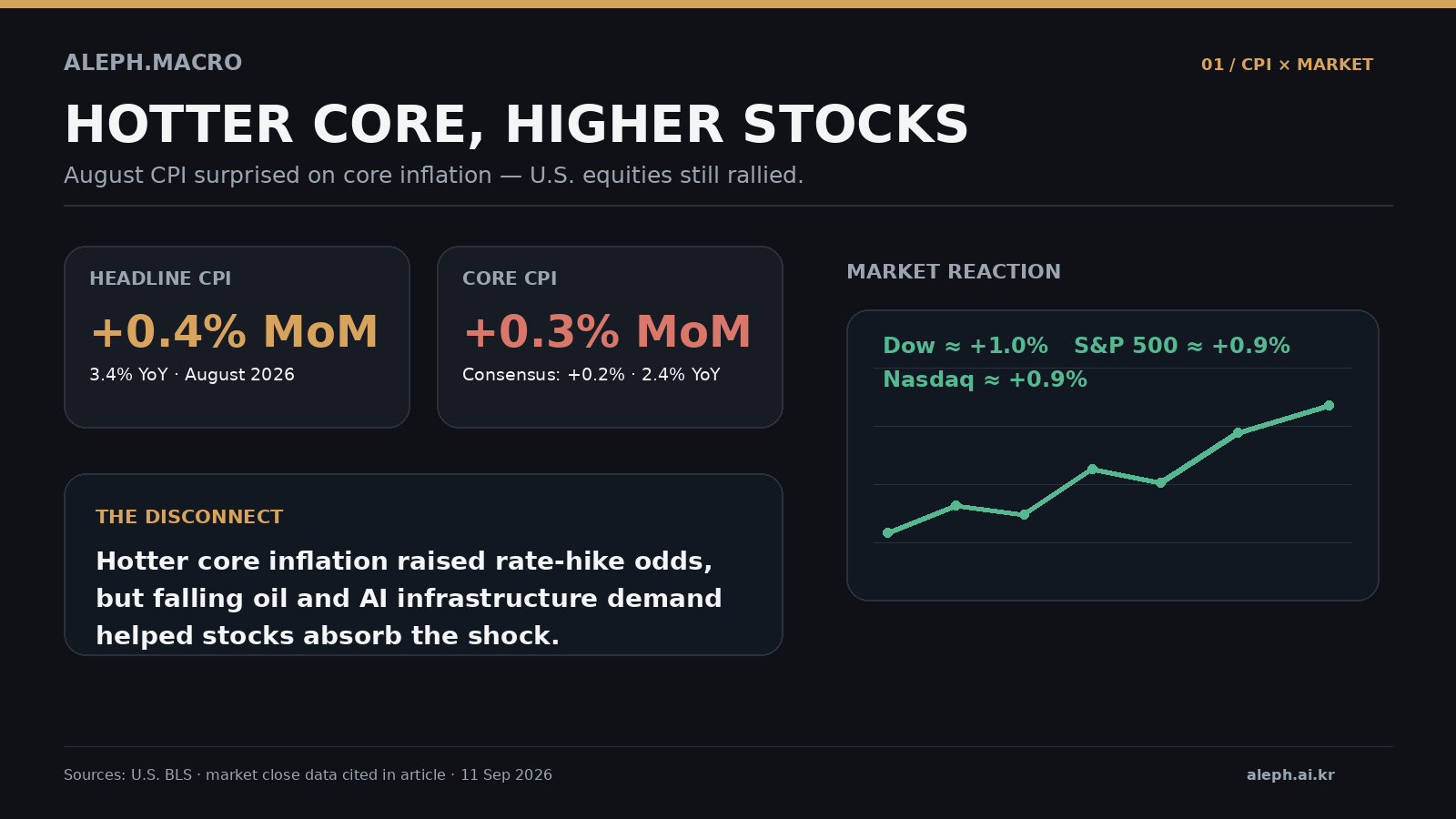
The August CPI, announced by the U.S. Bureau of Labor Statistics (BLS) on September 11, rose 0.4% from the previous month and 3.4% from the previous year. Given that the monthly growth rate in July was 0.1%, the margin of increase has widened considerably.
What stood out more was core inflation. The core CPI, excluding food and energy, rose 0.3% from the previous month, exceeding market expectations of 0.2%. While the year-on-year growth rate fell to 2.4% from 2.5% in July, looking only at the one-month trend, inflationary pressure has strengthened again.
Oil prices also had a significant impact. Gasoline prices rose 3.9% in a single month, accounting for more than one-third of the total CPI increase. However, oil prices were not the only issue. Service prices excluding energy also rose by 0.3%, while housing costs increased by 0.3% and transportation services by 0.5%.
The bond market reacted immediately. Following the CPI announcement, the probability of expecting a 25 basis point hike at the September FOMC meeting jumped to the mid-to-high 80% range, and at one point approached 90% during the trading session.
At this level, it wouldn't have been surprising if the stock market had fallen. However, the market moved in the opposite direction that day. The Dow rose by about 1%, while the S&P 500 and Nasdaq also rose by around 0.9%.
What was different?
It’s not that the 2CPI was good.
The rise on this day could be described as a “relief rally that the worst inflation has been avoided.” In fact, such an interpretation has emerged. However, the core CPI did not come out lower than expected; on the contrary, it was higher.
The market did not ignore the CPI either. The likelihood of an interest rate hike surged, and government bond yields rose immediately. However, other factors reacted more strongly in the stock market.
First was oil prices.
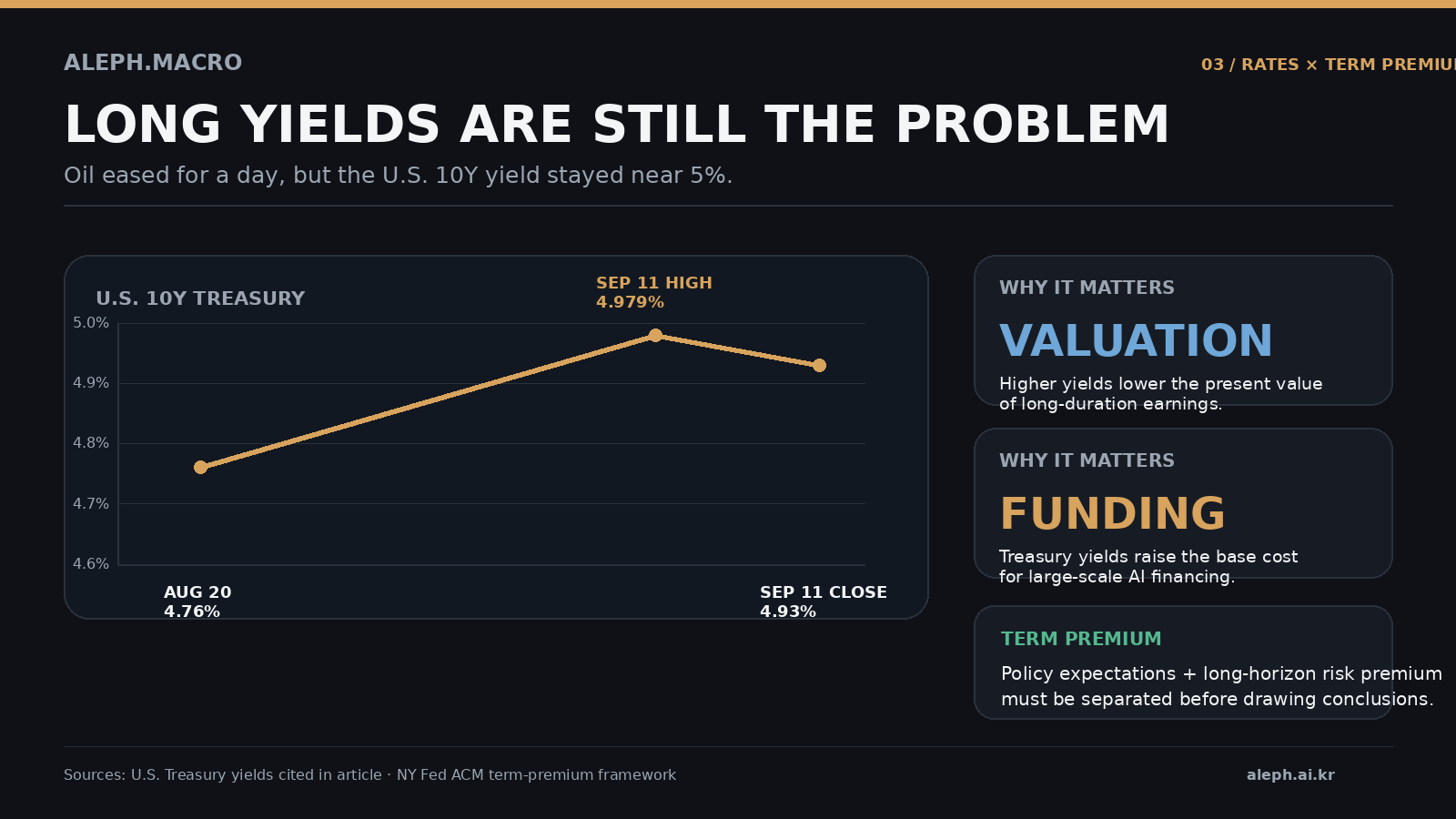
International oil prices rose sharply throughout the previous week as the situation in the Middle East deteriorated. Brent crude briefly surpassed $108 per barrel, and WTI also climbed above $100. However, on the day of the CPI release, both Brent crude and WTI fell by about 2–3%.
On a weekly basis, oil prices were still up more than 8%. While the trend hadn't changed, at least on that day, prices didn't rise further. That alone gave the market a moment to catch its breath.
However, it is difficult to view this pullback as a trend reversal. On September 13, the day this article is updated, Iranian state media reported that an Iranian merchant vessel was struck near the Strait of Hormuz, killing one person. Iraq's investigation into the earlier drone attack on Saudi Arabia's East-West oil pipeline is also continuing. It seems more accurate to view Friday's decline in oil prices as merely a brief pause during the surge.
The second was Oracle.
Oracle disclosed strong cloud earnings and AI demand after the market closed yesterday. It also maintained its capital expenditure plan for fiscal year 2027 at $90 billion to $95 billion. Naturally, market attention focused on where that money would flow.
Dell and HPE, suppliers of servers, racks, and cooling and network equipment, were the representative beneficiaries. The stock prices of both companies rose by double digits the following day, leading the rise in the S&P 500.
However, Oracle's stock price was different. It rose in the early trading session but eventually turned downward.
For Dell and HPE, Oracle's increased investment directly translates into revenue. On the other hand, Oracle must bear the cost of that investment directly. This is the reason why their stock prices diverged despite the same expansion of AI investment.
The demand for AI was strong. However, the cost to meet that demand was also considerable.
Therefore, it is difficult to call this day a simple CPI relief rally. It is not that the negative factors regarding the CPI disappeared, but rather that falling oil prices and expectations for AI infrastructure investment were reflected more significantly on that day.
3Oracle did well, so why did the stock price fall?
Oracle's performance itself was strong. Revenue rose 30% year-over-year to $19.3 billion, and cloud infrastructure revenue increased by 121%. The Remaining Purchase Order (RPO) was $664 billion, up $209 billion from the same period last year, and new AI cloud contracts signed this quarter also exceeded $30 billion.
RPO refers to the amount for which a contract has already been signed but has not yet been fully recognized as revenue. Simply put, it means that there is a backlog of orders that are highly likely to lead to future revenue.
Looking solely at the numbers, there seems to be little disagreement that the demand for AI is strong. The problem is the cost.
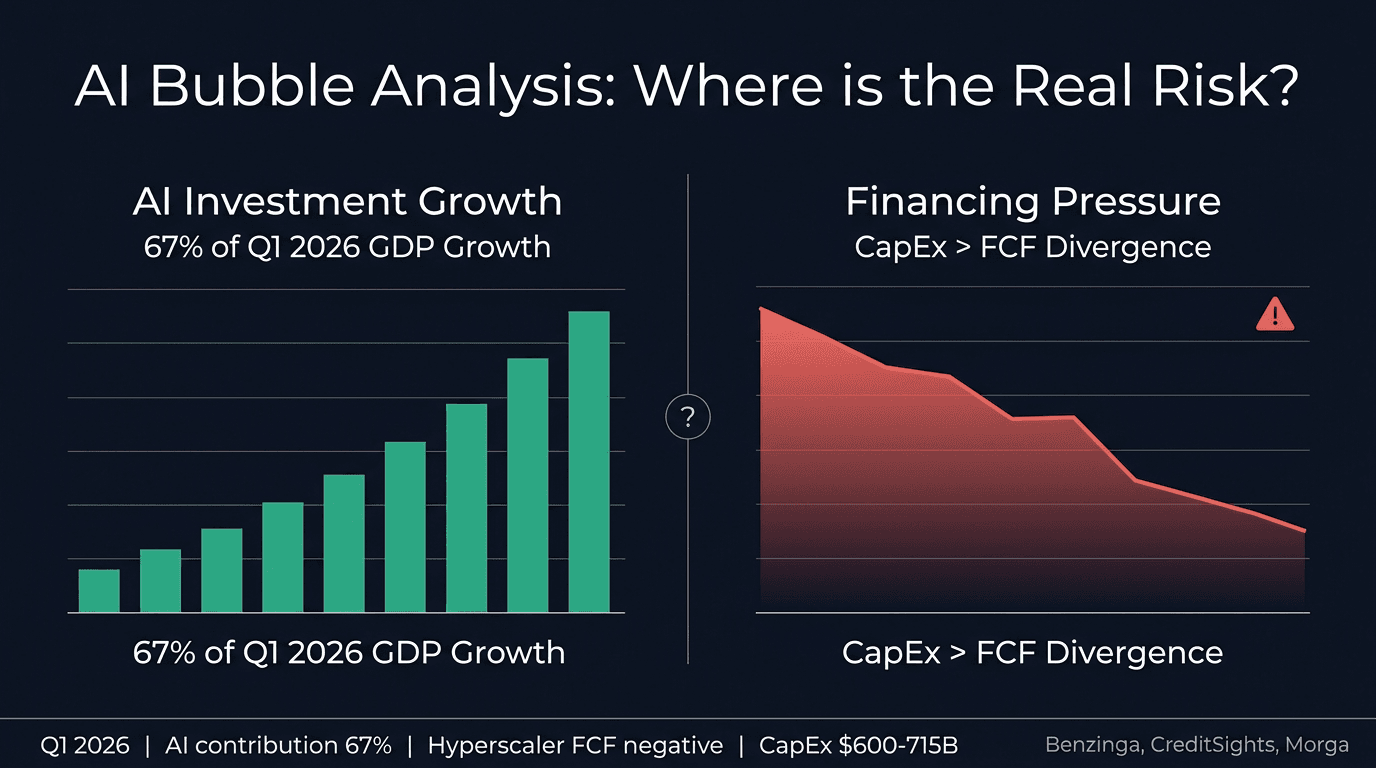
Oracle's capital expenditures for the same quarter were $28.5 billion. Free cash flow was in deficit by approximately $5.4 billion. Money invested in the quarter exceeded revenue for the same period.
Oracle's earnings showed two contrasting figures. RPO had increased significantly, while cash flow was in deficit. Demand was certain, but the investment costs to support that demand were substantial.
For Dell and HPE, this increased investment directly translates into revenue. Oracle, on the other hand, bears the costs directly.
What matters now is not how much money is spent on AI, but how quickly that money returns to revenue and cash flow.
4Then why do long-term interest rates remain high?
Here, the story of Term Premium, which was covered last month, comes up again.
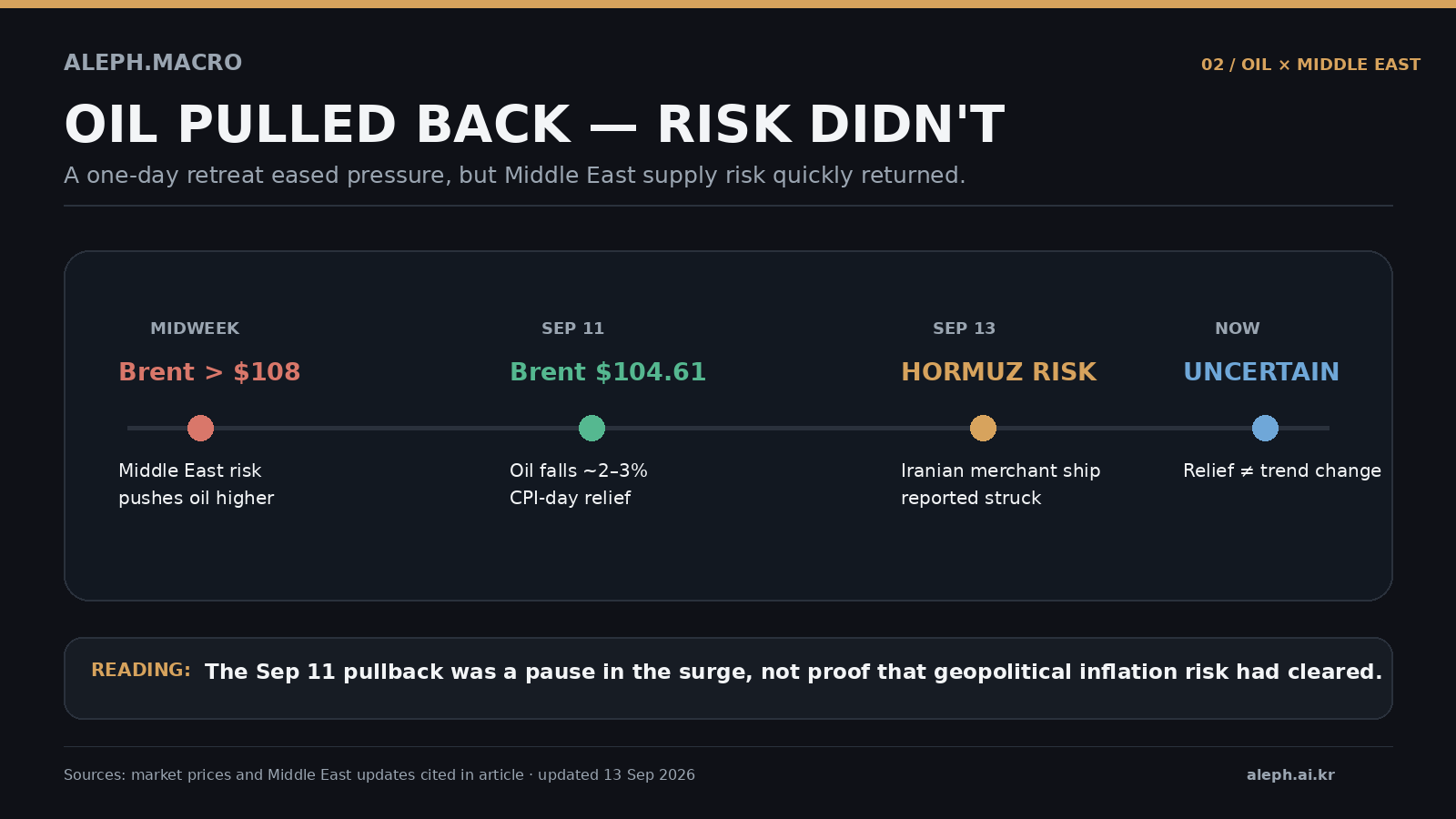
The yield on U.S. 10-year Treasuries, which stood at 4.76% on August 20, rose to 4.979% during trading on the day of the CPI release. This marks the highest level since 2023. Although it closed at 4.93%, it remained close to 5%, while the 30-year yield also climbed to the 5.3% range, reaching its highest level since 2007.
On the same day, oil prices fell, but long-term interest rates barely dropped. This means that oil prices are not the only force driving up long-term interest rates.
The U.S. government must continue to issue government bonds to cover its large fiscal deficit. In addition, AI companies are also raising massive funds to build data centers. Some analyses suggest that bonds issued by major AI hyperscalers alone amounted to approximately $220 billion through August 10 of this year.
With the government and companies simultaneously in need of large sums of money, the impact of oil price shocks originating from the Middle East has compounded the situation. This effectively gives investors buying long-term bonds more reason to demand higher interest rates.
However, this interest rate hike cannot be entirely explained by the term premium. It also reflects expectations regarding how much the Fed will raise rates in the future. To separate these two effects, the NY Fed needs to look at data from sources like ACM separately.
If long-term interest rates rise like this, AI companies face two burdens.
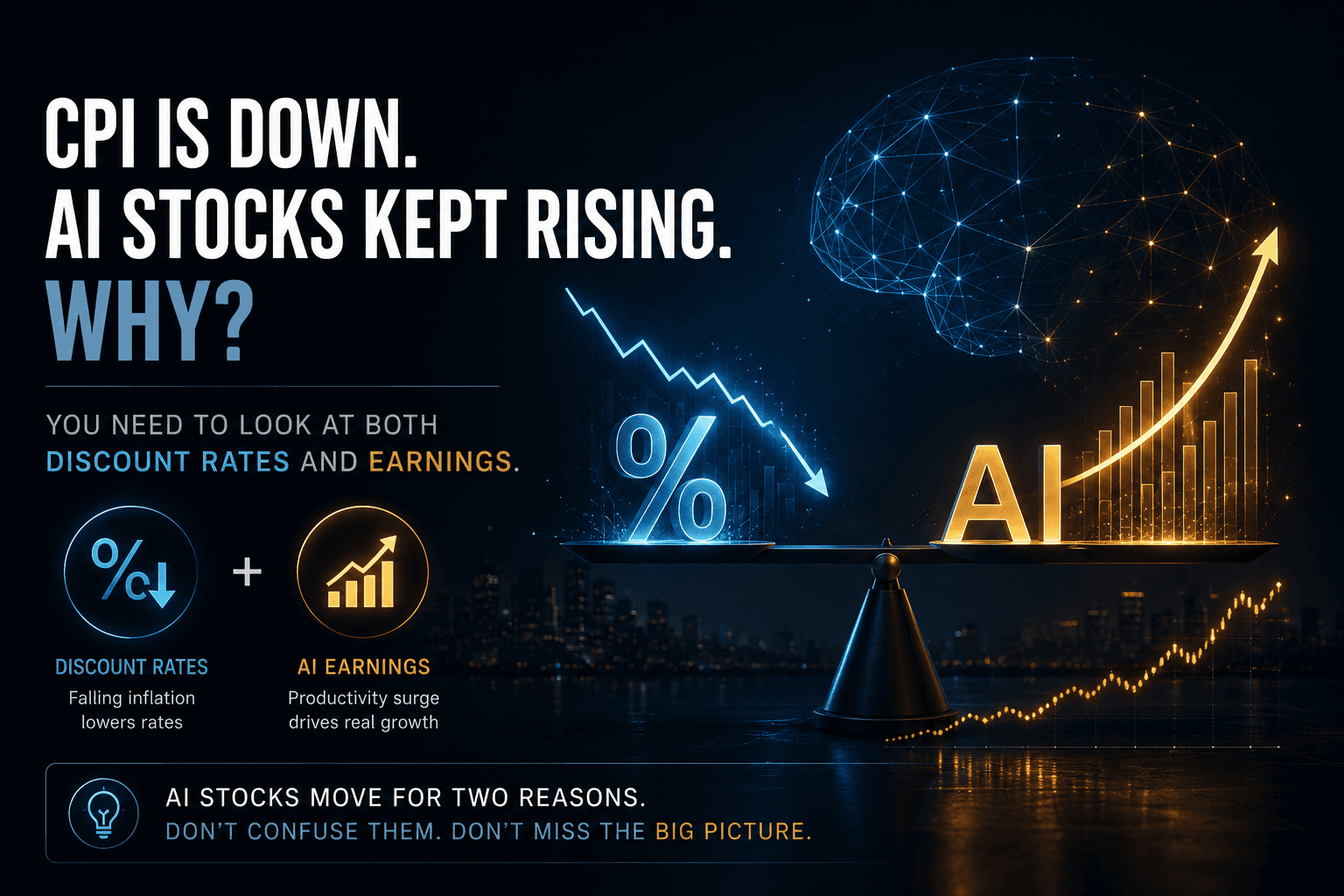
First is valuation. As interest rates rise, a higher discount rate must be applied to future earnings. Even for the same earnings, the value assessed at present decreases.
The cost of borrowing money also rises. Corporate bond yields are determined by adding the company-specific credit spread to the government bond yield. If government bond yields remain high for an extended period, the burden increases for companies that need to continuously raise large amounts of capital.
Will the money generated from AI investment be able to sufficiently outweigh the increased financing and investment costs?
Ultimately, this is also the part the market needs to verify going forward.
5The interest rate decision is not the only thing to watch at next week's FOMC.
The FOMC meeting on September 15–16 is the first meeting held following the recent CPI announcement. As the market has significantly increased the likelihood of a 25 basis point hike after the release of the CPI, attention will first focus on whether to raise or keep interest rates unchanged.
However, the Fed's explanation is just as important as the result. This is because the outlook for future interest rates could vary depending on how they view this recent price increase.
If the impact is deemed temporary due to rising oil prices, there may be no rush toward further tightening. Conversely, if the renewed rise in the core CPI's monthly growth rate is viewed as a more serious issue, there is a greater likelihood of keeping interest rates at high levels for a longer period or considering further hikes.
In the latter case, long-term interest rates, which are already close to 5%, could rise again. Conversely, if the Fed places more weight on energy prices, there is also a possibility that expectations for interest rate hikes currently reflected in the market could be partially lowered.
So next week, I plan to look at what the Fed is more concerned about than the interest rate decision itself.
6So what should I keep looking at?
It is difficult to conclude whether AI stocks are good or bad based solely on the recent CPI. Instead, by looking at oil prices, long-term interest rates, and the earnings of AI companies together, we can gradually see which direction the current situation is heading.
If oil prices fall and the 10-year yield stabilizes below 5% , there will be grounds to conclude that energy prices played a significant role in the recent inflation. The interest rate burden on growth stocks could also be somewhat reduced.
If oil prices fall but the 10-year yield continues to hover around 5% , the situation changes. In that case, one should pay closer attention to the fiscal deficit, government bond supply, and term premiums than to oil prices. This remains a burden for high-valuation stocks.
It would be most uncomfortable if oil prices rise again and core inflation strengthens . This would increase the Fed's reasons to consider further hikes, and long-term interest rates could rise again.
Conversely , if AI companies continue to see improvements in contracts, revenue, and cash flow despite high interest rates, there is less reason to view all AI-related stocks in the same direction. In fact, the gap between companies that can generate revenue while withstanding high interest rates and those that cannot could widen further.
I am watching this last case with the most interest. I plan to check whether investment and demand grow together at other hyperscalers, just like at Oracle, and whether that investment translates into cash flow.
It is insufficient to look only at how much CAPEX increases. It is more important to see if new contracts, revenue, and free cash flow improve together.
7Frequently Asked Questions
| question | answer |
|---|---|
| Why did the stock market rise when the recent CPI was bad? | The rise was not due to a positive CPI. International oil prices fell for a day, and related stocks like Dell and HPE surged as Oracle's earnings confirmed the possibility of continued investment in AI infrastructure. On that day, these two factors were reflected in the stock market more significantly than the negative news regarding the CPI. |
| Is the Fed really raising interest rates? | Following the CPI announcement, the market priced in a probability of a 25bp hike in September in the mid-to-high 80% range, and at one point during the trading session, it approached 90%. However, this is merely a market expectation and not a confirmed decision. We must verify the results of the FOMC meeting on September 15–16 and the Fed’s explanation. |
| Has the U.S. 10-year Treasury yield surpassed 5%? | On the day of the CPI announcement, the rate rose to 4.979% during trading, marking its highest level since 2023, before closing at 4.93%. It is more important how long such high interest rates persist than whether they surpass 5% for a single day. |
| Why are AI companies sensitive to long-term interest rates? | When interest rates rise, the discount rate applied when calculating the present value of future earnings increases, which can lead to lower valuations. At the same time, the financing costs required for data center investments also rise. The actual impact varies depending on a company's cash flow and creditworthiness. |
| What is the most important number in Oracle's performance? | An RPO of $664 billion and over $30 billion in new AI contracts demonstrate that AI demand is translating into actual contracts. On the other hand, a quarterly CAPEX of $28.5 billion and negative free cash flow indicate that the investment costs required to handle that demand are also very high. |
Conclusion — We must look beyond the CPI release date.
What I paid most attention to in this CPI was not the price figures themselves, but the way the market reacted after those figures were released.
Core inflation was higher than expected, and the likelihood of an interest rate hike jumped significantly. Normally, this would be a burdensome combination for stocks. However, on the same day, oil prices fell, and Oracle's large-scale investment plans were seen as new revenue opportunities for AI infrastructure companies like Dell and HPE. Consequently, the stock market actually rose.
However, concerns about inflation have not disappeared. The U.S. 10-year Treasury yield remains close to 5%, and the situation in the Middle East is becoming unstable again.
The same goes for Oracle's performance. It has been confirmed that the demand for AI is translating into actual contracts. At the same time, the amount of money spent to handle that demand was enormous.
So, going forward, I plan to look at three things.
Whether oil prices are rising again.
How the 10-year yield moves around the 5% mark.
And whether the money AI companies are pouring in actually returns as revenue and cash flow.
It is difficult to determine the market direction based solely on this CPI before seeing which direction these three factors move. We will likely be able to confirm the first clue at next week's FOMC meeting.
This article is intended for informational purposes only and not as an investment recommendation. Figures regarding CPI, interest rates, oil prices, and corporate earnings are based on data released between September 11 and 13, 2026, and are subject to change depending on market conditions thereafter. Investment decisions and responsibilities rest solely with the investor.
📌 Was this analysis helpful?
We will continue to track whether oil prices, long-term interest rates, and AI investments lead to actual revenue and cash flow.
Subscribe and get notifications →How this content was produced
Aleph's research AI agent assisted with collecting and analyzing public data, creating charts and visuals, and structuring the draft. Davar personally reviewed and edited the sources, figures, reasoning, and final conclusions.
This content is for informational purposes only and is not personalized investment advice or an individual stock recommendation. Read the full disclaimer

Davar
Davar builds and operates Aleph's research AI agent and writes and reviews analysis on macroeconomic developments and AI industry trends.
© Aleph. All rights reserved.