
We examined whether the money is really flowing into AI using the three ingredients: fiscal governance, stablecoins, and exchange rate coordination.
The U.S. Treasury Department has expanded its long-term Treasury bond buybacks. Stablecoin issuers continue to purchase short-term U.S. Treasuries. The U.S. and Japan have jointly intervened in the foreign exchange market to prevent the yen from plummeting, and the November midterm elections are approaching. Connecting these facts creates a rather plausible narrative: if the government suppresses interest rates and exchange rates and releases liquidity, that money will eventually flow into AI and semiconductors. However, according to Reuters, the yield on U.S. 10-year Treasuries rose to 4.786% during trading on September 1, hitting its highest level since January 2025. This occurred less than two weeks after the Treasury Department announced the expanded buybacks. If this gap is overlooked, the conclusion that "money eventually goes to AI" becomes difficult to establish.
1Things that are true and things that are not yet proven
To verify the narratives currently circulating in the market, one must first distinguish between facts and inferences. The U.S. Treasury’s expansion of long-term bond buybacks, increased holdings of short-term bonds by stablecoin issuers, joint U.S.-Japan currency intervention, and Big Tech’s expanded investment in AI infrastructure are confirmed facts.
The problem lies in what follows. “The Treasury Department is artificially lowering long-term interest rates,” “The U.S. has launched a massive liquidity injection ahead of the midterm elections,” and “U.S.-Japan currency coordination is a modern-day Plaza Accord”—from these sentences onward, interpretations become mixed, and the assertion that “money generated by these policies will eventually flow into AI stocks” is an unproven inference.
| division | Verifiable information | Unconfirmed connection |
|---|---|---|
| Treasury bond buyback | Increased the buyback size per long-term bond from $2 billion to a minimum of $4 billion. | Is it possible to continuously lower long-term interest rates? |
| stablecoin | The issuer holds short-term government bonds and government bond collateral assets as reserve assets. | Does the net liquidity of the financial system increase by the same amount? |
| Exchange rate coordination | U.S. and Japan jointly intervene in buying yen | Is it a Plaza Accord aimed at widespread dollar weakness? |
| AI investment | Hyperscalers' CAPEX and corporate bond issuance are increasing | Does fiscal liquidity flow directly into AI asset prices? |
What needs to be verified is not the individual facts, but the causal relationships connecting them. Let's break them down one by one.
2 Government bond buybacks are not QE
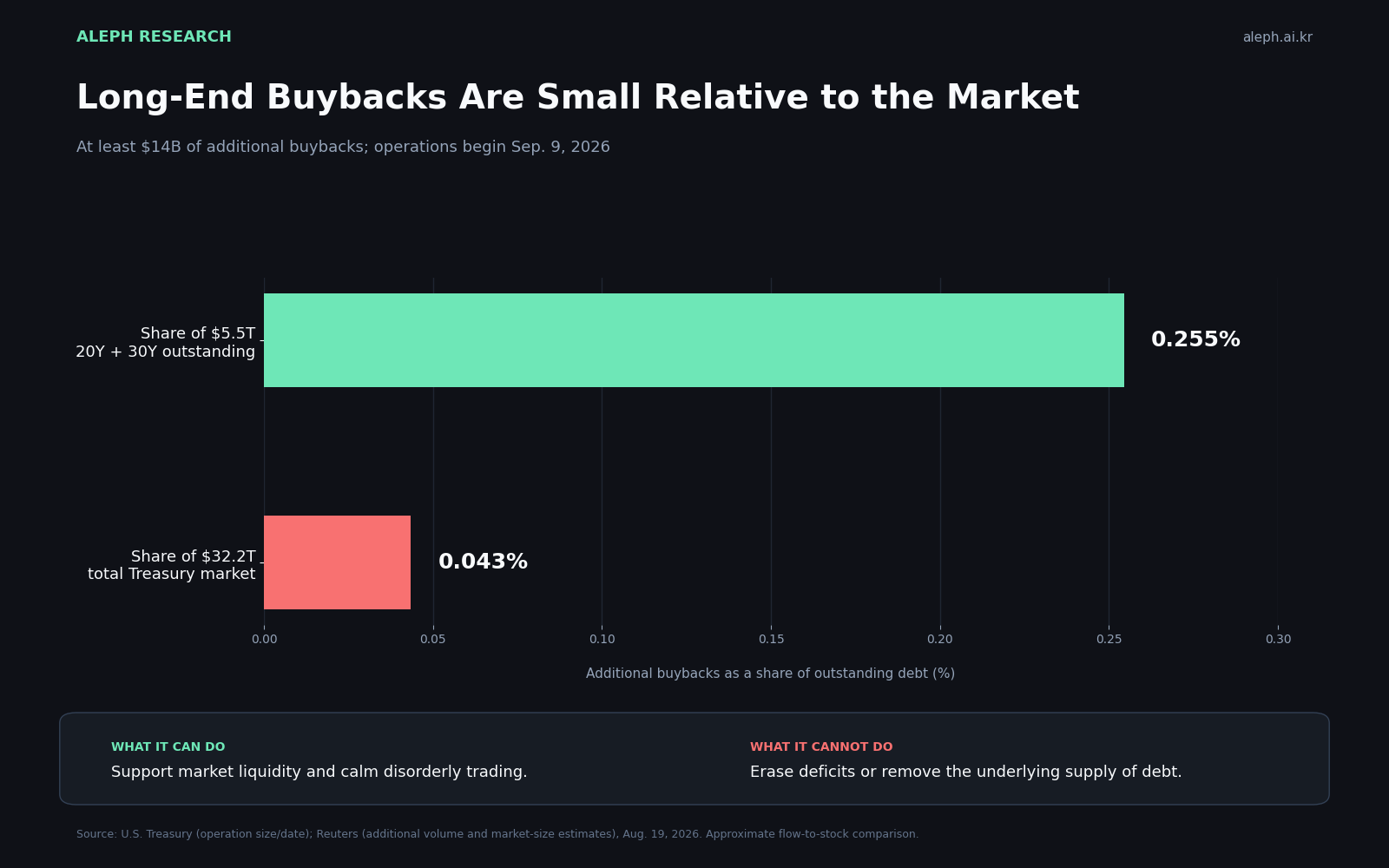
The core of the Treasury bond buyback is not a central bank-style money supply, but rather support for long-term market liquidity as officially announced by the Treasury Department. On August 19, the U.S. Treasury Department announced that it would increase the buyback volume for 10- to 20-year and 20- to 30-year Treasury bonds from a maximum of $2 billion per round to a minimum of $4 billion. The expanded volume will be in effect from September 9 to November 4. If conducted in conjunction with the issuance of Treasury bonds of other maturities, it may also have the effect of maturity restructuring, but this is a matter that needs to be verified separately. This means that as of September 3, when this article is written, the interest rate and liquidity effects resulting from the actual purchases have not yet been verified.
The official purpose stated by the Treasury Department is to provide liquidity support to the long-term bond market. The intention is to improve market trading conditions by purchasing existing government bonds that are infrequently traded. Since long-term interest rates briefly fell immediately after the announcement, there is room to interpret this as a policy intended to suppress interest rates. However, it would be problematic to equate the government bond buyback with the Federal Reserve's quantitative easing.
When the Federal Reserve implements quantitative easing, the central bank's balance sheet expands and reserves in the banking system increase. The Fed itself has previously explained that it primarily funds securities purchases through the creation of bank reserves. On the other hand, for the Treasury Department to buy back long-term bonds, it must raise the funds through taxes, cash reserves, or the issuance of other government bonds. Reducing long-term debt does not mean that the government's net debt decreases by the same amount. Depending on the financing method, the effect on the maturity and composition of debt may be greater.
| division | Treasury bond buyback / Fed quantitative easing |
|---|---|
| Executing entity | U.S. Treasury Department / U.S. Federal Reserve |
| Main purpose | Support for long-term liquidity in the government bond market / Easing of financial conditions and delivery of monetary policy |
| financing | Revenue, Cash Holdings, Issuance of Other Government Bonds / Increase in Central Bank Reserves |
| Government net debt | It does not decrease to the same scale / It does not eliminate government debt itself |
In fact, some of the interest rate declines were reversed the day after the announcement of the expanded buyback . On September 1, the U.S. 10-year Treasury yield rose to 4.786%, and the Japanese 10-year Treasury yield also reached 3% for the first time since 1996. The market appears to have reflected oil price instability originating from the Middle East, inflation, the possibility of further tightening, and large-scale bond issuance by governments and companies more significantly than the buyback. This is closer to the observation that the effects of the policy announcement have not yet overwhelmed structural supply and inflationary pressures, rather than evidence that the buyback has failed.
Can expanding buybacks alone be called “financial dominance”?
Fiscal dominance refers not to a situation where the government spends a lot of money, but to a state where the central bank's price policy is subordinate to the government's financing needs. Related research by the Federal Reserve also explains that fiscal policy can conflict with the central bank's price target when it fails to or refuses to make primary balance adjustments for debt stability.
High U.S. fiscal deficits and interest costs are clearly increasing the risk of fiscal domination. In its July budget review, the CBO projected that the fiscal deficit for fiscal 2026 would reach approximately $2.1 trillion . This figure represents an upward revision of $200 billion from the forecast made in February of this year. On September 2, Reuters reiterated that the total debt of the U.S. federal government has exceeded $40 trillion. However, it is premature to conclude that the country has already transitioned to a fiscal domination regime based solely on the expansion of buybacks. Such an conclusion would require evidence that the Fed has begun prioritizing government borrowing costs over inflation. At this point, it is more accurate to say that "the pressure exerted by fiscal burdens on monetary policy and market interest rates is increasing" rather than stating that "fiscal domination is confirmed."
3 stablecoin is a new buyer of U.S. Treasury bonds.
More than half of the claims regarding stablecoins are correct. Since dollar stablecoins typically hold safe assets such as cash and short-term government bonds as reserve assets, if the issuance volume increases, the issuer must also purchase additional short-term government bonds.
Tether stated that its direct and indirect exposure to U.S. Treasury bonds amounts to approximately $141 billion as of the end of March 2026. Circle's USDC circulation stood at $73.7 billion as of August 27, and the majority of its reserve assets are held in government-style money market funds that invest in short-term government bonds and repurchase agreements. This is not a bad picture from the U.S. perspective. If overseas users convert their domestic currencies into dollar stablecoins, there is potential for new demand to emerge for the dollar and U.S. Treasury bonds. While the foreign exchange reserves of China and Japan were the primary demand base for the U.S. Treasury bond market in the past, digital dollar users are now gradually joining that ranks.
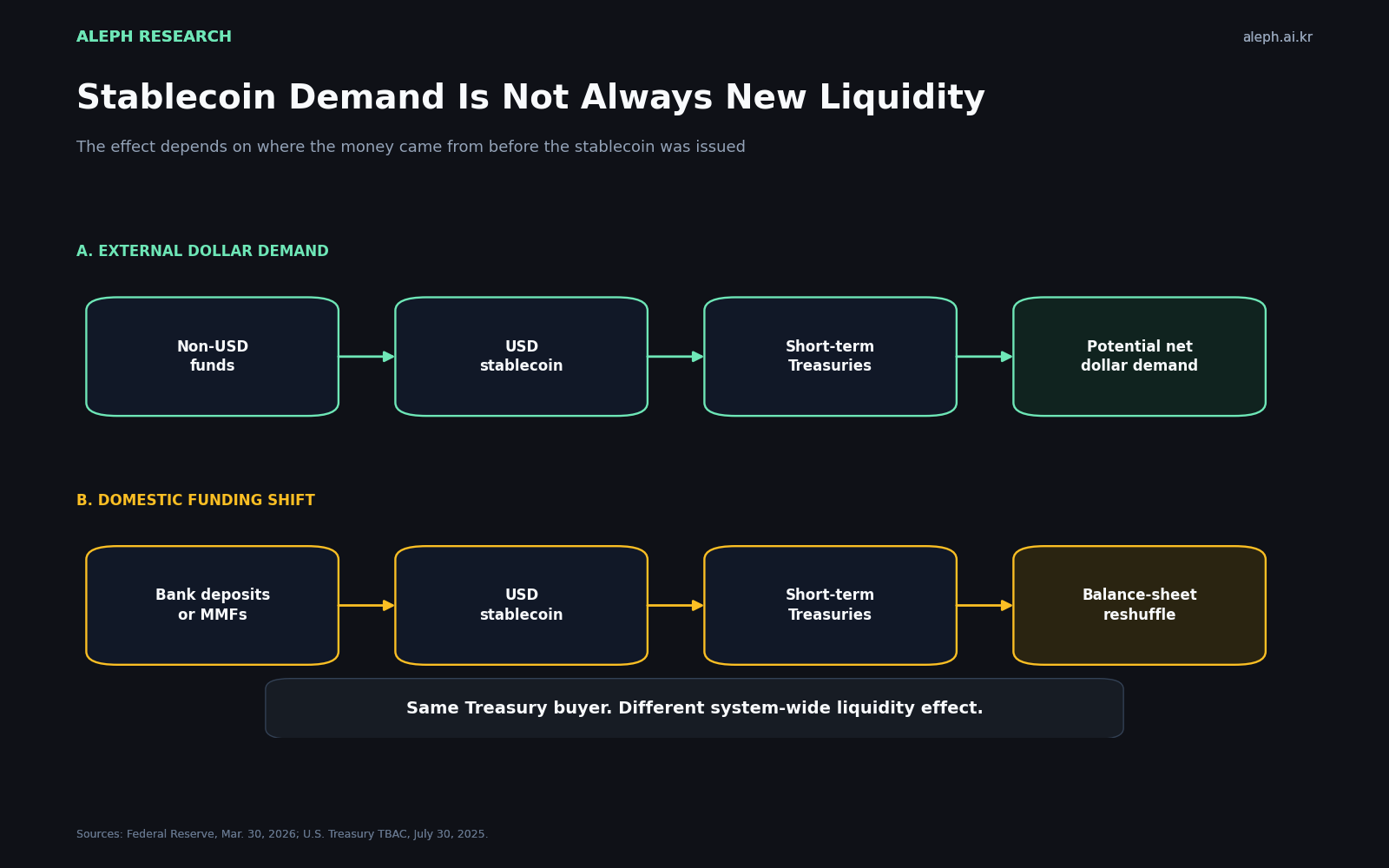
However, it is difficult to assume that the U.S. money supply and financial market liquidity will increase by the same amount as the stablecoin issuance. If we assume that an American exchanges $10,000 in bank deposits for USDC and Circle uses that money to purchase short-term government bonds, the $10,000 was not created in this process. The money that was in the bank deposit has merely moved to the stablecoin reserve assets.
The U.S. Treasury Advisory Committee also pointed out that if stablecoins replace existing cash-like assets such as deposits or money market funds, new demand could be partially offset by a decrease in demand from existing investors. The Federal Reserve's 2026 study is similar. While purchases of Treasury bonds by stablecoin issuers can lower short-term interest rates, investors who previously held those bonds will move to other assets. The final effect ultimately depends on who bought the stablecoins and where the money originally came from.
- If overseas non-dollar funds flow into stablecoins, there is a high possibility that net demand for the dollar and short-term U.S. Treasury bonds will increase.
- Moving funds from U.S. bank deposits or MMFs to stablecoins has a strong character of capital redistribution within the financial system.
Stablecoins are clearly new buyers of short-term U.S. Treasury bonds. However, that in itself is not the same as the Fed's money supply or the provision of large-scale liquidity in risky assets.
4 Is U.S.-Japan Currency Coordination a Modern-Day Plaza Accord?
It is true that the U.S. and Japan intervened together in the foreign exchange market. However, it is difficult to conclude from this fact alone that the U.S. is pushing for a general weakening of the dollar.
The Japanese Ministry of Finance officially announced on July 31, U.S. Eastern Time, that it had purchased yen in coordination with the U.S. Treasury Department. The purpose was to alleviate the excessive volatility and disorderly movements in the yen market. Calling this a "modern-day Plaza Accord" is an exaggeration.
The 1985 Plaza Accord was a multilateral framework in which the United States, Japan, West Germany, France, and the United Kingdom agreed on an orderly decline in the value of the dollar and coordinated macroeconomic policies and foreign exchange market interventions. This measure is a bilateral intervention by the U.S. and Japan to prevent a sharp decline in the yen, and no broad policy agreement to weaken the dollar as a whole has been confirmed.
The results were also limited. The yen, which had been close to 164 yen per dollar just before the joint intervention, rebounded temporarily but weakened again to around 160 yen on September 1. While U.S. and Japanese authorities confirmed their commitment to continued coordination, the U.S. Treasury Secretary also assessed that recent yen movements were relatively under control. Although foreign exchange market intervention can alter the speed and volatility of exchange rates, it is difficult to change the long-term direction of the exchange rate as long as the interest rate differential, inflation, and fiscal conditions between the U.S. and Japan remain unchanged. Based on current evidence, it is more accurate to interpret this measure as a stabilization step intended to prevent the sharp decline in the yen from spreading to global bond and financial markets, rather than as a "weak dollar project."
5 Does Money Go to AI, or Does AI Suck Up Money?
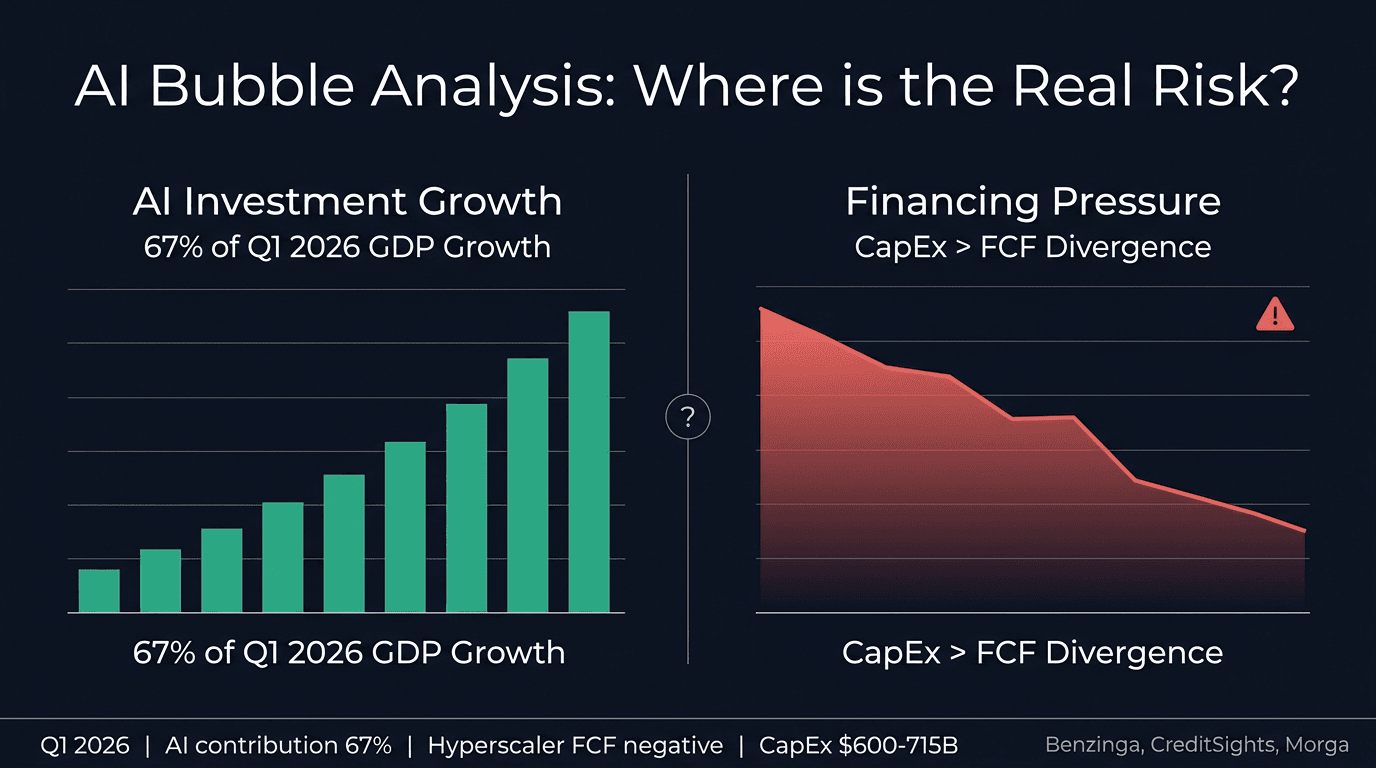
It is difficult to assume that the funds will flow directly into AI simply because government bond buybacks and stablecoins partially ease financial conditions. Investment in AI infrastructure is clearly continuing to increase. Alphabet raised its annual CAPEX forecast for 2026 from the previous $180 billion–$190 billion to $195 billion–$205 billion . While explaining that this is the result of accelerating facility deliveries to meet demand for cloud and AI, the company also revealed that free cash flow will be pressured as depreciation expenses and data center energy costs rise.
Microsoft also executed $41 billion in CAPEX in the fourth quarter of fiscal year 2026. Of this, about two-thirds consisted of short-life assets centered on GPUs and CPUs. Operating cash flow for the same quarter was $55.4 billion, and free cash flow reflecting CAPEX was $19.6 billion. This means that while it is true that demand for AI is translating into actual revenue, the burden that the scale of investment places on cash flow and profit and loss must also be considered.
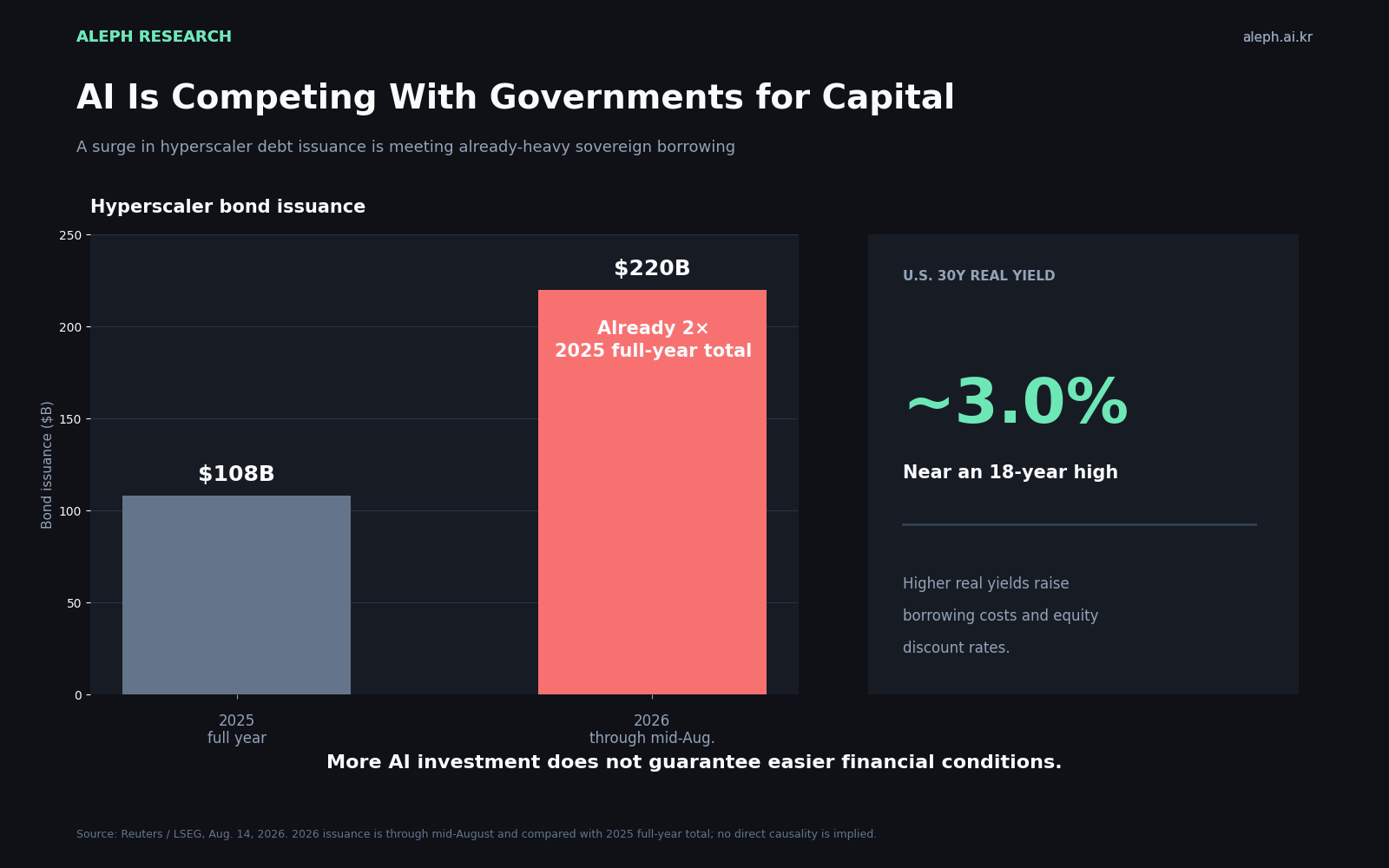
At the same time, Big Tech is actively utilizing not only its cash reserves but also the bond market. AI hyperscalers such as Alphabet, Amazon, and Meta issued approximately $220 billion in bonds from the beginning of 2026 through mid-August. This has already exceeded double the total issuance of $108 billion in 2025. During the same period, the real 30-year yield in the U.S. reached about 3%, its highest level in nearly 18 years.
Here, the story takes a turn. AI is the ultimate destination for liquidity, yet simultaneously a massive borrower requiring enormous capital. Just as the U.S. government issues Treasury bonds to cover its fiscal deficit, AI companies issue corporate bonds to secure data centers and GPUs. Ultimately, these two types of bonds compete for the same funds from pension funds, insurers, asset managers, and bond funds.
There are indications that these changes in the financing environment are also reflected in corporate bond prices. An increase in the issuance of AI-related corporate bonds and a rise in spreads are being observed together. Amazon’s $25 billion long-term bond was priced at a rate approximately 120 basis points higher than U.S. Treasury bonds. A year ago, the spread on a similar bond was about half that amount.
Rather than a linear narrative of fiscal liquidity supply → interest rate decline → AI rise , it is closer to a cycle in which the government's issuance of government bonds and the expansion of financing by AI companies compete for the same capital, causing real interest rates and financing costs to rise, and that pressure leads back to the verification of profitability within AI .
6Will High Interest Rates Stop AI Investment?
High interest rates alone do not halt all AI investment. If demand is sufficient and the return on investment exceeds the cost of capital, companies will continue investing even as interest rates rise. The supply and demand constraints on cloud computing, as evidenced by the earnings of Alphabet and Microsoft, also serve as proof that investment in AI infrastructure is not driven solely by vague expectations.
However, not all AI companies are in the same position. Therefore, rather than asking "Is money coming into AI?", you should check the following questions first.
- Are actual sales and contract balances increasing due to AI investment?
- Are operating cash flow and free cash flow growing faster than the increase in CAPEX?
- How much is dependence on external financing, such as corporate bond issuance and leasing, increasing?
- Can the increases in depreciation, electricity, and memory prices be absorbed through improvements in price and productivity?
- Is the return on investment maintained even if the cost of capital increases?
Applying this criterion reveals a divergence in positions even within the AI value chain. Suppliers with verifiable orders and revenue, such as those in GPUs, HBM, networks, and power equipment, can directly benefit from increased infrastructure investment for the time being. Companies that have integrated AI into improving revenue and margins in existing businesses, like cloud computing and advertising, possess the internal cash flow to handle large-scale investments. Conversely, companies relying on borrowing and capital increases without confirmed monetization are more vulnerable to rising real interest rates and widening credit spreads.
We are gradually approaching a market where companies capable of overcoming high capital costs are separated from those that cannot, rather than a market where liquidity drives up the entire AI sector.
7What should I watch next?
Rather than trying to predict the direction in advance, it is better to check how the following five data points actually move.
How the expanded buyback starting September 9 will affect liquidity, bid-to-cover ratios, tails, and term premiums in the 10–20 and 20–30 maturity segments. The results of multiple rounds of bidding are more important than the reaction immediately following the announcement.
How much the Ministry of Finance increases the issuance of short-term government bonds after buying back long-term bonds. Reducing the supply of long-term bonds and increasing the supply of short-term bonds can have different effects on long-term and short-term interest rates.
To distinguish between new dollar demand and internal movements, one must look not only at the issuance volume of USDT and USDC but also at the increase in overseas users, changes in U.S. bank deposits, and MMF fund flows.
The spread relative to government bonds is more important than the issuance amount itself. If the spread continues to widen, it means the bond market has begun demanding higher risk rewards for expanding AI investment.
You must look at CAPEX, depreciation, operating cash flow, free cash flow, cloud revenue, and contract balance together. The verification criterion is ultimately how much cash the investment generated, rather than the fact that the investment increased.
8Frequently Asked Questions
| question | answer |
|---|---|
| Why is government bond buyback different from QE? | The Federal Reserve’s QE raises funds by increasing bank reserves, whereas the Treasury’s buybacks are financed through tax revenues, cash reserves, and the issuance of other government bonds. Reducing long-term debt does not mean that the government’s net debt decreases by the same amount. |
| If the number of stablecoins increases, does U.S. liquidity increase by the same amount? | It depends on the source of the funds. If overseas non-dollar funds flow in, new demand is created, but if the money comes from U.S. bank deposits or MMFs, it is closer to a redistribution within the financial system. |
| If liquidity increases, won't it eventually flow into AI stocks? | While this may be true for some, AI companies themselves are borrowers that raise massive amounts of capital through corporate bonds and capital increases. As the government and AI companies compete in the same capital market, real interest rates and borrowing costs could rise together. |
Conclusion — U.S. policy can buy time, but it cannot replace profitability.
The U.S. Treasury's bond buybacks can improve trading conditions in the long-term bond market and mitigate sharp interest rate increases. Stablecoins can broaden the demand base for short-term U.S. Treasuries and strengthen the dollar's international influence. Exchange rate coordination between the U.S. and Japan can also slow the speed at which the sharp decline in the yen spreads into global financial instability. These policies can buy time for AI investment to continue.
However, government bond buybacks are not QE, stablecoins are not devices that automatically create new money, and exchange rate intervention cannot eliminate interest rate differentials and fiscal problems. Above all, in this process, AI companies are also competing with the government for the same capital. Now, before the first buyback begins on September 9, the stage is closer to verifying whether the policy changes actual interest rates and financing costs, rather than determining the direction of the policy.
Money is flowing into AI. However, the scale of money required by AI is also growing.
Moving forward, the direction of liquidity is not the only factor determining AI assets. It will become more important to consider whether they can generate actual cash flow and productivity while withstanding high real interest rates and borrowing costs. What needs to be checked now is not how much money the U.S. is injecting, but at what price the market is supplying the massive capital simultaneously demanded by the government and AI companies. That price is ultimately long-term interest rates and corporate bond spreads. After September 9, we must re-examine the buyback auction results in conjunction with long-term interest rates, term premiums, and AI corporate bond spreads.
This article does not recommend the purchase or sale of any specific assets. It is an analysis intended to observe fund flows and risk structures based on publicly available policy materials and market data. Furthermore, as the expansion of the Treasury Department's buyback program is set to take effect on September 9, 2026, its actual effectiveness has not been verified at the time of writing. Investment decisions and responsibilities regarding the companies and stocks mentioned lie solely with the individual, and consulting with a professional financial advisor before making any significant decisions is recommended.
We will continue to monitor how the buyback bid results, long-term interest rates, and AI corporate bond spreads move after September 9.
Subscribe and get notifications →How this content was produced
Aleph's research AI agent assisted with collecting and analyzing public data, creating charts and visuals, and structuring the draft. Davar personally reviewed and edited the sources, figures, reasoning, and final conclusions.
This content is for informational purposes only and is not personalized investment advice or an individual stock recommendation. Read the full disclaimer

Davar
Davar builds and operates Aleph's research AI agent and writes and reviews analysis on macroeconomic developments and AI industry trends.


© Aleph. All rights reserved.