

Samsung Electronics and SK Hynix’s Profits and Stock Prices Examined Through Cafe Competition
On October 13, the KOSPI fell below the 6,000 mark during trading and closed at 6,035.35, down 5.46% from the previous trading day. Samsung Electronics dropped 7.39%, and SK Hynix fell 10.09%. Over the weekend, Chinese memory company CXMT (Changxin Memory) announced that it would launch a new type of server DRAM by the end of the year. This news was cited as one of the factors behind the decline in semiconductor stocks.
Investments in AI continue to rise, and memory companies are performing well, yet semiconductor stocks plummeted on a single piece of news regarding a competitor's new product. Has the demand for AI suddenly disappeared, or is the market reacting too sensitively?
Along with these two points, there is another question to consider: even if the demand for AI increases, will existing memory companies be able to continue generating the high profits they currently do? In this article, using the example of a bustling cafe street, we will examine how projected profits and stock prices might change with the emergence of competitors, and what additional factors AI stock investors should look for in the future.
Even if the number of customers at 1Cafe is increasing, the number of people looking to take over the cafe may decrease.
News of a competitor's new product does not immediately change announced earnings. Instead, it can change expectations regarding future profits. Let's take a cafe street as an example.
Customer numbers are steadily increasing on a certain cafe street. Existing cafes sell a lot of coffee and make substantial profits. However, a new cafe scheduled to open nearby says it will sell similar coffee at a lower price.
It is not that the existing cafe's sales decreased last month, nor has the customer base suddenly disappeared. Nevertheless, anyone looking to acquire the cafe hesitates to pay the same high price as before. This is because they must weigh whether they can maintain current prices in the future, whether they need to offer discounts to retain customers, and whether the profit margin for each store is shrinking as the number of cafes grows faster than the number of customers.
The same question arises when investing in memory companies. Even if the demand for memory increases as AI servers grow, the profits for existing companies could change if the number of suppliers competing for that demand increases.
Looking solely at recent performance, profits have increased significantly. Samsung Electronics announced on October 8 that its preliminary consolidated operating profit for the third quarter was 107.4 trillion won . This represents a 782.5% increase from the same period last year and a 20.0% increase from the previous quarter, marking the first time a domestic company's quarterly operating profit has exceeded 100 trillion won. However, as this is a preliminary figure prior to closing the accounts and represents the consolidated operating profit of Samsung Electronics as a whole, it does not signify the profit of the memory business alone.
However, stock prices are not determined solely by the results of the previous quarter. They also reflect expectations regarding future earnings and how long current profits will last. "They earned a lot this quarter" is a different judgment from "they will continue to generate such profits steadily."
This decline also needs to be viewed by separating current earnings from expectations for future profits. Of course, the entire drop on the 13th cannot be explained solely by CXMT. The securities industry cited weakness in U.S. semiconductor stocks, concerns regarding financing and profitability for AI infrastructure investments, and foreign selling as factors. Analysis also suggested that the buying sentiment supporting the stock price has weakened as Samsung Electronics’ share buyback for employee compensation has concluded and SK Hynix’s buyback is nearing its end.
2 Just because a new cafe opens doesn't mean you will immediately lose customers.
What CXMT has released this time is a launch plan. To assess actual competitiveness, it is necessary to verify whether the customer adopts the product and whether it can be reliably produced and delivered.
Let's say a new cafe announces that it will sell delicious coffee at a low price. This is worrying news for an existing cafe. However, simply saying that doesn't mean it will immediately steal customers. You must open, gain customer recognition, and sell a sufficient quantity of coffee of consistent quality every day. You also need to assess whether you can sustain business while selling at a low price.
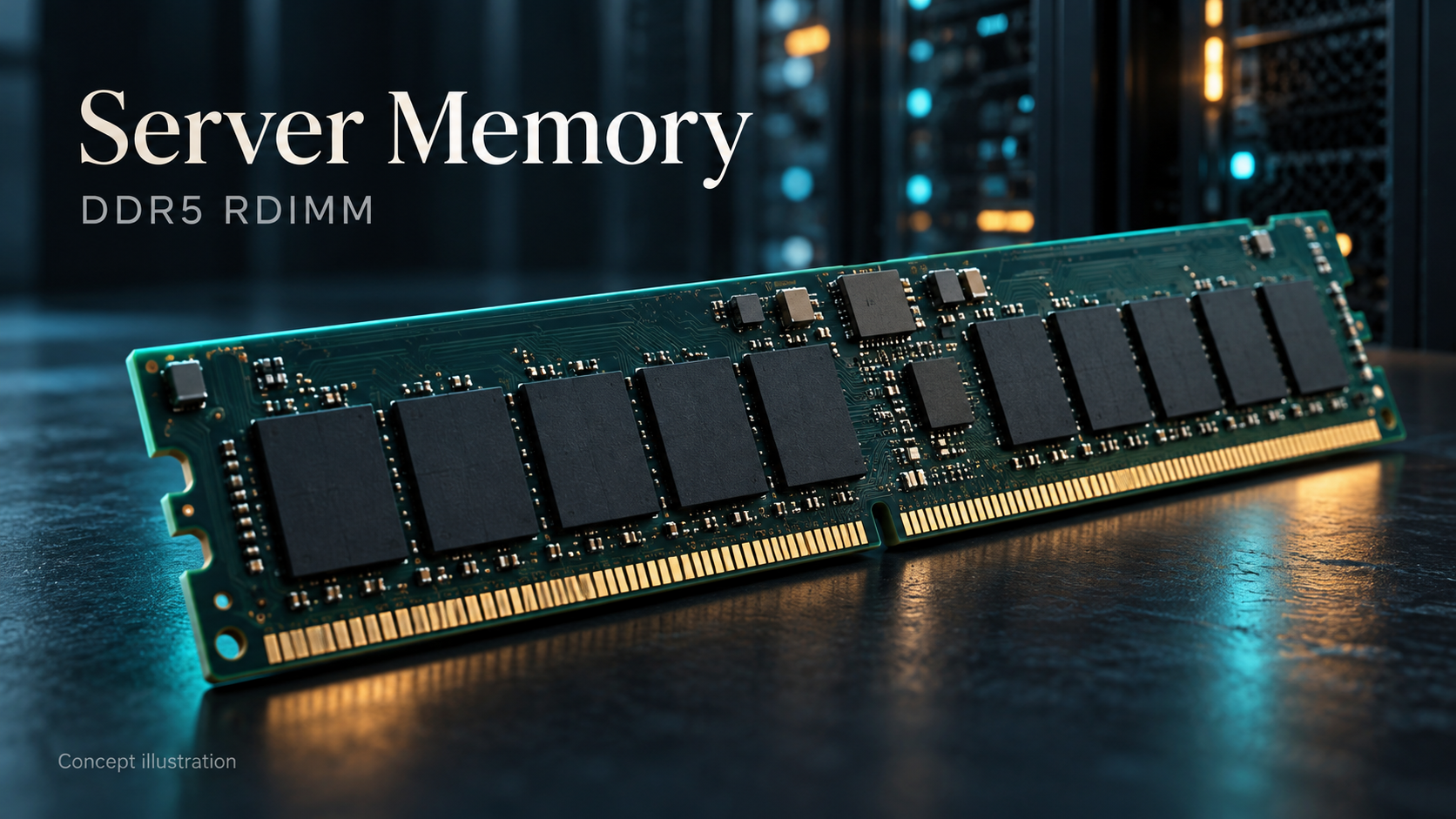
Let's examine CXMT's announcement in this same order. At an industry event held in Shanghai over the weekend, CXMT President Cao Kanyu announced that they would launch server DRAM modules (DDR5 RDIMM) using the 4F² structure by the end of 2026. 4F² is a design method that reduces the area occupied by a single 'cell,' a small compartment for storing information, thereby allowing more cells to be packed into a chip of the same size.
The Malaysian media outlet The Edge Malaysia reported that a company spokesperson confirmed the remark, but described it as an unproven claim. It also added that President Chao did not disclose specific details. Assessments from the domestic securities market also suggested that the company had announced a year-end launch plan rather than successfully reaching the mass production stage. It is unknown how far the company has conducted internal testing. Based solely on the publicly available data I have reviewed, it is difficult to fully evaluate the mass production yield, performance, and level of customer certification.
Beginner investors do not need to understand every technology name. Rather, the priority is to distinguish between promises of a launch and what is actually sold. If you place a Caffe and a memory company side by side, it becomes easy to see what you need to look for.
- Quality — Cafes look at whether customers purchase because they are satisfied with the taste and quality of the coffee, and memory companies look at whether client companies decided to use the product after testing it.
- Production Capacity — Cafes look at whether they can produce large quantities of the same quality even during busy times, while memory companies look at whether they can produce enough products that meet quality standards.
- The ability to maintain low prices — just as a cafe looks at whether it can continue business even at low prices, a memory company looks at whether it can cover production costs and continue supplying even at low prices.
- Repeat purchase — Cafes look to see if customers return, and memory companies look to see if additional orders from clients follow.
Yield , a term frequently mentioned in semiconductor articles, refers to the ratio of products that are usable within the total production volume. If the yield is low, fewer products can be sold even with the same equipment and costs. Therefore, announcing successful development is a separate matter from manufacturing and selling a large volume at a competitive cost.
This is not the first time CXMT has unveiled server memory. The company already showcased a DDR5 product family, including server modules (RDIMM), at the IC China exhibition in November 2025. What is noteworthy this time is the plan to launch server products featuring a new cell structure.
However, we cannot ignore the possibility of competition simply because publicly available data is insufficient. Rather than rushing to conclude that we have "already been caught up" or that there is "no impact," now is the time to observe whether clients adopt the new product and how much the volume of deliveries grows.
3Even if the number of customers increases, if more cafes open, we may have to lower coffee prices.
The profits of memory companies depend as much on the selling price as on the sales volume.
It might seem that an increase in customers on a cafe street would guarantee success for all cafes, but that is not necessarily the case. If the number of cafes grows faster than the number of customers, customers face a wider variety of choices. Existing cafes may lower prices or increase benefits to retain customers. Even if more coffee is sold, overall profits fall short of expectations if the profit per cup decreases.
For memory as well, supply and demand must be considered together. It is important not only to look at how much was sold, but also at what price it was sold and how much profit remains after deducting costs. When announcing its second-quarter earnings on July 29, SK Hynix explained that DRAM and NAND prices rose significantly compared to the previous quarter , and that increased sales of high value-added products such as HBM, AI server DRAM, and enterprise SSDs (eSSD) contributed to the improvement in performance.
Conversely, if sales prices fall due to competition, the growth in profits may be limited even if sales volume increases. If the price drop is significant, profits themselves may decrease. Of course, existing companies can mitigate this impact by lowering production costs or increasing the proportion of products that can command higher prices.
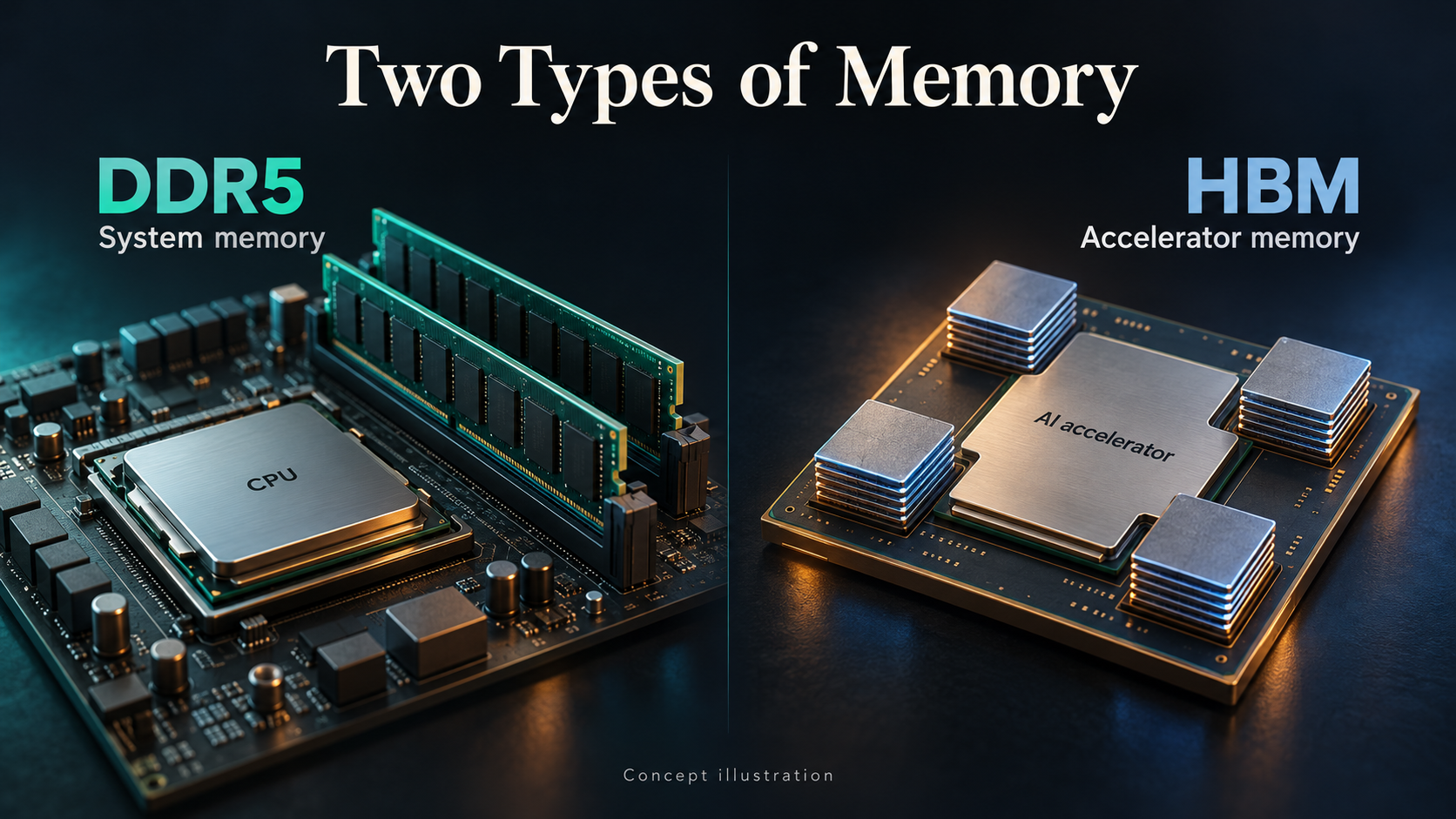
From this point on, there are aspects that are difficult to explain using the café analogy. This is because the roles and competitive conditions differ for each memory product. While both server DDR5 and HBM are used in AI infrastructure, they are not the same product. According to SK Hynix , server DDR5 is memory that stores data required for CPU operations, whereas HBM rapidly exchanges large amounts of data right next to the AI computing chip. Therefore, it is difficult to conclude that the release of a new server DDR5 product can replace HBM.
However, even if HBM competitiveness is maintained, the company's overall profits could be affected if profits from other products decline. In other words, concerns cannot be fully resolved simply by saying, "HBM is different." Samsung Electronics and SK Hynix should not be viewed as a single entity either. To properly gauge the impact of competition, one must examine separately which products each company generates revenue from and to which clients they sell those products to.
Even if 4Cafe makes more money, the acquisition price could actually go down.
To understand why the stock price moved, you just need to break it down into two factors: how much the company is expected to earn in the future, and how many times that profit investors are willing to pay. It is easy to understand if you look at it in the context of buying and selling a cafe.
There is a person looking to acquire a cafe. Initially, they expected the cafe to earn 100 million won per year and intended to buy it for 1 billion won, which is ten times that profit. Later, business improved, and the projected annual profit increased to 120 million won . However, as competition intensified in the surrounding area, they became concerned about whether this level could be maintained in the future. Therefore, they now say they will only pay up to 7.5 times the projected profit.
| item | Previous judgment | Changed judgment |
|---|---|---|
| Expected annual profit | 100 million won | 120 million won |
| How many times the profit will it generate? | 10 times | 7.5 times |
| Acquisition price | 1 billion won | 900 million won |
The money expected to be earned by the cafe increased by 20% , but the price people are willing to pay for this cafe actually decreased by 10% .
A similar situation can occur in the stock market. EPS (Earnings Per Share) is a value representing a company's net profit per share. PER (Price-to-Earnings Ratio) is the stock price divided by EPS. If the EPS expected to be earned in the future is used, it is called the projected PER. In the example from the cafe, 100 million won and 120 million won correspond to projected earnings, while 10 times and 7.5 times correspond to the PER.
When competition intensifies, investors have two possible judgments: either underestimate future earnings, or maintain the earnings outlook but value the same earnings lower than before due to increased uncertainty. It has not yet been confirmed how much each of these changes contributed to the recent decline. By comparing how the expected EPS and stock price changed for the same fiscal year, one can separate the changes in expected earnings from the P/E ratio. However, this comparison alone cannot separately calculate the impact of the CXMT announcement on the stock price.
You cannot conclude that a stock is cheap simply because the P/E ratio has decreased. The acquisition price appears cheap if you assume that the profits from the cafe business's best year will continue to be earned every year. However, the calculation changes if profits decline. To determine if the stock is undervalued, you must also examine whether the profits used in the P/E calculation will be sustained in the future.
5Three Things to Watch Going Forward — Shipments, Sales Price, and Profit Outlook
To determine whether competition is reducing the profits of existing companies, one must look at CXMT's shipment volume, the existing companies' selling prices, and profit outlook together.
It is not too late to reach conclusions such as “China has caught up” or “it has fallen, so it is an opportunity” after confirming these three points. Here is a summary of what to look for in each case.
- Has the new CXMT product actually started selling? — Customer adoption, actual shipments, repeat deliveries, and supply volume
- Are existing companies maintaining their prices and profits? — Operating profit margin, which is the percentage of sales price, inventory, and revenue by product that remains as operating profit.
- Has the forecast for future earnings changed? — Whether the profit outlook for the same fiscal year has been raised or lowered, and the future earnings forecast disclosed by the company
The assessment changes depending on this data. Even if CXMT increases supply, if demand increases proportionally, existing companies can maintain their selling prices and profits despite intensified competition. If the supply of new products is delayed and orders for existing companies remain steady while selling prices are maintained, the impact of these concerns on performance may be limited.
Conversely, if increased new supply and customer adoption lead to lower selling prices for existing vendors, accumulating inventory, and lowered profit forecasts, then one must examine whether actual profitability is deteriorating beyond temporary anxiety. However, since slowing demand or increased production by other companies can also influence price declines and inventory growth, this cannot be entirely attributed to CXMT.
Just because prices have dropped in some transactions does not mean that memory prices as a whole have fallen. It is necessary to distinguish between spot prices traded at any given time, contract prices between companies, and the prices of DDR5 and HBM. First, it is worth watching to see what explanations regarding product-specific pricing and future profits will be provided during Samsung Electronics' third-quarter earnings conference call scheduled for October 29.

6Frequently Asked Questions
| question | answer |
|---|---|
| What kind of company is CXMT? | Headquartered in Hefei, China, it is China's largest DRAM manufacturer and was listed on the Shanghai Stock Exchange's STAR Market in July 2026. According to quarterly data updated by Counterpoint Research in September, the global DRAM market share by revenue in the second quarter of 2026 was Samsung Electronics 38%, SK Hynix 25%, Micron 24%, and CXMT 10% . CXMT's market share rose from 4% in the same period last year to 10%. Revenue share does not directly reflect production volume or technological level. |
| What is the 4F² structure? | It is a next-generation structure currently being developed by existing companies such as Samsung Electronics, based on a DRAM design method that reduces the area of a single information-storing cell to fit more cells into a chip of the same size. |
| Does CXMT's server DDR5 replace HBM? | Since the two products have different roles, it is difficult to view server DDR5 as directly replacing HBM. Nevertheless, if profits from memory products other than HBM, such as DDR5, decrease, it could affect the company's overall profits. |
| The stock price has dropped significantly, lowering the PER; doesn't that mean it has become cheap? | You cannot tell solely from the P/E ratio. You must also consider how long current high profits will be sustained and how much the possibility of a decline in profits is already reflected in the stock price. Judging the acquisition price based only on the profits from the year the cafe business was at its best could lead to an inaccurate calculation. |
Conclusion — Even on streets with increasing customer traffic, the cafe's profits must be considered separately.
The fact that the number of customers on the cafe street is increasing is still important. However, there is one more thing to verify for anyone looking to buy a cafe on that street: whether the cafe can retain its customers while also protecting its coffee prices and profits, even as the number of competing shops increases.
In the previous article , "How Much Does an AI Data Center Need to Break Even?", we calculated how much an AI data center needs to earn to recoup its investment. This time, we examined how long companies supplying memory to AI infrastructure can maintain their profits amidst competition.
There is one more step between the judgment that AI will be used more widely and the judgment that a particular company's stock is worth buying at its current price. It involves verifying how much that company can earn in a growing market and how long it can sustain those profits.
Frankly, based solely on the current data, it is difficult to judge whether this decline was excessive or if the profit structures of existing companies have already begun to waver. I intend to use the news regarding CXMT as an opportunity to re-evaluate how long the high profits of memory companies will be sustainable.
Will CXMT's new year-end product actually be delivered to clients? Will existing suppliers be able to maintain current contract prices at that time? Will they be able to sustain their recent high profitability next year and the year after? I intend to look for the answers to these questions one by one in the upcoming earnings and pricing data.
📌 Was this analysis helpful?
We will continue to monitor how competition and profitability among memory manufacturers change as the demand for AI increases. Please subscribe below to receive new posts.
Subscribe and get notifications →How this content was produced
Aleph's research AI agent assisted with collecting and analyzing public data, creating charts and visuals, and structuring the draft. Davar personally reviewed and edited the sources, figures, reasoning, and final conclusions.
This content is for informational purposes only and is not personalized investment advice or an individual stock recommendation. Read the full disclaimer

Davar
Davar builds and operates Aleph's research AI agent and writes and reviews analysis on macroeconomic developments and AI industry trends.

© Aleph. All rights reserved.